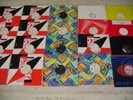
1940 World Fair Festival of BRAZILIAN MUSIC MUSEUM OF MODERN ART Villa Lobos 78
$
30


Favourite Auctions
To save auctions to your favourites, please login
If you don't have an account, please register
Description
WEEK 1 of 3 weeks of great auctions - A whole range of great records, pls have a look at the banner below the
Item Description. More good stuff to come.
I will be happy to hold your items until the end of these auctions, and pack them in one economic parcel
Shipping prices have gone up again, I am trying my best to keep your shipping as affordable as before.
For International Buyers - I have great rates for international shipping, especially large parcels to Japan and Western Europe, but of course I will ship WORLDWIDE.
IF YOU WIN MULTIPLE ITEMS DO NOT USE EBAY CHECK OUT in order for me to get you low combined postage. Send me an invoice request instead.
A series of great Personality Records, with Shakespearean Actors, Presidents and Kings and great performances:
Organized by Nelson A Rockefeller, President of the Museum of Modern Art and the Government of Brazil in conjunction with the 1940 World Fair at the Museum of Modern Art:
A festival of Brazilian music arranged by Burle Marx in association with Hugh Ross: October 16 through October 20, 1940, in the auditorium of the Museum of Modern Art ... New York City
Sponsored by the New York Museum of Modern Art and the Commissioner for Brazil
A Festival of Brazilian Music
Artists:
The Brazilian Festival Orchestra, Walter Burle Marx, conductor
The Schola Cantorum, Hugh Ross, conductor
The Brazilian Festival Quartet, with Elsie Houston, soprano
This is one of the landmark recordings of Villa-Lobos's music. Recorded in October, 1940, the program is based on music played at A Festival of Brazilian Music, a series of three concerts held at the Museum of Modern Art in New York, October 16 and 20, 1940. The Festival was sponsored by MOMA and the Commissioner General for Brazil.
Musical Masterpiece Series
M-773 (17966-17970)
“ ... The real revelation was Elsie Houston. Her’s (sic) is one of our most precious national voices—if not the most precious. She is incomparable among our native singers, intelligent, cultured, with impeccable taste and a magnificent voice ...”
Mario de Andrade, in the São Paulo Diario National
“When she really had the spirit moving in her, it would make your hair stand on end ... But there were nights when she wasn’t interested, or she was depressed ... Her occasional bursts of temperament betrayed a melancholy spirit ...”
Paula Laurence, quoted in James Gavin’s 1991 book
Intimate Nights: The Golden Age of New York Cabaret.
on pre war gold label 5x 12" records with Original Album DM773 and booklet
12" 78 rpm record
Condition:
Excellent, some rubbing. Sides 8, 10 have a small spot of greying. album great,
Elsie Houston (1902-1943) was a Brazilian singer.
Elsie Houston was born in Rio de Janeiro in 1902. She was the descendent of confederados, southern plantation owners that had come to Brazil after the American Civil War. Elsie's father was James Frank Houston, a prominent Rio dentist and Elsie Houston's mother, Arinda Galdo, was a native of Rio de Janeiro, and had Portuguese roots in the Madeira Islands. Elsie Houston figured in the Brazilian literary/art/music scene during a critical time in its history. It was an era of tremendous creative energy. In addition to Mário de Andrade and Patricia Galvão ( Pagu), Elsie Houston knew others famous members of this artists movement, including the composer Heitor Villa-Lobos , the painters Flavio de Carvalho, Anita Malfatti and Tarsila do Amaral, and the leader of Brazilian modernism, Oswald de Andrade.
Elsie moved to Germany and studied with Lilli Lehmann a renowned voice teacher. She then studied with another famed soprano, Ninon Vallin, first in Argentina and then in Paris. Houston's relationship with Heitor Villa Lobos began in her teens. Houston was definitely a soloist at Villa Lobos's 1927 Paris concerts. In 1928 she married Benjamin Péret, French surrealist poet, with whom she lived in Brazil from 1929 to 1931. Their son, Geyser, was born in Rio de Janeiro in 1931.
By the late 1930s, Elsie Houston had moved to New York. She was a brilliant singer, particularly skilled in the interpretation of Brazilian songs. The New York Times during this era praised for her performances. She was also an active supporter of young Latin American composers, performing early pieces by composers such as Jayme Ovalle and Camargo Guarnieri. She died in 1943, her death was listed as an apparent suicide.
From Marstonrecords.com
Elsie Houston
“ ... The real revelation was Elsie Houston. Her’s (sic) is one of our most precious national voices—if not the most precious. She is incomparable among our native singers, intelligent, cultured, with impeccable taste and a magnificent voice ...”
Mario de Andrade, in the São Paulo Diario National
“When she really had the spirit moving in her, it would make your hair stand on end ... But there were nights when she wasn’t interested, or she was depressed ... Her occasional bursts of temperament betrayed a melancholy spirit ...”
Paula Laurence, quoted in James Gavin’s 1991 book
Intimate Nights: The Golden Age of New York Cabaret.
Of the many performers who came to the United States in the 1930s during the country’s craze for all things Latin American, the most unusual was probably the Brazilian singer Elsie Houston. Not much appreciated in Brazil, she had preferred living in Paris, and later in the U.S.A., where she developed a sizable following of discerning music lovers in New York, Chicago, Philadelphia, and other large cities. Her unique music, however, was too exotic, rich, and sophisticated for the general public, which preferred the glittery parody of Brazilian music in movies of the day with the gyrating exotique, Carmen Miranda.
Elsie Houston was born in Rio de Janeiro on 22 April 1902. Her father was James Frank Houston, a dental surgeon born in Tennessee who migrated to Brazil in 1891, where he married Arinda de Malta Galdo (some sources give her name as Malta de Galdo), whose ancestors had come to Brazil from Portugal more than three hundred years earlier. Elsie was one of seven children of the union. She must have exhibited talent at an early age, for while studying singing locally with Stella Peradiu, she befriended the composers Heitor Villa-Lobos, Luciano Gallet, Hekel Tavares, Carmago Guarnieri, and others in 1921 when she was still a teenager. Perhaps her family thought her involvement with Brazilian music was becoming too intense and possibly detrimental to her future prospects, for the next year they sent her to Germany, where she was accepted as a pupil by the legendary, phenomenal singer and teacher Lilli Lehmann, who had taught Olive Fremstad, Geraldine Farrar, and Germaine Lubin. It was the formidable Lehmann who gave the young Houston a solid vocal technique, one which allowed her to use her voice in unusual ways, yet never lose its musical quality. Two years later Houston returned to Brazil, and was then promptly shipped off to Buenos Aires, to study with another great singer, France’s Ninon Vallin, who was a favorite at the Teatro Colón. Houston remained there for two years, then moved to Paris with Vallin.
It was in Paris that Houston realized that her vocation was not for opera. She met a woman named Marguerite Béclard d’Harcourt (1884–1964), a French composer. Béclard d’Harcourt was also a pioneer ethnomusicologist who specialized in collecting South American folk songs, transcribing them into standard musical notation. She encouraged Houston to study her native Brazilian music and provided her with access to recordings she had made of folksongs. Madame Béclard d’Harcourt and her husband, ethnologist Raoul d’Harcourt, maintained a salon where many of the Brazilian diaspora in Paris would congregate. It was there, in 1926, that Elsie Houston presented her first concert of Brazilian music. The following year she made her formal debut at the Salle Gaveau, sharing the concert with Villa-Lobos. In 1928 she cut her first recordings - two sides for French HMV of four Villa-Lobos songs with Mme. Villa-Lobos at the piano.
Houston was only twenty-four but already an authority on Brazilian music; she subsequently published two volumes on Brazilian popular song. Also in 1926, through one of her sisters, Mary, who was married to the art critic (and ardent Trotskyite) Mário Pedrosa, she met a surrealist poet—Benjamin Péret. They married and the couple returned to Brazil in 1930, where Péret helped her collect material on the Brazilian Macumba. The word is of African (Bantu) origin, and means “musical instrument” as well as “magic,” and is frequently used in Brazil to refer to any ritual or religion of African origin. He would accompany her to the places where the rituals were being performed. Elsie heard the guttural chants of the leaders and absorbed the hypnotic atmosphere surrounding them, and would later incorporate the same mood in her own performances of the song, “Jongo.”
Houston cut her second group of records in Brazil in 1931, for the Brazilian Columbia label, mostly folksongs. She must have known how important it was to master the folksong—it was the “frame” that Brazilian composers used on which to hang the material of their art songs. It had the same syncopated African rhythms, the angular melodies, and the driving movement. On these recordings, Houston’s voice is light and youthful, but the music is repetitive and the songs go on for too long. Just when one thinks a song is ending, it starts all over again. The accompaniment of a small combo of drums, guitars, and maracas suggests street music from the favelas. Houston sings with abandon, impetuous, and with such conviction and authority that one could not imagine anyone singing these folksongs better than this.
While she was absorbed with her researches and career, her husband began to lean towards extremism in all things. He and his close associate André Breton became famous for taunting priests, and there was a photo of Péret published in France doing just that, with the caption: “ ... that malingerer, that exasperator, that incredible parasite of a do nothing, Benjamin Péret.” Their only child was born in 1931, and the boy was given the name “Geyser” (it is reported that she would not accede to Péret’s desire to name the child “Satan.”) Péret began to stretch the surrealist movement beyond poetry, to encompass political action. He wrote manifestos protesting the treatment of black people and Indians, and encouraged communists to join the protests. This didn’t sit well with the Brazilian authorities; Péret was a French national, and the Brazilian government expelled him. Elsie Houston returned to Paris with her husband.
This marked the beginning of her mature career, when she became known as an international artist. She gave concerts in France and Switzerland. In 1933, she recorded four additional sides for French HMV—Brazilian folksongs accompanied by “Carlitos and his Brazilian Orchestra.” These exhibit the same commitment to the music as her Columbia recordings, with her voice darting in and out of the orchestral accompaniment like some exotic bird in flight. Soon she was informally known as “The Ambassador of Brazilian Music.”
In 1936 Péret went to Spain to fight in the civil war, and there he met a young woman with whom he had an affair. Like Breton, Péret did not believe much in “family values,” finding conventional morality restrictive. Because of severe laws, Houston and Péret could not easily be divorced, and composer Paul Bowles said that Houston did not want to end the marriage. She returned to Brazil periodically, giving concerts in Rio and , sometimes including songs by Debussy and Ravel among the folksongs, just to prove to critics that she was a classically trained singer. Soon she was acclaimed the best interpreter of the songs of Oscar Fernández and Villa-Lobos, her specialty. But she had to struggle, for the people of the upper classes in Brazil disliked the idea of presenting African rhythms and angular melodies as art, as well as the new and strange way she used her voice in her song presentations. They wanted to hear European music, and did not want to be reminded that Brazilian culture is more than Portuguese.
She gravitated to Paris again, but back in Brazil in 1935, she separated from Péret and then returned to Paris, where she had an enthusiastic following. One Brazilian journalist wrote: “Our songs, sentimental, some sensuous and others happy, easily and rapidly conquered the Parisian public.” In 1937 she came to New York, where she remained for the rest of her life, arriving just as the rage for Latin-American music was at a peak. President Roosevelt’s “Good Neighbor Policy” encouraged it, and all America was dancing to Afro-Latin rhythms of the rumba, conga, and the samba. The music of the Mexican Agustín Lara and the Cuban Ernesto Lecuona, as well as many other Latin-American composers filled the air waves. On 4 March 1938 she appeared on radio in New York in a program with speeches by the U.S. under-secretary of state, officials from the Brazilian embassy, the Pan-American Union, and the Brazilian-American Chamber of Commerce. In a “tailgate effect,” after band leaders and popular performers came, there had followed the classical composers and performers. Until her death Houston performed often in the United States, sometimes several times a week.
In 1940 Houston appeared on a program with other artists at a Festival of Brazilian Music at New York’s Museum of Modern Art, and proved the sensation of the Festival. Clad in a green dress, with her tall, thin figure, and with that voice, she seemed to some the reincarnation of Rima the Jungle Bird Girl, heroine of W. H. Hudson’s novel, Green Mansions. Perhaps the greatest of all “crossover” artists before that term was even invented, she appeared not only on august concert stages, but also in night clubs frequented by Cole Porter and Marlene Dietrich like Le Ruban Bleu (where Houston’s accompanist was the great Cy Walter, and where she alternated with Lotte Lenya, who was jealous of Elsie’s greater success), supper clubs like The Rainbow Room, as well as New York’s Lewisohn Stadium, and Washington’s Watergate National Park in 1941, where she sang for an audience that exceeded 20,000 people. She also sang in private homes, like her friend composer/pianist Samuel Barlow’s Greenwich Village townhouse, in his beautiful Louis XVI drawing room, the scene of many of her concerts, where she brought Xango, the God of Thunder, to life. In 1941 she appeared at New York’s Town Hall in a joint recital with harpsichordist Yella Pessl. Composer/critic Virgil Thomson wrote in Elsie’s defense, in response to a reader who had complained in a letter to the New York Herald Tribune that Houston was not a classical artist. On 26 January that year the New York Times reported on her performance a week earlier at a New York supper club: “For each of these songs Miss Houston found the precise tone and nuances of color, rhythm, accentuation. But she has extraordinary resources of tone-color and diction, and a rare gift of characterization.”
By 1941, Brazilian music and its North American version, using Brazilian rhythms, had become extremely popular, primarily as the result of the success of Carmen Miranda, the highest paid film star in 1942. But there was almost no relationship between Elsie Houston’s exquisite understanding of Brazilian music, and Hollywood’s cheap commercialization of it. Elsie was quite aware of Miranda. At one of her appearances at New York’s Rainbow Room, Houston sang and danced the “canco do caboclo” (frog song) in conjunction with the renowned dancer and choreographer Charles Weidman, and wore a hat á laMiranda, but it was elegant and chic.
Houston’s voice is usually described as a soprano, but that was only one of the many voices she used to capture the color of Brazilian music. There was the guttural voice she used to create the incantation in “Jongo,” the magic spell of Macumba. In her performances of the song, the lights were dimmed to nothing and in the dark, illuminated only by candles, she would play a drum while she chanted. James Gavin, in his “Intimate Nights: The Golden Age of New York Cabaret,” wrote: “Houston dressed elegantly but austerely, making it a shock when she began to wail like a woman possessed. Her beautiful but metallic soprano ranged all the way from birdlike highs to fierce, animal-like sounds.” No one would have thought this was a voice of an operatically trained singer.
Sometimes she would use her voice like a percussive instrument, usually in music that was driving and syncopated, typical of Afro-Brazilian rhythms. In this music we can hear her extraordinary rhythmic sense. But then, in the most intimate moments, she became a French diseuse (monologist), as she whispered “Mon ami!” To dispel the sad atmosphere of that song she might then sing Villa-Lobos’s “Oxcart Driver’s Song” [Canção do carreiro] with a crazy exuberance that never descended into shouting, but remained always a musical utterance.
Finally one would forget all her different voices when she used her pure trained soprano in “Bahia,” which somehow suggests by its beauty a picture of lushness and sunlight. In “Foi numa noite calmosa” she sings with such emotional depth that one doesn’t need to understand the words to be moved. These are from her Victor album of Brazilian songs, recorded in 1941. The Victor recordings benefit from the expert sound engineering of the company, which faithfully represented the depth and resonance of her voice. One must note that no small part of that Victor album’s success was due to the talented accompaniment of Pablo Miguel, whose deep piano tone reminds one of Ignaz Friedman.
Houston made a series of recordings for New York’s Liberty Music Shop, only four of which were issued. These lack the recording expertise achieved by Victor, and the sound is somewhat distant and thin. Despite this, the group provides a glimpse of the variety of her art, ranging from “Jongo” and “Xango,” to the hauntingly beautiful Brazilian lullaby “Toda p’ra você” by Fernandez, with its tender repeated phrases. The three French songs have their moments. “Mon ami,” based on a simple scale, starts with casual insouciance, but as the scale rises the diseuse becomes more and more tormented until, at the last note, the performer is almost in tears because of her “ami.” Ravel’s “Sur l’herbe” adds a certain Brazilian flavor to the Ravelian surface, and the “caf conc” valse “Quand je chant cette melodie,” is colored with a wonderful nostalgic sentiment. Her recording of “Fado” (Fate) is so despairing, as if it were the summing up of her life.
The location of Houston’s unissued Liberty Music shop discs is currently unknown—the author received a tape of them from Marcus Blechman (1922–2010), a renowned theatrical photographer who was her intimate friend. She apparently had tears in her eyes as she presented him with the discs rather mysteriously. This was just a few days before she took her own life on 20 February 1943 with an overdose of sleeping pills.
Houston had complex financial and personal problems. at the end she was involved with a Belgian “Count” or “Baron” named Marcel Courbon, who apparently was living off her, and whom she claimed was her husband, although she Péret never divorced. In 1942 Elsie Houston and Courbon were apparently arrested in Charleston, South Carolina. She had appeared at benefits for Russian causes, such as “The Women’s Division of the Russian War Relief Society.” At the same time she was sending her son to an expensive private school, while keeping an apartment on Park Avenue. She left two notes in French, one to her sister Mary Pedrosa and the other to Courbon. The police wanted to question him, but he had disappeared. There is enormous irony to her sad end, for had she delayed just a little, she would have received a check from Mrs. Bliss, the wealthy arts patron who lived in Dumbarton Oaks in Georgetown, where Houston had sung. Perhaps we will never know details of her love affair and political activities with Courbon, but what matters is that the world lost a great and unique artist.
Quick NOTE ON GRADING AND SHIPPING:
As you can see from my feedback, I try hard to earn your POSITIVE FEEDBACK and FIVE STAR RATINGS.
If for any reason your transaction was NOT SATISFACTORY, pls contact me and I will work something out with you. YOU WILL NEVER HAVE A REASON TO GIVE ME A NEGATIVE RATING or a LOW STAR RATING.
Quick note on grading:
The Grade (Excellent to Fair, I don't give Mint) refers to the WEAR of the record. Any other defects are stated separately, when prefaced with "HOWEVER" or "BUT" they will be significant.
When I listen to a record, I may also give it an aural grade (again E to F), and make a SUBJECTIVE judgment of the pressing quality for hiss and surface noise.
"SUPERQUIET" is basically noiseless, like a vinyl pressing.
"VERY QUIET" is an exceptionally quiet record for a given pressing.
"Quiet" is a record that is a great example without undue noise for a given pressing.
These judgments are SUBJECTIVE and will depend one the styli, phonograph etc. you use on your own equipment.
Pls check my other auctions for more great records and phonograph items:
http://shop.ebay.com/carsten_sf/m.html
http://shop.ebay.com/carsten_sf/m.html
====
Multiple item shipping: I am happy to combine items for shipment in one parcel.
If you win multiple items, pls send me an INVOICE REQUEST to calculate the correct postage. Ebay check out will not give you the multiple item discount!
Records will be packed safely between corrugated cardboard in a sturdy box with plenty of padding for safe shipment.
Shipment is usually Media Mail, unless another service is requested. Shipping is at your risk, I will be happy to insure items at your cost.
I charge actual postage plus a small fee for packing materials
As always, I guarantee your satisfaction. If you don't like the item, just return it, and I will refund the full purchase price.
If you are in the San Francisco area, I encourage pick-up in person.
US Domestic Shipping:
Here is a guideline for US Media Mail Shipping:
Prices below are for regular 78 rpm records. Up to about 5 records, I will ship Edison Discs for the same rates. Estimate count for Album Sets as number of records plus 1 record. I have a great track record for sending LARGE PARCELS of records safely
1 record: 4.75$
2 records: 5.75$
5 records: 7.50$
10 records: 9.50$
MANY MORE RECORDS: Don't worry. I safely ship 40 - 50 pounds of records double boxed in moving boxes, and even then Media Mail will probably not exceed 30$.
The numbers above include the 9% Ebay fee on shipments.
Pls ignore the automatically calculated prices on the ebay site, as I will weigh every parcel and charge based on actual weight.
Please send me a message if you would like to lower your shipping rates!
International Buyers:
All'attenzione degli acquirenti italiani:
ATTENTION TO ITALIAN BUYERS:
Due to rare problems with delivery in ITALY, I will NOT GUARANTEE delivery of parcels sent by US Postal Service First Class and Priority Mail. If you prefer secure delivery, I will be happy to quote you either Registered Mail or shipment by FEDEX
I am very happy to ship records worldwide.
One record usually ships for 20 - 25$ worldwide, 14 - 19$ to Canada
Pls contact me for a shipping estimate, or send me an invoice request after close of auction.
For very large parcels, I have very economic shipping rates, much lower than US MAIL, especially to Japan, Western Europe and Taiwan.
AND AGAIN -THANK YOU FOR YOUR INTEREST
As you can see from my feedback, I take great care in presenting, grading and shipping your items. I really want you to be happy with the purchase. If you feel that anything is wrong with the item or the shipping, contact me and we will work it out !!!
Pls contact me with your country, home town and postal code before bidding for an estimate.
=====
As always, I would appreciate any suggestions and corrections from you, pls contact me with any question.
Thank you very much, and good luck bidding !!!
price rating