1964 LP Beira Antologia da Musica Regional Portuguesa Lopes-Graca Giacometti
$
130


$ 130
Sold For
Oct 29, 2020
Sold Date
Oct 22, 2020
Start Date
1
Number Of Bids
Portugal
Country Of Seller
eBay
Sold at
Favourite Auctions
To save auctions to your favourites, please login
If you don't have an account, please register
Description
Michel Giacometti (Ajaccio, Corsica, January 8, 1929 - Faro, November 24, 1990) was a Corsican ethnologist and collector who made important ethno-musical collections in Portugal. BURLAP cover!
He is an essential figure in the defense and enhancement of Intangible Heritage. In 1959, Giacometti arrived in Portugal, and in the following year he founded the Portuguese sound archives, which aimed to gather a large number of musical testimonies from all over the country, something that had never been done before. He adopted Portugal, where he lived the rest of his life, and where he is buried. Giacometti's work is vast. As a result of his first works, the “Anthology of Portuguese Regional Music” was made in collaboration with Fernando Lopes Graça, in the late sixties and early seventies. In the five volumes of this collection, records of the musical traditions of Trás-os-Montes, Algarve, Minho, Alentejo and Beiras are presented. Then there were achievements in different formats: audio, video, texts and exhibitions. We highlight the contribution made in the genesis of the Museu do Trabalho, in Setúbal, which today bears his name. Also in partnership with Fernando Lopes Graça, the “Círculo de Leitores” published the “Cancioneiro Popular Português”. The television series “Povo que canta”, conceived in partnership with the director Alfredo Tropa in the 70s.
Edition of only 300 copies!!
Fernando Lopes-Graça, Michel Giacometti ?– Beira Alta - Beira Baixa - Beira Litoral
Label:
Arquivos Sonoros Portugueses ?– GE. LD. 18
Series:
Antologia Da Música Regional Portuguesa – Vol. V
Format:
Vinyl, LP, Limited Edition, Numbered
Country:
Portugal
Released:
1971
Genre:
Folk, World, & Country
Style:
Tracklist
A1 Bacelada A2 Martírios A3 Cantiga Da Azeitona A4 Bendito A5 Alvorada A6 Amentar Das Almas A7 S. João A8 Bendito A9 Cantiga Da Ceifa A10 Dança Dos Homens A11 Maçadela Do Linho A12 Senhora Do Almortão A13 Cantiga Da Roda B1 Senhora Santa Combinha B2 O Carvalhal B3 Senhora Da Póvoa B4 Cantiga Da Ceifa B5 Canto Da Paixão B6 Devoção Das Almas B7 Olé, Ó Senhora Mãe B8 S. João B9 Senhora Santa Luzia B10 Aboio B11 Aleluia B12 Cantiga Do Entrudo B13 Cantiga Da Sacha B14 Cantiga De Nanar B15 A Tia BaptistaCredits
- Compiled By – Michel Giacometti
- Recorded By, Liner Notes [Notated By] – Fernando Lopes-Graça, Michel Giacometti
Notes
1st. Pressing with Booklet; Numbered; Limited to 300 copies
Portuguese Regional Music - Beiras
The ethnomusicological survey that covered vast areas of the Provinces of Beira Alta, Baixa and Beira Litoral became possible, in its extension and depth, thanks to the convergent collaboration of several private and official entities.
In this way, the survey was carried out in six stages (from August 1968 to October 1970), during which about twenty thousand kilometers were covered and collected, in ninety of the one hundred and seventy locations on which our survey began. six hundred musical species, representing some thirty hours of useful recording.
The choice of documents for the composition of this disc, which aims to be, so to speak, the sum of the survey, obeyed the imperative of a representation as objective as possible, in quantitative and qualitative plans, of the five districts that make up the three Beiras . Representation that, however, cannot, of course, reflect the objective musical reality of those same districts, but only accentuate their general lines or tendencies.
In the chaining of the musical excerpts, it was sought, in obedience to the criterion adopted when starting this panorama, to facilitate the apprehension by the simple listener, through an appropriate contrast of the genres, modalities, melodic and harmonic structures, etc. We also think that such apprehension can also be facilitated by the aesthetic unity so that, to a certain extent, the twenty-eight compensated passages converge. Finally, without departing from this criterion, we understand well to join species whose immediate confrontation, within the same sequence, can serve the scholars of our regional music.
It is our strength to note again the state of disintegration in which our culture of oral tradition finds itself, and it is to be foreseen in the future that the total disappearance of its original forms appears very close to us. And again we will point out as subversive elements, in this case, mass communications in their almost daily generality, alongside the many groupings called folklore that, as if dialectively, act to promote and disseminate conventional forms of culture. In this sense, we will say, however, that the serious phenomenon of emigration does not prevent us, after reflection, for the time being very ostensibly influencing this process of disintegration to which we have alluded.
It remains for us to address here in our most heartfelt thanks to the people of Beira, who spontaneously provided us with the most useful and dedicated assistance.
Michel Giacometti
The music of the Beira provinces is perhaps that which, among our regional music earlier and with relative continuity, was and has been the object of curiosity by researchers or simple collectors. The starting point was given by the scholar Pedro Fernandes Tomás (not specifically a musician) when, in 1896, he published his Popular Songs of Beira, prefaced by the illustrious Leite de Vasconcelos (also not at all familiar with the strictly musical disciplines). From then on, the written compendia of that music constitutes a small body of publications of a value that is certainly unequal, but which nevertheless placed the music of Beira (and especially Beira Baixa, which, in this chapter, we should consider taking the palm of your sisters ) in a situation of privilege in relation to the other Portuguese provinces, as far as its disclosure to the public and, say, its “use” by the musicians, professionals or amateurs themselves.
However, all of these publications, already irregular in themselves (with one other relevant exception) in the properly ethnomusicological criteria that informed them, still lacked a fundamental deficiency: that of offering us a unilateral image of Beira music, reduced to the single disc, when what makes the interest and the most priceless value of this is undoubtedly its predominant polyphonic structure.
Without ignoring work previously done, but not very accessible, in the field of fixation by recording the physiognomy typical of Beira music (we refer to the records made by Artur Santos at the head of the BBC in London), we believe that the present volume of the series Portuguese Regional Music comes to bring an essential contribution to the knowledge and study of a song that proves to be possibly the richest, in terms of aspects, and in the morphological and stylistic plan, among our folk songs.
Perhaps in no other Portuguese region, as in Beiras (with some reservation for Beira Litoral and certain areas of Beira Alta - and if it is scientifically legitimate to operate dichotomies in provinces that, geographically and ethnographically, interpenetrate), if we encounter a such a variety, such an overlap of strata of folk music, the “primitive” surrounding the “evolved”, the “ancient” alongside the “modern”. Of course, “primitive” and “evolved”, “ancient” and “modern” are purely concepts here.
(IF YOU WIN AN AUCTION, PLEASE ASK FOR THE INVOICE AND WAIT FOR IT...) DON'T PAY IMMEDIATELY, PLEASE ASK ME FOR THE INVOICE)
GRADING SYSTEM:
Uploaded with MINT STILL SEALED, I ONLY USE THIS WHEN A RECORD IS UNOPENED FOR BOTH RECORD & SLEEVE NEARMINT RECORD IS PERFECT / SLEEVE IS PERFECT, SOMETIMES STILL IN SHRINKWRAP
VG+ TO NEARMINT HAS SOME MINOR PAPERSCUFF- SIGNS OF PUTING THE RECORD IN AND OUT OF IT'S SLEEVE / SLEEVE HAS MINOR WEAR
VG+++ RECORD HAS VERY LITTLE SIGNS OF BEING PLAYED, SOME VERY LIGHT VISABLE SCUFFS THAT MAY SOMETIMES BE AUDIBLE .../ SOME LIGHT WEAR ON THE FRONT SLEEVE OR VERY SMALL SPLITS OR WRITING, BUT VERY CLOSE TO
VG+ TO NEARMINT
VG++ RECORD HAS SIGNS OF BEING PLAYED, VISABLE LIGHT SCUFFS THAT MAY SOMETIMES BE AUDIBLE .../ SOME WEAR ON THE FRONT SLEEVE OR SMALL SPLITS OR WRITING
VG+ VISABLE & SOMETIMES EVEN AUDIBLE SCUFFS / SCRATCHES , BUT MOST OF THE TIMES STILL SELL-ABLE TO CLUB DJ'S BECAUSE OF LOUD PRESSINGS & STUFF / SLEEVE IS PRETTY MUCH USED (SEE ITEM DESCRIPTION)
VG SCUFFS & MARKS OR SKIPS, SOLD "AS IS" ,MOST OF THE TIMES FOR THE JACKET OR AS A MUST-HAVE TO FILL YOUR COLLECTION / SLEEVE IS PRETTY MUCH USED (SEE ITEM DESCRIPTION)
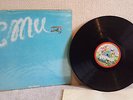
The photos on here are of the ACTUAL item for sale - they are not stock photos, photoshopped or anything else - what you see here is what you will get! Hopefully, you can find any other info that you require via the photos - i take photos of all aspects to show you the record as fully as possible. If you have any further questions then please email me and i will do my best to answer.
Please check my entire collection of rare records!!
Thank you.
price rating