1968: THE SMOKE;NM PSYCH CLASSIC ON TOWER
$
67


$ 67
Sold For
Jul 19, 2005
Sold Date
Jul 12, 2005
Start Date
$ 15
Start price
13
Number Of Bids
USA
Country Of Seller
eBay
Auctioned at
Favourite Auctions
To save auctions to your favourites, please login
If you don't have an account, please register
Description
FOR MY OTHER eBay AUCTIONS, CLICK HERE!
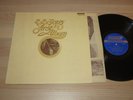
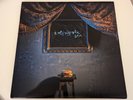
1968: THE SMOKE; NM ORIGINAL MONO PRESSING!!! OUT-OF-PRINT! HYPER RARE! (TOWER)
This is a first edition press of The Smoke's first and only LP from 1968, on Tower records T5912, a psyche classic. Vinyl is NM, cover is VG+ some natural aging. The version of this rare in any edition psych title is the one with the Sidewalk records logo on the cover and the Tower label on the record, but there is one important difference: the Tower version on Mono, supposedly doesn't exist, and that's what this is! Amazing stuff!
The Smoke:
Zeke Lund- bass player
Mal Luker- lead guitarist
Geoff Gill- drums
Mick Rowley- vocals and rhythm guitar
and Phil Peacock
Songs include:
Cowboys And Indians
Looking Thru The Mirror
Self-Analysis
Gold Is The Colour Of Thought
The Hobbit Symphony
The Daisy Intermission
Fogbound
Song Thru Perception
Philosophy
Umbrella
Ritual Gypsy Music Opus 1
October Country
Odyssey
More than any other band, The Smoke epitomized the groove of Swinging London -- which was especially ironic when one considers that, at the height of their success, they sold more records in Europe than England. Their sound fell somewhere between mod and the Beatles -- their instrumental attack was somewhat Who/Small Faces-like, yet they delighted in cheerful vocals and infectious harmonies and melodies. Only slightly popular on their home turf, and unknown in the U.S., their biggest success was in Germany (oddly enough, for such a British-sounding group). The band hailed from York, where bassist Zeke Lund and lead guitarist Mal Luker began playing together in a band called Tony Adams & the Viceroys, whose lineup eventually came to include drummer Geoff Gill. Though the band was successful locally, enjoying a decent fan base with a solid, basic rock & roll sound, built on early-'60s songs, Lund, Luker, and Gill could hear the changes going on around them in music, with the rise of Merseybeat and the blues, R&B, and soul-based music coming out of London. They eventually decided to strike out on their own, playing a more ambitious repertory. They linked up late in 1964 with singer Mick Rowley and rhythm guitarist Phil Peacock, refugees from a band called the Moonshots. The resulting band, the Shots, played a hard brand of R&B, similar to what the Small Faces were doing -- they were taken on as clients by Jack Segal and Alan Brush, a pair of London-based agents (Segal had the know-how, Brush the financing), who fronted them money for rehearsals and equipment, and got them signed up with independent producer and music publisher Monty Babson, who cut four sides with the group, two of which were issued as a single under license to EMI-Columbia. It was at just about that time that events began breaking against the band -- they lost Phil Peacock, who wasn't comfortable with the more complex sounds the rest of the band were interested in generating, and they lost their financing. They gamely decided to carry on as a quartet, the single-guitar configuration lending itself to an edgier sound, and sought new backing. That was how they ended up in a bizarre management situation, when they were offered a seeming rescue by a pair of twin London-based entrepreneurs, Ron and Reg Kray. Renowned today the world over as notorious gangsters, the Kray brothers have been immortalized in books, including Profession of Violence and Reg's own autobiography Born Fighter, and one feature film (The Krays), and were even memorably satirized in one Monty Python sketch ("The Piranha Brothers"). They were among the top crime kingpins in London at the time, and among their other enterprises, they had an interest in a few clubs, and thought at one point that a more direct participation in the entertainment business might prove lucrative. (And yes, it sounds funny to read it, or even to write it, but that is exactly how Morris Levy, an American gangster and club owner, came to go into the record and publishing business in New York, and ended up founding Roulette Records). Thus, they signed the group and became the Shots' managers, but were never able to do anything with them in terms of bookings -- strong-arming clubs for "protection" money was more their specialty than lining up engagements. The band decided to abandon the contract, and when they were served with an injunction, they were left unable to perform. As luck would have it, however, they still had a publishing and recording contract with Babson and access to his studio, and so they took advantage of their ban on performing by writing and making records. Indeed, thanks to the fact that they were barred from performing as a band, the Shots probably had more free time to write and record than any working group in England (even the Beatles were touring in those days, though not for much longer). It was during this period that they also decided to change their name, dropping the Shots -- no one remembered the Moonshots by this time, anyway -- in favor of the Smoke. One of the songs they came up with was "My Friend Jack," a mod-flavored psychedelic number authored by Rowley and Gill. With its march beat and mix of shimmering and crunchy reverb-laden guitar, it was a catchy, striking, aggressively trippy work -- in America, it would've been called psychedelic punk -- that now seems like the most delightfully subversive piece of freakbeat, somewhere midway between the Who's power-chord-drenched teen anthems and the trippy cheerfulness of, say, "Dr. Robert" by the Beatles. Its drug references were so potent that the song had to be rewritten before EMI would touch it; released in February of 1967 -- a period in which "Penny Lane" and "Strawberry Fields Forever" were as challenging or ambitious as the label wanted to be -- the single only made it to number 45 before being banned by the BBC, limiting it to three weeks on the U.K. charts. In Europe, however, the record soared; the group were also fortunate enough to appear on an installment of the German television show Beat Club, alongside Jimi Hendrix, the Who, and Cliff Bennett & the Rebel Rousers. "My Friend Jack" ended up riding the German pop charts to the top, and earned the Smoke a place on a tour with the Small Faces and the Beach Boys. They were now stars, although not in the place they'd expected to be. The single charted high in Switzerland, France, and Austria as well, and suddenly there was demand for a Smoke LP in Germany. They delivered this in the form of It's Smoke Time, comprised of the best of the year-old tracks recorded for Babson in the spring, summer, and fall of 1966. The band actually relocated to Germany, while continuing to release records in England -- their recording contract was sold to Chris Blackwell in late 1967, and he soon took over their management as well; they were free of their obligations to the Krays by then (who had, in any case, been distracted by a gang war and a prosecution). They cut some fine psychedelia and crossed paths with the members of Traffic in the studio during this period. The end came out of a degree of weariness, after five years of work and perhaps the sincere belief that they'd already enjoyed most of the fruits of their brief pop stardom -- they declined to obey a Blackwell summons to return to England for a recording session, and that marked the effective end of their history, at least as a classic British beat/freakbeat outfit. Mick Rowley remained in Germany, where, as the voice and frontman for the band, he had a natural following. Luker, Gill, and Lund did finally return home and went to work for Babson's Morgan Studios, working in various bands within Babson's orbit, including Blue Mink, Orange Bicycle, and Fickle Pickle.
Buy from a seller who puts the item in your hands with big sharp pictures and full details.
All records and CDs included in these auctions are VG+ or better (unless specifically stated), many are NM.
FYI:
MINT is strictly a sealed item.
NM is anything that is not sealed, but perfect.
VG+ will have some scuffs (no scratches).
Records and CDs have been cleaned.
Record covers have been cleaned where available.
With any record, an inner sleeve is ALWAYS a part of the sale.
We are professional used music dealers and collectors. We will never tell you we “do not have a record player so we cannot tell you whether these records play good or not”.
We love vinyl and assume that if you are buying a record it is because you’re looking to play and enjoy an art form which has value now and will accrue value in the future, not simply because the cover “will look nice framed".
CONTACT US TO BUY, SELL OR TRADE!
If you have any questions whatsoever, please email us.
Why let a sniper steal your item from you while you’re elsewhere?? Bid early, to win.
Items without bids may be removed before auction's end!
ALL SALES ARE FINAL.
WINNING BIDDER MUST CONTACT US WITHIN 48 HOURS!
PAYMENT MUST BE RECEIVED WITHIN 7 DAYS, OR YOUR ORDER WILL BE RETURNED TO eBay FOR NON-PAYMENT AND NEGATIVE FEEDBACK WILL BE LEFT.
WE ACCEPT CASH, MONEY ORDER, CASHIER'S CHECK AND PayPal.
SORRY, NO PERSONAL CHECKS.
NEW! AMERICAN BUYERS PAY A FLAT RATE OF $6 S&H FOR PRIORITY MAIL DELIVERY OF UP TO 3 RECORDS (DEPENDING ON THE THICKNESS OF THE COVERS).
CANADA DELIVERY IS $8 FOR AIRMAIL SHIPPING.
OTHER INTERNATIONAL ORDERS PAY $12 FOR AIRMAIL S&H.
WE ALWAYS DISCOUNT SHIPPING CHARGES FOR MULTIPLE AUCTION WINS.
PAYMENT MUST BE IN AMERICAN CURRENCY!
MANY MORE ITEMS AVAILABLE NOW AND/OR SHORTLY.
CHECK OUR OTHER AUCTIONS!
On Jul-13-05 at 18:08:46 PDT, seller added the following information:An error was made in the historical data given for this band. Titles, label & photos are all correct. The following is the proper information. We apologize for any confusion.
Recorded: Hollywood Boulevard Studios, Los Angeles, California, summer 1968, released: November 1968
Personnel:
Michael Lloyd (vocals, keyboards, guitar, bass, horn and string arrangements),
Stan Ayeroff (guitars),
Steve Baim (drums)
In a Beverly Hills mansion built for Gloria Swanson, a boyish man in his late forties, dressed in white shorts, T-shirt and baseball cap sits in a room adorned with the spoils of a musical career crammed with hits. Platinum, gold and silver discs for records he's produced are visible on the walls of a nearby anteroom, a jukebox sits across the hall. But we're here to talk about one of this man's earlier recordings, as a musician, an almost solo project of which he's rightly proud and one that didn't sell a bean. The Smoke Michael Lloyd clearly recalls the day he decided to be in a band. Aged 12, he was surfing in Hawaii in the summer of '62 with schoolfriend and fellow pianist Jimmy Greenspoon. "We were far out from the shore and we heard music coming from the beach. It sounded great. So we paddled in and there were these local guys playing Ventures songs - they were very good - and that started us thinking, We've got to have a band!" Michael took up guitar and thus were born The New Dimensions, a barely pubescent surf combo. When the British invasion turned the local band scene on its ear a couple of years later, Lloyd and his chums became The Alley Kats and then The Rogues. Lloyd's musical obsession meant he wasn't giving school his full attention, so, in the autumn of 1964, he left Beverly Hills High School and started at the more relaxed Hollywood Professional School. When he deigned to attend classes, he met the Harris brothers, Shaun and Danny, sons of celebrated American classical composer Ray Harris. The trio quickly recognised their common enthusiasm for pop, and, inspired by seeing Jeff Beck and The Yardbirds at a Hollywood party, began recording songs in Michael's bedroom. The party's host, an older guy named Bob Markley, offered to fund recordings in a 2-track studio. In return he asked to join the band as a tambourine player, because it would help him attract girls. Their rudimentary recordings, mostly cover versions, were released locally on an album (recently reissued) as The West Coast Pop Art Experimental Band Volume 1. Lloyd left and the group subsequently signed to Reprise, creating three excellent albums that also deserve to be more widely heard. (They later reunited with Lloyd for an album entitled Bob Markley - A Group... It's a long story.) In the meantime, Michael was introduced to young executive Mike Curb by ubiquitous LA scenester and producer Kim Fowley. Curb handed the precocious producer a number of projects for Tower under names such as The Laughing Wind and The Rubber Band. Epic Records then offered Lloyd the chance to produce a folk group who came to be called October Country. October Country One afternoon in late 1967 the band assembled at Columbia Records Studios on Sunset. "That was my first time in a real studio. It was an 8-track and one of those union places where you couldn't touch a thing. The first thing that happened was that the drummer was so nervous he threw up and ran out! So I ended up playing the drums and then, after everyone left, I replaced all the instruments, overdubbed the strings and sang with the girl in the group." Although it flopped, the October Country album gave Lloyd a taste of what he could achieve with such facilities at his disposal. 'I promoted the fact that I could do it all. Mike Curb had this great studio called Hollywood Boulevard and he let me spend about six months there making an album. It was just me and those two guys. No engineers, no anything.' Thus was born The Smoke. Michael song lead vocals, played bass and keyboards while "those two guys" were Stan Ayeroff, who co-wrote three of the songs and played guitar, and Steve Baim who played drums. (Jimmy Greenspoon, by this time part of Three Dog Night, appeared in the shots on the sleeve although he didn't play on it.) Lloyd poured everything he'd learnt into the album. It opens with the organ-driven Cowboys And Indians, a song with parallels to Brian Wilson's Heroes And Villains. 'I met Bruce Johnston and he took me to a couple of sessions while Brian was recording Good Vibrations," recalls Lloyd. "it was a great experience. Obviously The Beatles and The Beach Boys were a prime motivation. I think I've always been trying to catch up with them." There are overt Beatles references throughout the record, the chorus of Lucy In The Sky With Diamonds is even quoted in the fade to Fogbound. The song's influence is also clear in Gold Is The Colour Of Thought. Elsewhere, the lush arrangements feature Pepperesque bursts of trumpet, strings, harpsichord and lashings of sweet singing. Including all the foregoing, October Country, the song, makes a spirited reappearance and there are further great pop moments in Umbrella and Odyssey. As a final nod to Lloyd's heroes, the album is dedicated to Stuart Sutcliffe. As records by Beatle-obsessed youths of the '60s go, it all remains remarkably fresh, and should certainly delight fans of post-Pet Sounds psych-pop, say Millennium or Sagittarius. Perhaps only Stan's tricksy guitar shop-window, The Hobbit Symphony breaks the mood. Despite encouragement from Tower and a wide release, the album flopped. "I don't know if anybody really knew what to make of it," sighs Lloyd. "We never went on to play live as The Smoke as I'd planned.' Luckily, Lloyd had plenty of youthful confidence in reserve and didn't let failure faze him. "By the time I was 19, I'd already recorded over 10 albums with different bands and different labels, all unsuccessful! But after that my life changed a great deal." At the tender age of 20, Lloyd was appointed vice-president of MGM by Mike Curb and his first production job, Lou Rawls's Natural Man, won a Grammy. After that he turned out hits for teen sensations like The Osmonds and Shaun Cassidy, later producing Belinda Carlisle, Barry Manilow and, most lucratively, the multi-million selling soundtrack to Dirty Dancing. He worked on Pat Boone's recent, bizarre and surprisingly controversial album of orchestrated versions of heavy metal classics, and is in the studio with the Harris brothers hoping to resurrect the West Coast Pop Art Experimental Band. But of all the things he's recorded it's clear Michael Lloyd's very fond of his forgotten classic created almost 30 years ago and is delighted that it's still finding fans. "It was great fun and gave me the opportunity to learn a little something. I'm very grateful for that."
price rating