ART BLAKEY AND THE JAZZ MESSENGERS _ The Big Beat Vinyl LP MONO
£
45
$
60


Favourite Auctions
To save auctions to your favourites, please login
If you don't have an account, please register
Description
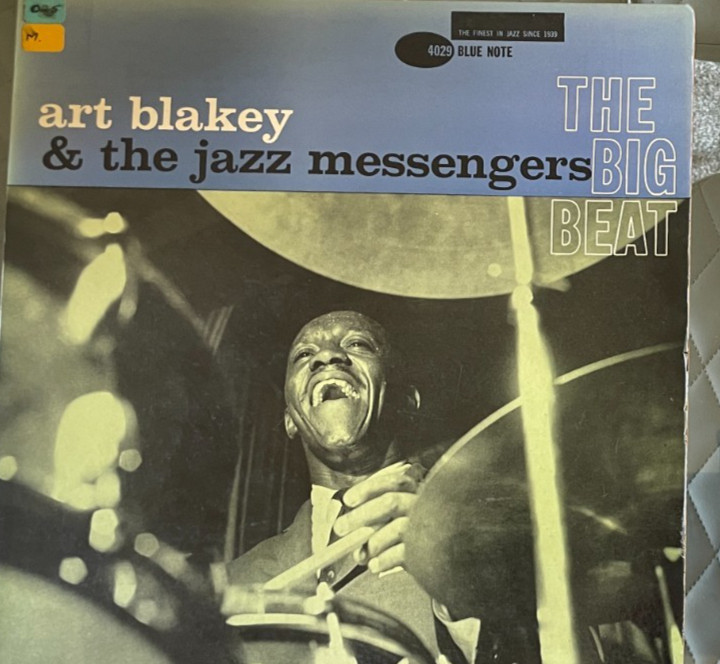
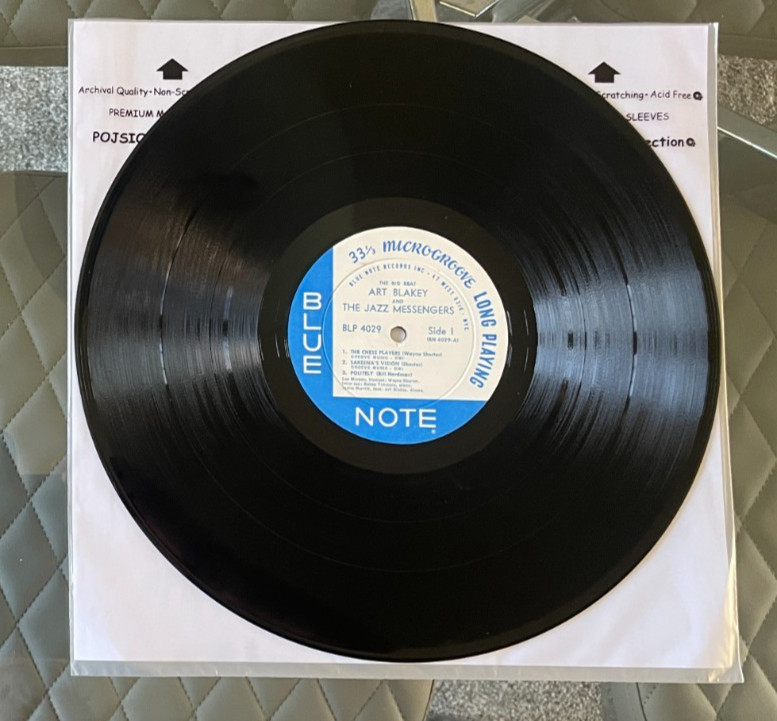
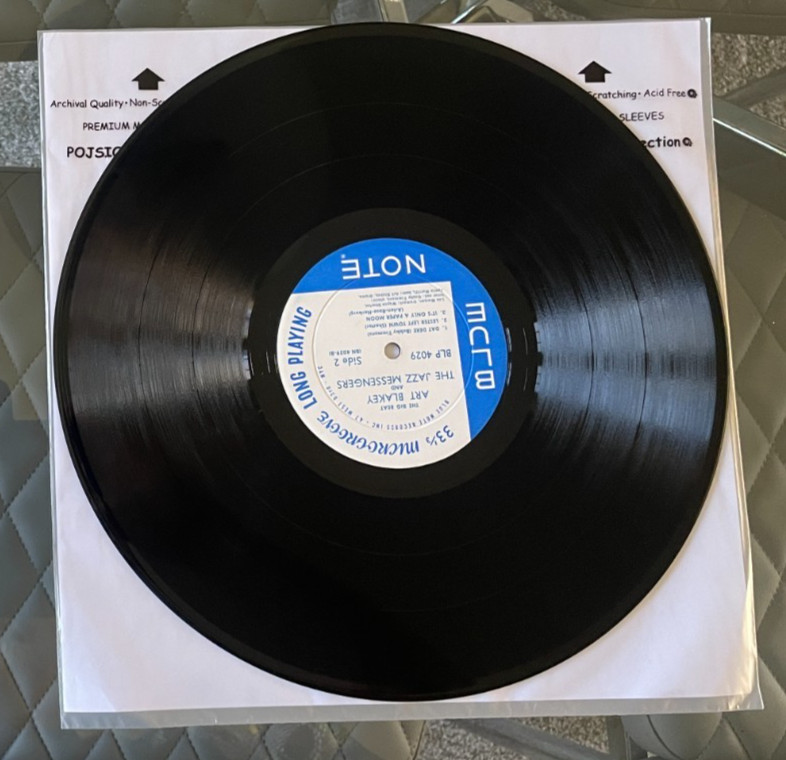
Label:Blue Note – BLP 4029
Format:Vinyl, LP, Album, Mono, DG side 1
Country:US
Released:1961
Genre:Jazz
Style:Bop
-
Matrix / Runout (Runout side A): RVG [Stamped] BN-LP-4029 A [Hand-etched]
-
Matrix / Runout (Runout side B): RVG [Stamped] BN-LP-4029 B [Hand-etched]
Although it's often associated with the band's extraordinary run of albums in 1961, The Big Beat was actually recorded and released in 1960 on Blue Note Records. Because it sits between Moanin' (1958) and A Night in Tunisia (1961), it's sometimes mistakenly referred to as a 1961 release.
Why The Big Beat matters
The Big Beat captures one of the definitive lineups of Art Blakey's Jazz Messengers:
Lee Morgan – trumpet
Wayne Shorter – tenor saxophone
Bobby Timmons – piano
Jymie Merritt – bass
Art Blakey – drums
This was the first Blue Note album to feature Wayne Shorter as a Jazz Messenger. His arrival transformed the band's sound, bringing a more harmonically adventurous and compositionally sophisticated approach while retaining the earthy hard-bop drive that Blakey demanded.
The music
The LP consists of six tracks:
The Chess Players (Wayne Shorter)
Sakeena's Vision (Wayne Shorter)
Politely (Benny Golson/Walter Davis tradition—credited to Bill Hardman)
Dat Dere (Bobby Timmons)
Lester Left Town (Wayne Shorter)
It's Only a Paper Moon (standard)
The balance of originals and one standard showcases exactly what made the Jazz Messengers unique: memorable themes, fiery improvisation, and impeccable ensemble playing.
Highlights
"Dat Dere"
This became the album's signature tune. Written by Bobby Timmons, it's steeped in gospel and blues, following in the tradition of his earlier hit "Moanin'." The melody is catchy enough to sound almost like a folk song, yet the band stretches it into an exciting hard-bop performance. It later became a jazz standard with lyrics by Oscar Brown Jr.
Wayne Shorter's compositions
Three of the six tracks are Shorter originals:
The Chess Players is rhythmically intricate and harmonically richer than much of the era's hard bop.
Sakeena's Vision, dedicated to Blakey's daughter, is lyrical and atmospheric.
Lester Left Town pays tribute to Lester Young while pointing toward the more modern compositional style Shorter would later perfect.
These pieces foreshadow the music Shorter would soon create with Miles Davis and later with Weather Report.
The recording
The album was recorded on March 6, 1960, at Van Gelder Studio with legendary engineer Rudy Van Gelder. Producer Alfred Lion captured the group with the warm, punchy sound that became synonymous with Blue Note's golden era.
Why collectors love it
Many jazz fans consider The Big Beat one of the essential hard-bop albums because it represents the Jazz Messengers at a creative peak:
explosive yet disciplined drumming from Blakey,
Lee Morgan's brilliant, blues-infused trumpet,
Bobby Timmons' soulful piano,
Jymie Merritt's rock-solid bass,
and the emergence of Wayne Shorter as a major composer.
It also marks the beginning of an extraordinary sequence of albums—including A Night in Tunisia, Like Someone in Love, The Freedom Rider, and Roots & Herbs—that many regard as the finest period in the Jazz Messengers' history.
For many listeners, The Big Beat is the perfect bridge between the accessible, blues-driven hard bop of the late 1950s and the more exploratory jazz that would define the 1960s. It swings hard, but beneath the
price rating