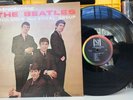
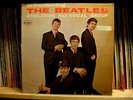
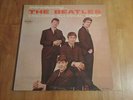
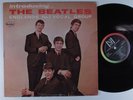
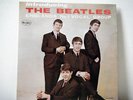
BEATLES INTRODUCING... THE BEATLES ORIG '64 MONO LP VERSION 2 GENUINE RARE
$
21

Favourite Auctions
To save auctions to your favourites, please login
If you don't have an account, please register
Description
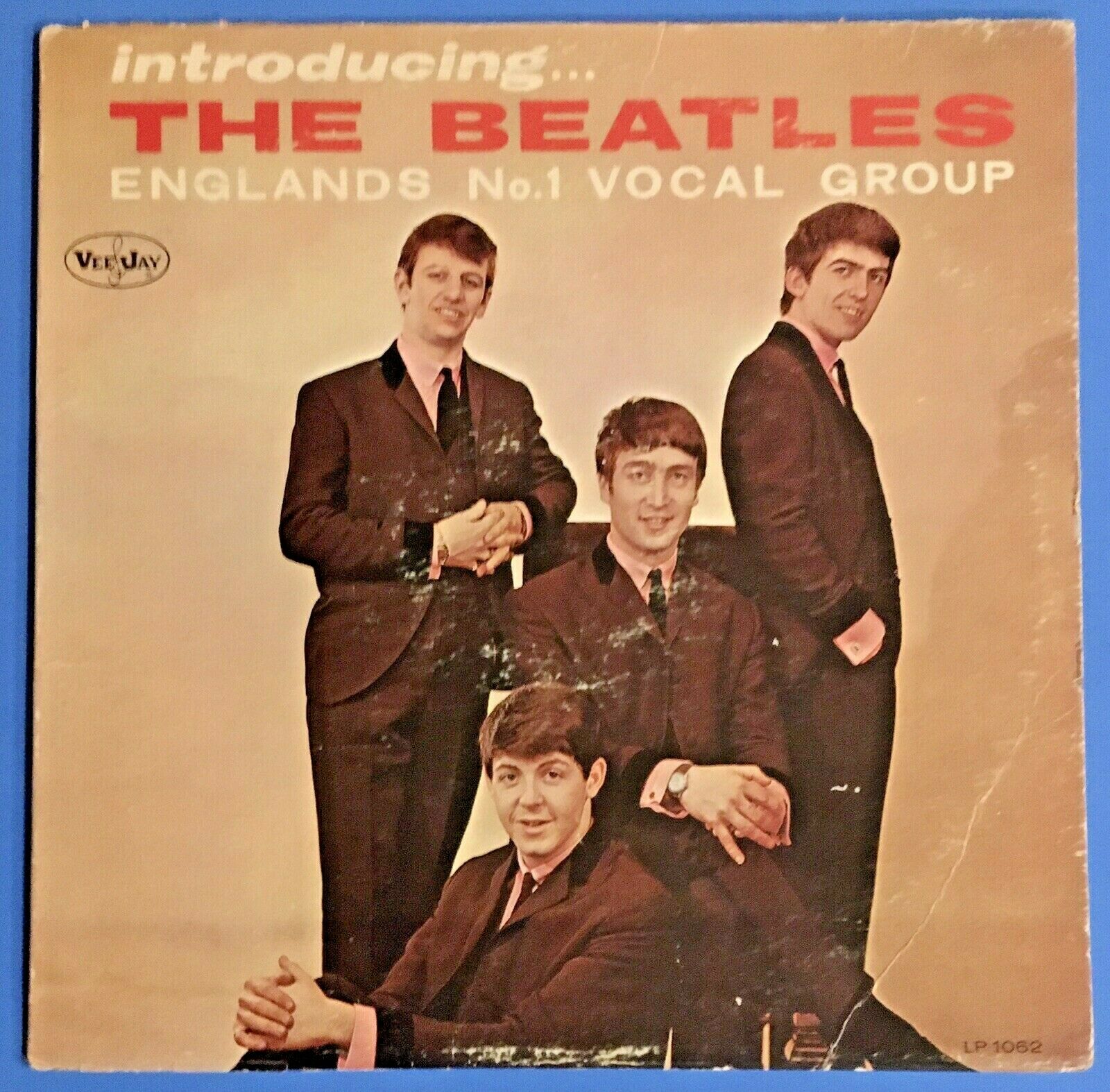
According to rarebeatles.com this is a genuine 1964 MONO cover Version 2 from VeeJay records with a comma after the first Please in 'Please, Please Me'
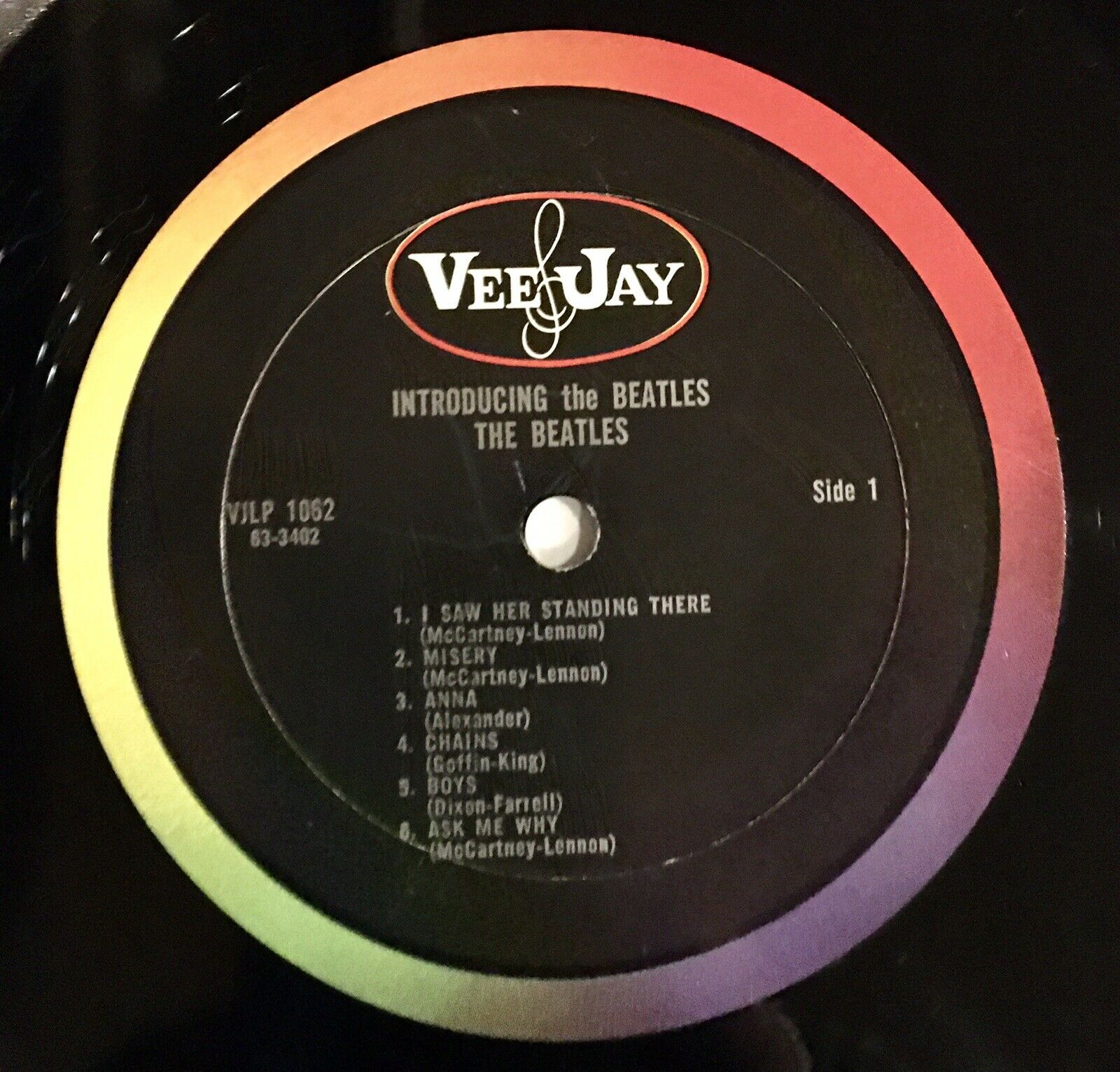
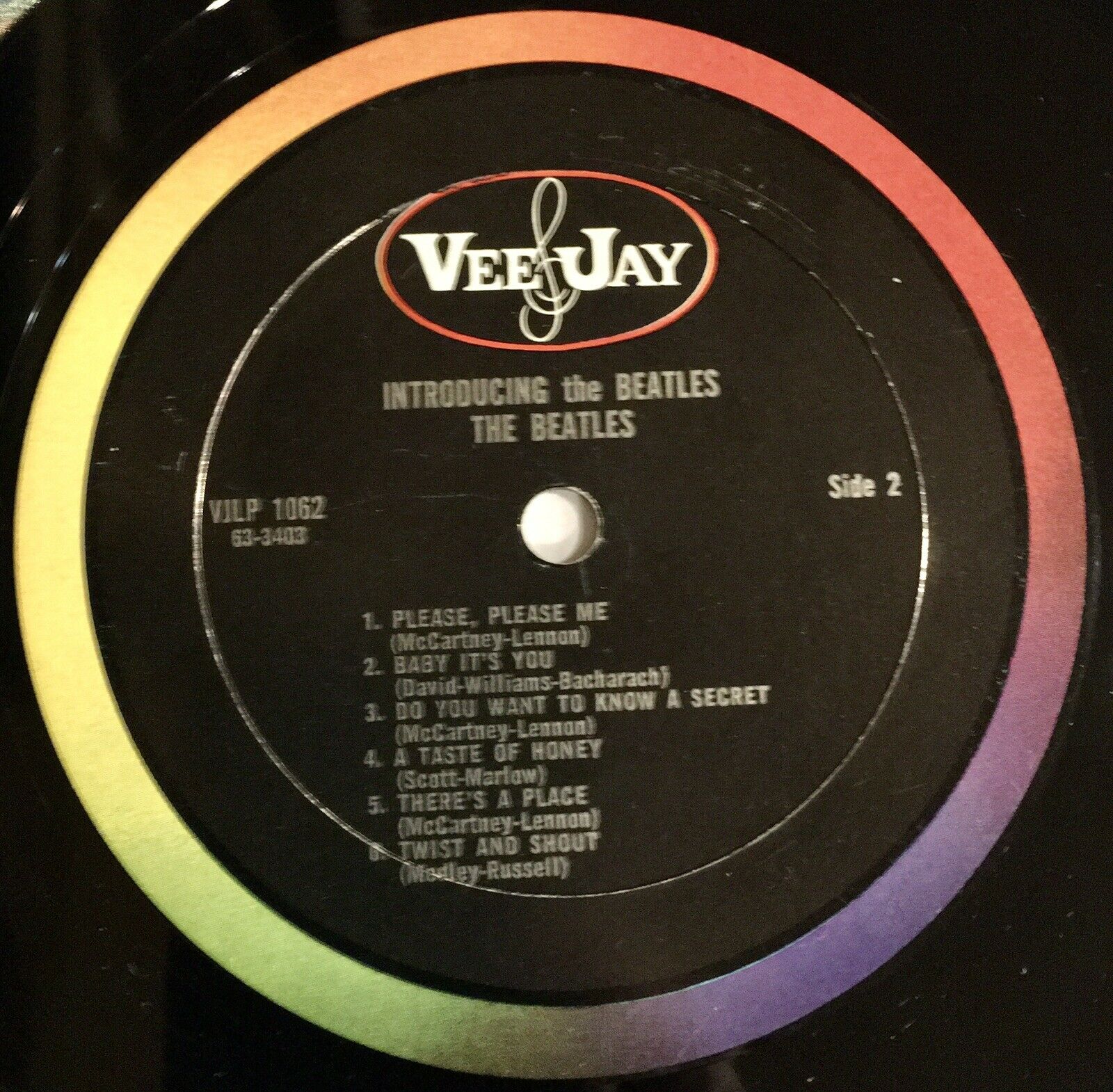
The disc is the RARE Oval Colorband label with left justified titles with no long-playing or microgroove.
Matrix has correct runout
- Matrix / Runout: (Side 1 (deadwax)): 63-3402
- Matrix / Runout: (Side 2 (deadwax)): 63-3403
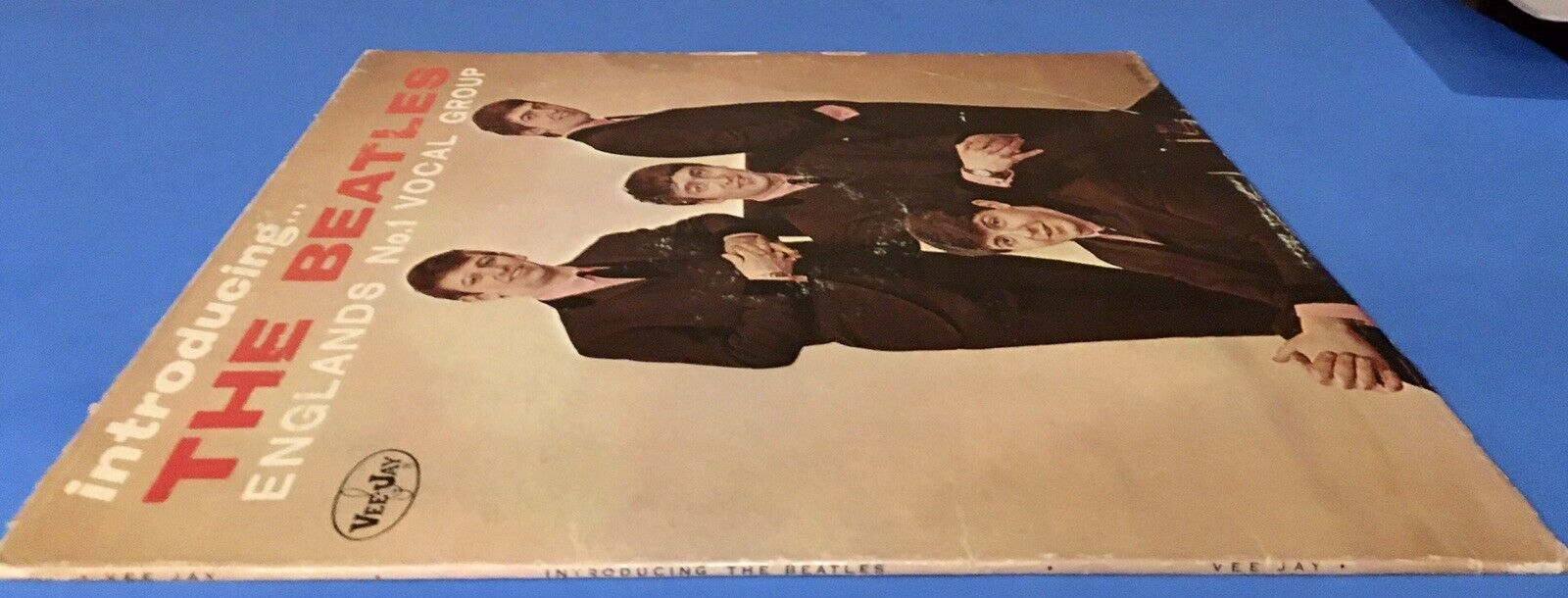
Sleeve: VG- Corner and edge wear. Some rubbing on the front cover. Some chipping along top and bottom spine. Crease on left bottom corner.
Vinyl: G+ visually, but plays VG. Still retains original gloss but has numerous hairlines and a few deeper light scratches.
Still a very rare and collectible piece of Beatles History!
Please view my other listings here on ebay.
I gladly combine postage for multiple purchases. I PROMISE TO DO EVERYTHING I POSSIBLY CAN TO INSURE YOU A PLEASANT & STRESS FREE TRANSACTION..! THANKS FOR LOOKING!!!
Album History and Counterfeit detection
Perhaps the most distinctive component in the history of Beatles records is the album Introducing The Beatles (Vee-Jay VJLP/SR-1062). This eccentric LP is distinctive on many fronts, not the least of which is that its dozen tracks have proliferated into over two dozen subsequent albums and singles.
This early 1964 product of Chicago's Vee-Jay label competed heartily in the marketplace, right along with the big boys over at Capitol. As a small, independent company with a big hit record on their hands, Vee-Jay and their vendors labored around the clock to meet the enormous demand for this LP. Although a huge seller, its sales life was cut short by litigation with Capitol. Unable to endure costly legal battles, Vee-Jay reached a settlement with Capitol under which its rights to all of its Beatles recordings were turned over to Capitol on October 15, 1964.
Not surprisingly, most of the world's rare and valuable records, including Introducing the Beatles, have been counterfeited -numerous times and in a myriad of variations. It is probably the most counterfeited record in history, and deserving of consideration for a gold or platinum award in the category: Rock Album Most Frequently Faked.
With so many different bogus copies floating around, perhaps we should begin by giving a precise description of the original album. Knowing how to spot an original is one of the best weapons against getting stuck with a pretender.
The first issue covers were manufactured in Chicago by the offset printing firm Coburn & Company just after July 23rd 1963. This company printed up the first 6000 front slicks and back liner notes. These 6000 are the only cover slicks that say "Printed in U.S.A" on the front cover, vertically from the bottom left corner along the spine. Later covers were printed by Ivy Hill Lithograph Co. at their New York and California locations. All original covers have a glossy coated paper stock, both front and back. If either the front or the back cover is flat (lacking gloss) it's a counterfeit.
Although color shades do vary on originals, the printing of the photo and text is always very sharp and clear. Any with poor quality printing are probably counterfeits. All legitimate covers are made using varying shades of gray or tan cardboard, with the printed front and back slicks bonded on them. All original covers we have seen have a 1/4" overlap of cardboard at the top and bottom of the inside cover. This check can only be made by viewing the inside of the cover at the top and at the bottom. On most fakes, these overlaps are either much larger than 1/4", or there is no flap at all. The California plant made a small quantity of original monaural covers that have no flap at all, but they still have the glossy back cover slick as well as high quality printing. Also, these come with an authentic disc inside, yet another way to help determine originality.
A few counterfeits do have covers with high quality printing, but their overall construction and/or disc quality are noticeably imperfect.
While it is very helpful to have a known original on hand for comparison, few folks have that luxury. When this is not possible, use the following checklist to make a determination regarding authenticity.
Some of the more common characteristics found on COUNTERFEIT COVERS:
- Covers with a brown border around the front cover photo are fakes.
- Covers with a bright yellow tint and the word "STEREO" printed in black at the upper left are fakes.
- Covers without George Harrison's shadow-visible to his right of where he stands, near the edge are fakes.
- Covers with red, blue, and yellow dots, unmistakable under the top of the back cover, are fakes. The dots are used by the printers during the printing process. On originals, the dots are in a different area and are not normally visible. (This fake is of particular importance due to the high quality of the front cover photo. For that reason, this cover has fooled many a collector. Look for the dots! Fake covers are almost always accompanied by a fake disc.)
- Covers for the stereo issue that list Love Me Do and P. S. I Love You, among the two columns of tracks on the back, are almost always fakes. Only a couple of authentic copies of these versions are known to exist.
- If either the front or the back cover is flat (lacking gloss) it's is a counterfeit.
Some of the more common characteristics found on COUNTERFEIT DISCS:
- Any labels with flat textured rainbow/colorband labels are fakes.
- Labels that have "THE BEATLES" and "INTRODUCING The BEATLES" separated by the center hole are fakes.
- If the width of the vinyl trail-off -the gap between the end of the last track and the edge of the label is greater than one inch, you have a fake.
- Any copy with black labels that do not have the rainbow colorband, that are printed on glossy paper stock, are fakes.
- Copies with rainbow/colorband labels that have faint print and/or weak color brightness and a lack of clarity are fakes.
Some of the more common characteristics found on ORIGINAL COVERS:
- Covers-front and back-must have slicks that are either glossy or semi-glossy.
- Printing on covers must be of high quality and professional looking.
- Back cover lists contents in two columns
- Stereo copies must meet one of the following conditions: 1. Back cover pictures 25 color photos of other Vee-Jay albums. This copy is commonly known as the "Ad Back" cover. 2. Back cover is totally blank; a completely white slick with no print whatsoever. 3. Back cover lists content in two columns, almost always containing Please Please Me and Ask Me Why. Only a couple of original copies have been verified listing Love Me Do / P.S. I Love You.
Some of the more common characteristics found on ORIGINAL DISCS:
- Labels have "THE BEATLES" and the title "INTRODUCING THE BEATLES" above the center hole.
- Only gloss or semi-gloss rainbow/colorband labels are used on originals.
- All original labels have bright, sharp silver print.
- The vinyl trail-off -the gap between the end of the last track and the edge of the label usually measures from 7/8" to 1" wide, but never greater.
- The rainbow/colorband that circles the perimeter of an original label is of high resolution, with smooth, gradual changes in color.
- The vinyl trail-off area on over 90% of all originals has one or more of the following mechanical Stampings: 1. The term "AudioMatrix." 2. The letters "MR" inside of a circle. 3. The letters "APP" in italics. Among originals, only those made in Santa Monica lack machine Stampings. Regardless, these still have the aforementioned bright silver print and glossy labels. To date, we have never seen a counterfeit copy with machine stamping in the trail-off area.
- We have never found a counterfeit with the word "STEREO" printed on the label.
- Any copy with "STEREO" printed on the label is more than likely an original.
- All originals with black labels that do not have the rainbow colorband are printed on a flat-not glossy-paper stock.
- Any item under scrutiny must measure up in all the above areas of originality testing. If either the cover, disc or label fails even one criterion of the test, then it is likely from that secluded, middle Eastern country: Itsa Faykuh!
price rating