DEUTSCHE 12´ DLP- PHILIPS A 00226 / 00227 L von " GUSTAV MAHLER ", bitte lesen
  €   28
  $   33


€ 28 Sold For
Jan 4, 2015 Sold Date
Dec 28, 2014 Start Date
€   20 Start price
3   Number Of Bids
  Germany Country Of Seller
eBay Auctioned at
 
save auction  

Description

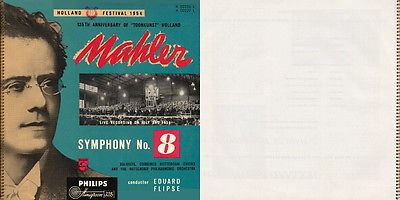
  • Angebot : " Eine " Original DEUTSCHE 12´ DLP - PHILIPS A 00226 / 00227 L - MONO, mit der " SYMPHONY No. 8 - G. MAHLER " als " LIVE RECORDING ON JULY 3 RD 1954 "
  • vom ( HOLLAND - FESTIVAL 1954 / 125 TH ANNIVERSARY OF " TOONKUNST " HOLLAND ), gespielt von dem " ROTTERDAM PHILHARMONIC ORCHESTRA ", unter Leitung
  • von " EDUARD FLIPSE ", sowie internationale Spitzen - Interpreten als Solisten und ein kombinierter " ROTTERDAMER CHOR ", im mehrseitigen sehr informativen bebilderten
  • Klapp - Cover von 1954 !
  • -----------------------------------------------------------------------------------------------------------------------------------------------------------------------------------------------------------------------------------------------------------------------------------
  • Zustand : Original 12´ DLP und Klapp - Cover sehr gut erhalten ( M- / VG+ )
  • Mängel - Platte : Leichte feine Oberflächenwischer - Label sind sauber ( Empfehlung für Mintsammler, was die LP´s betrifft )
  • Mängel - Cover : Normale Alterserscheinungen, leichtes Ringwear, die Ecken sind durch das Alter etwas
  • abgestoßen, ansonsten weder beschrieben noch gerissen ( Original mit Plastic - Spirale gebundenes Klapp - Cover ).
  • LP - Bezeichnung : " SYMPHONY No. 8 - G. MAHLER - Holland Festival 1954 " !
  • Matriz - Nummer : LP 1 - A. Seite : AA 00226 - I L - 3 ( gestanzt ) / B. Seite : AA 00226 - 2 L - 14 ( gestanzt )
  • LP 2 - A. Seite : AA 00227 - I L - 7 ( gestanzt ) / B. Seite : AA 00227 - 2 L - 15 ( gestanzt ) - ( Deutsche Pressung )
  • Genre : Klassik ( Konzerte mit Chor )
  • Abspielgeschwindigkeit : 33 U/pM
  • Angebotsbild : Zeigt original Scans des Klapp - Covers außen und innen sowie der Label.
  • Beschreibung : Hier eine interessante original deutsche 12´ Philips Doppel - LP, mit einer Live - Aufnahme von 1954 der
  • " Symphony No. 8 " von " Gustav Mahler " , gespielt von dem " Rotterdamer Phiharmonic Orchestra ", unter der Leitung
  • von " Eduard Flipse ", sowie internationalen Spitzen - Gesangssolisten und ein kombinierter " Rotterdamer Chor ", anläßlich
  • des 125 TH Anniversary of " Toonkunst " Holland vom 3 July 1954. Auch das sehr informative und bebilderte Klapp - Cover,
  • macht dieses Angebot zu einem Erlebnis, nicht nur akustisch sondern auch optisch. Das Cover ist in englischer und teilweise
  • deutscher Sprache verfasst und die Außenbeschriftung der Label in deutsch sodaß man, da es nicht auf dem Klapp - Cover
  • vermerkt ist, von einer deutschen Pressung ausgehen kann. Da meines Wissens, wesentlich mehr englische und holländische
  • Pressungen auf dem Markt sind, ist diese deutsche Ausgabe als doch sehr selten einzustufen, da das Klang - Spektrum bei
  • den deutschen Pressungen um einiges besser ist, als bei den europäischen Ausgaben. Da es sehr viele Anhänger, dieser
  • doch sehr anspruchsvollen hochwertigen Live - Musik gibt, dürfte dieses Angebot seine Wirkung nicht verfehlen und bei
  • einem begeisterten Klassik - Anhänger sicherlich sehr gut ankommen !
  • ----------------------------------------------------------------------------------------------------------------------------------------------------------------------------------------------------------------------------
  • 12´ Doppel - LP " G. Mahler - Symphony No. 8 " Live Recording on July Holland Festival 1954 !
  • LP 1 - A. Seite :
  • 1. Satz : Hymnus : Veni, Creator Spiritus
  • LP 1 - B. Seite :
  • 2. Satz : Final Scene from Goethe's " Faust " ( Schluss )
  • LP 2 - A. Seite :
  • 2. Satz : Final Scene from Goethe's " Faust " ( Anfang )
  • LP 2 - B. Seite :
  • 2. Satz : Final Scene from Goethe's " Faust " ( Fortsetzung )
  • Orchester : " ROTTERDAM PHILHARMONIC ORCHESTRA " in Begleitung eines kombinierten " ROTTERDAMER CHOR´S "
  • Dirigent : " EDUARD FLIPSE "
  • Solisten :
  • Annelies Kupper - Soprano I and Magna Peccatrix
  • Hilde Zadek - Soprano and Una Poenitentium
  • Corry Bijster - Soprano and Mater Gloriosa
  • Annie Hermes - Contr'alto l and Mulier Samaritana
  • Lore Fischer - Contr'alto II and Maria Aegyptiaca
  • Annie Woud - Contr'alto
  • Lorenz Fehenberger - Tenor and Doctor Marianus
  • Frans Vroons - Tenor
  • Herman Schey - Bariton and Pater Ecstaticus
  • Gottlob Frick - Bariton and Pater Profundus
  • David Hollestelle - Bariton
  • ----------------------------------------------------------------------------------------------------------------------------------------------------------------------------------------------------------------------------
  • Text : Im Klapp - Cover Innenseiten in Englisch !
  • TECHNICAL ASPECTS OF THIS MUSICAL MILESTONE
  • A grandiose Performance of Gustav Mahler's Eighth Symphony was given in Rotterdam on the 3rd July 1954. The Accasion was a Gala Concert
  • in Holland's Major Port City, famous for Its magnificent and speedy recovery from the terrible destruction which brought If to the verge of Disaster
  • in the Second World War, in honour of the 125th Anniversary of the founding of the Royal Netherlands Music Society. Rotterdam Music - Lovers,
  • headed by Eduard Flipse, the Conductor of the Rotterdam Philharmonie Orchestra, decided to perpetuate the Event by adding a Grand - Scale Per -
  • formance of Mahler's monumental Work to the Programme - an inspiring Work which, due to the immense Scale on which it was conceived, is heard
  • but seldom. It was to be a Performance with hundreds of Singers - 900 Members of Choirs from Rotterdam and surrounding districts co - operated In
  • its realization - while the Rotterdam Philharmonie Orchestra too, was augmented by an additional 150 Musicians, the majority of whom were lent for
  • the occasion by the Brabant Philharmonie Orchestra of 's - Hertogenbosch. In Co - Operation with the Municipal Authorities and Services, the Music
  • Society and the Management of the Rotterdam Philharmonie Orchestra, a large exhibition Hall, the " Ahoy " Hall, was promoted to Concert - Hall. Alt -
  • hough this Hall was capable of accommodating thousands of Mahler admirers, it scarcely needs stressing that innumerable technical difficulties re -
  • mained to be solved. One of these Problems involved the Construction of a Platform for the Soloists, Choirs and Orchestra, a total therefore, of some
  • 1100 Persons. An Organ also had to be installed at the rear of this Platform, and a well - known firm of Organ - Makers, who had just completed a
  • large Church Organ, indicated their Wlllingness to lend the new Instrument for the occasion, and were even kind enough to incorporate a Number of
  • additional facilities, desired by the Conductor and Organist, at their own expense. Even though the Municipality of Rotterdam offered to stand as Gua -
  • rantor for any possible financial losses resulting from this unique, large - Scale Performance, everything possible was done to ensure that the occasion
  • proved entirely successful financially as well musically. The Maximum Number of Seats were provided and this, in turn, meant bullding tribunals and rai -
  • sed platforms. Special Offices, including a number which concentrared their activities on Publicity and the sale of Tickets at Home and abroad, together
  • with special technical Services, were set up. Special Arrangemenls were also necessary for transporting the thousands of Music - Lovers to and from
  • the Concert. Rehearsal Programmes were drawn up several Months ' in advance and carried out in various Places scattered throughout the City. During
  • the hundreds of Hours spent in rehearsal, Eduard Flipse demanded the utmost from all those taking Part. The Performance itself proved a veritable Triumph
  • for him, the Soloists, the Choirs and the Orchestra. Mahler enthusiasts from far and near came to Rotterdam determined not to miss this unique Event. Mu -
  • sic Critics from America, England, France, Belgium and countless other Countries journied to Hollond to atiend the Concert. The Hall Holding 8500 Persons,
  • was filled to capacity. Two general Rehearsals, open to the Public, were held on the Ist and 2nd July, which were ottended by 7000 and 8500 visitors re -
  • spectively. Altogether, a total of 23000 Music - Lovers listened to the Rotterdam Performance of Mahler's " Eighth '' the " Symphony, of Thousand " awe -
  • inspiring pilgrimage to an improvized Music Centre, which also superb from an Acoustic Point of view. When the Plans for this great Cultural manifestation
  • became known, Philips immediafely offered to Co - Operate in Recording the Performance and making it available commercially to Music - Lovers all over
  • the World as a unique " Live Recording ". This was done. During the extremely complicated Arrangements which this involved, Philips enjoyed the warmest
  • and unstinted Co - Operation of the Organizers. Our recording Taff was accommodated for Days on end in special technical accommodation placed and their
  • disposal, and everything was done to ensure that recording conditions were' s favourable as possible. In order to eliminate unnecessary noise, for example,
  • certain municipal tram Services with Stops near the " Ahoy " Hall were diverted elsewhere during the performance. A Sound - absorbing floor - covering was
  • laid in the vicinity of our Microphones. Lined receptacles were fitted to the Music stands of the Violinists and Viola - Players in the Orchestra. These receptac -
  • les were provided to hold their mutes, as the latter's replacement on the Stands under normal Conditions invariably created a certain amount of noise in the vi -
  • cinity of the " all - hearing " Microphones. The Concert Programme Sheets were printed on special Paper in order to eliminate all possible rustling noises, while
  • note in these sheets also appealed to the Public to bear the Microphones in mind. These precautionary measures were even carried to such an extent that the
  • chirping sparrows, which had their nests there, were chased away. Those entrusted with this strange task did not succeed in tracking down oll these Indus -
  • trious and cheerful Birds, although they did not disturb the Recording. The Result of the Recording of this Major International Cultural Event will be found in this
  • Album. Philips is justifiably proud at the thought that many more thousands of People will now be able to enjoy this Performance, prepared as it was with such
  • great care and devotion, under the distinguished baton of Eduard Flipse. It is a magnificent rendering of one of the most beautiful Works in the whole Literature
  • of Music.
  • GUSTAV MAHLER'S - EIGHTH SYMPHONY !
  • Mahler and Holland - two Terms witch, quite justifiably, are frequently associated in the Music World. Nowhere have the Products of this Austrian Master's Ge -
  • nius been received with such affection, such appreciation and such enthusiasm, as in Holland. This unstinted admiration for Mahler has its Roots in the Amster -
  • dam Concertgebouw, where Gustav Mahler found an unusually staunch Advocate in Willern Mengelberg during the first four Decades of this Century, and if was
  • due to his efforts that the Composer's creative Powers and art became Familiar in wide circles among the Dutch Music - Loving Public, an appreciation which even -
  • tually spread far beyond the frontiers of that Country. It was fully in occordance with the Tradition of Music Life in Holland, therefore, when the Eighth Symphony,
  • Mahler's most imposing and greatest Work, formed an undisputed climax to the 1954 Holland Festival. Eduard Flipse has proved himself to be a predestined Cham -
  • pion of this great Tradition, animating and inspiring a Vocal - Instrumental Ensemble numbering more than a thousand Performers to a hymnal Profession of faith,
  • reyealing the full significance of the Words of the young Alfrede Casella in 1910 : " Wir grüssen Gustav Mahler als den einzigen Musiker, der die wahre Tragweite
  • der Ode an die Freude erfasst hat." It is the Spirit born of Beethoven's Ninth Symphony which, reaching an absolute dynamic zenith, assumes , a tangible Form for
  • the last Time. Music as a profession of faith and Music in the service of the Cult - like Character of the Concert Hall, as this has developed since Beethoven in the
  • 19th Century. Mahler conceived this Work in a feverish creative urge in the Summer Months of 1906, so that in August of that Year he was able to write : ''. . . Ich
  • habe eben meine Achte vollendet. - Es ist das Grösste was ich bis jetzt gemacht habe. Und so eigenartig in Inhalt und Form, dass sich darüber gar nicht schreiben
  • lässt. Denken Sie sich, dass das Universum zu öffnen und zu klingen beginnt. Es sind nicht mehr menschliche Stimmen, sondern Planeten und Sonnen, welche krei -
  • sen..." The Master realized this Symphony's significance in his oeuvre while still under the immediate Impression of its completion. When he described it as his " gre -
  • atest Work fo Date ", his evaluation referred to both the Volume of Material arrayed before us here, as well as to his last brilliant inspiration based on the wealth of
  • experience and cognition of his previous Works. From the Point of view of Style, the Eighth Symphony is based on the components of two Periods in the develop -
  • ment of Mahler's Style, which are clearly and contrasfingly defined in both the previous Trilogies ( II - IV and V - VII ). The strictly Thematic, polyphonous scope of
  • the Instrumental Symphonies ( V - VII ) is transferred into the much greater tonal Dimensions of an enormous Vocal Instrurnental Ensemble, consisting of a greatly
  • augmented and colourful Orchestra, a mixed double Choir, a Boys' Choir and eight Solo Voices. The Text, therefore, is not more or less separate, as in the previous
  • Symphonies, Iniroduced in pari in independent Vocal Episodes, but integrated as it were in the Symphonie whole. Whereas the Poet only has his say at the climaxes
  • of the Musical development in the Second, Third and Fourth Symphonies, his Words being used io stress various aspects of the Composer's train of thought, poetry
  • is incorporated integrally in the Music in the Eighth down to the very last Detail. In Addition, the Eighth also reveals a new deviation from fhe formal lay - out inherent
  • in the Third Symphony, the biparfition characterizing the latter Work being adopted again and adhered to strictly throughout. The amalgamation of the Hymn '' Veni
  • creator Spiritus ", datina. from the early Middle Ages, on which the first pari is based, with a conclusion derived from the second Part of Goethe's ' Faust '', has for -
  • med a of lengthy Discussion. Mahler's Music itself provides the most convincing explanation of this Combination. Listening to this Work, one should look upon the
  • Goethe Verses, not in connection with his " Faust " Drama, but as an independent poem, in which the Idea of love carries us off like a natural, purifying and exalting
  • Power into a higher World. The first pari is one of the most perfectly rounded off and at the same Time, one of the most highly - strung Works which Mahler ever
  • wrote. The main motif and Themes are closely interwoven with each other in Artistic but thoroughly natural counterpoint from the very beginning onwards. After
  • the first invocation of the creative Spirit, heard in the double Choir a Cappella : the Bassoons answer imrnediately with an Inversion of the Main Theme : An Inversion
  • which is allocated an important Role in the subsequent development of the whole movement. This is followed closely by a short Lyrical subsidiary Theme, heard in
  • the Violins, while the first Choir restates the main Theme in the dominant : and it is from this that the first Thematic Group is further developed ". Offset against this
  • first impressive invocation, there is a second Lyrical Group of Themes, in which the Solo Voices take the lead in wide, sweeping curvest : The simple pregnancy
  • of all the main motifs in the compact exposition is characteristic of the layout of the whole movement, based as if is on the classical Sonata Form. Score Numbers
  • 17 - 64 cover the development, in which there a Number of Groups, the following remarkable Variation on the Main Theme being very striking : The most important
  • turning - Point in the development is the majestic climax " Accende, accende lumen sensibus ", in which all the Voices unite with rudimentary force, Fortissimo and
  • in unison. His brilliant E Major gives the Text a striking colour Contrast with the strict, energetic E Flat Major with which the Work opens. An imposing triple Fugue,
  • uniting Themes IV, II and later VII, commences with Number 46 and leads to the Thematic basic Idea. " Veni creator " in a new setting ( Number 64 ). A mystical
  • grandeur surrounds the introduction by the Boys' Choir of " Gloria patri domino ", with which the coda begins : providing a triumphant consummation fo the first
  • Part of this Work. The second movement as it were reveals the redeeming answer of this Hymn, to the ecstatic beseeching prayer to od, to the plea for redemption
  • through the Holy Ghost and etemal love ( Accende lumen sensibus; infunde amorem cordibus ) : " Gerettet ist das edle Glied der Geisterwelt vom Bösen : Wer immer
  • strebend sich bemüht, den können wir erlösen. Und hat an ihm die Liebe gar von oben teilgenommen. Begegnet ihm die selige Schar mit herzlichem Willkommen."
  • The two poems - no matter how different they may be in Character - embody a Number of remarkable analogies, both in their Basic approach and in a Number of
  • individual descriptions, as rnay be gathered from the following Examples :
  • fons vivus - schäumende Gotteslust
  • accende lumen sensibus - erleuchte mein bedürftig Herz
  • infirma corporis - uns bleibt ein Erdenrest
  • imple superna gratia - " una poenitentium "
  • Mahler's Musical Intuition seized hold of them, characterizing them by similar Motif and Thematic treatment, revealing at he same Time the hidden analogies. In this
  • respect, the " accende " and " Gerettet " are of special importance, because they each contain the psychological nucleus and are also, to a certain extent, the axis
  • around which the whole rotates. In the first Part the longing for redemption by the Holy Ghost, built up fo the greatest might and concentration, bursts forth in the
  • unison invocation with sudden and unexpected vehemence; in the second Part, the joyful confidence in the conviction of redemption accorded to the ever - striving,
  • ever - toiling spirit from above. Here too, the Musical Theme is indicated accordingly; the whole approach - Rhythm, Key, Colour and Instrumentation - is new, while
  • the same Thematic nucleus is expressed in an entirely different Way. The same principle has also been applied to all the subsidiary Parts of the Symphony. Revealing
  • almost clairvoyant Gifts. Mahler discerned that was common and mutually complementary In both poems and succeeded magnificently in outlining them in ferms of
  • Music. And while the Motif and Thematic unity of the Music is used to underline that which is spiritually common, if also demonstrates simultaneously, in the sharpest
  • possible manner, the Character of the two poems. A completely new World opens up before our Eyes with the first bars of the great Orchestral Prelude to the " Faust "
  • Scene. Several of the Motifs are obviously derived from the preyious Hymn, but we now find ourselves in totally different surroundings. We are no longer Part of a
  • Group of ecstatic human beings appealing for cognition, grace and redemption, and we are no longer sunk in veneration and af fhe same Time rapture, one among
  • thousands - Nature has borne us aloft to higher spheres and we feel : here is the Key to our resurrection, to our presence at fhe last Revelations. That which Goethe,
  • the Poet, regarded here as in a Vision, enclosing if in symbolic Words, which can never be done full justice on a Theatre Stage, Mahler, the Musician, illustrated and
  • recreated brilliantly. And when one becomes absorbed in this Music, it reveals itself to us as the transcendent Stage on which Goethe's poem has been imbued with
  • Musical, Scenic and tangible life. It is only fowards the end of this Part that fhe first Hymn makes its reappeorance in architectonic Dimensions, when the breath - taking,
  • mysterious introduction of the " Chorus mysticus ", beginning like a breath of Wind gradually mounts to ecstatic heights : " das Ewig - Weibliche Zieht uns hinan." Trombo -
  • nes and Trumpets blazon forth from the heights in majestic diffusion - the " Veni creator " once again - while the whole Work terminates in triumphant E flat major splendour.
  • Dr. Rudolf Mengelberg.
  • -----------------------------------------------------------------------------------------------------------------------------------------------------------------------------------------------------------------------------------------------------
  • HYMNE " VENI, CREATOR SPIRITUS "
  • Veni, creator spiritus, Mentes tuorum visita. Imple superna gratia, Quae tu creasti pectora.
  • Qui diceris Paraclitus, Altissimi Donum Dei, Fons vivus, ignis, caritas Et spiritalis unctio.
  • Infirma nostri corporis, Virtute firmans perpeti, Accende lumen sensibus, Infunde amorem cordibus.
  • Hostem repellas longius. Pacemque dones protinus. Ductore sic te praevio. Vitemus omne pessimum.
  • Tu septiformis munere. Digitus paternae dexterae.
  • Per te sciamus da patrem, Noscamus atque filium, Te utriusque spiritum Credamus omni tempore.
  • Da gaudiorum praemia. Da gratiarum munera. Dissolve litis vincula, Adstringe pacis foedera.
  • Gloria Patri Domino, Natoque, qui a mortuis Surrexit, ac Paraclito In saeculorum saecula.
  • LAST SCENE FROM " GOETHE'S FAUST ", SECOND PART
  • Bergschluchten, Wald, Fels, Einöde, heilige Anachoreten, gebirgauf verteilt, gelagert zwischen Klüften
  • CHOR UND ECHO
  • Waldung, sie schwankt heran, Felsen, sie lasten dran, Wurzeln, sie klammern an, Stamm dicht an Stamm hinan.
  • Woge nach Woge spritzt. Höhle, die tiefste, schützt. Löwen, sie schleichen stummfreundlich um uns herum.
  • Ehren geweihten Ort, heiligen Liebeshort.
  • PATER ECSTATICUS
  • Auf und abschwebend, ewiger Wonnebrand, glühendes Liebeband, siedender Schmerz der Brust, schäumende Gotteslust.
  • Pfeile, durchdringet mich, Lanzen, bezwinget mich, Keulen, zerschmettert mich; Blitze, durchwettert mich !
  • Dass ja das Nichtige, alles verflüchtige, glänze der Dauerstern, ewiger Liebe Kern !
  • PATER FROFUNDUS
  • Tiefe Region, wie Felsenabgrund mir zu Füssen, auf tiefem Abgrund lastend ruht, wie tausend Bäche strahlend fliessen,
  • zum grausen Sturz des Schaums der Flut, wie strack, mit eignem kräft'gen Triebe, der Stamm sich in die Lüfte tragt :
  • So ist es die allmächtige Liebe, die alles bildet, alles hegt. Ist um mich her ein wildes Brausen,
  • als wogte Wald und Felsengrund, Und doch stürzt, liebevoll im Sausen, Die Wasserfülle sich zum Schlund, Berufen gleich das Tal zu
  • wässern; Der Blitz, der flammend niederschlug, Die Atmosphäre zu verbessern, Die Gift und Dunst im Busen trug : Sind Liebesboten,
  • sie verkünden, was ewig schaffend uns umwallt. Mein Innres mag' es auch entzünden, Wo sich der Geist, verworren, kalt, verquält
  • in stumpfer Sinne Schranken, scharfangeschlossenem Kettenschmerz. O Gott ! beschwichtige die Gedanken, erleuchte mein bedürftig
  • Herr !
  • ENGEL
  • Schwebend in der höhern Atmosphäre, Faustens Unsterbliches tragend. Gerettet ist das edle Glied. Der Geisterwelt vom Bösen :
  • Wer immer strebend sich bemüht, den können wir erlösen. Und hat an ihm die Liebe gar von oben teilgenommen, begegnet ihm die selige
  • Schar. Mit herzlichem Willkommen.
  • CHOR SELIGER KNABEN
  • Um die höchsten Gipfel kreisend, Hände verschlinget freudig zum Ringverein, regt euch und singe
  • heilige Gefühle drein; Göttlich belehret, dürft ihr vertraun; den ihr verehret, werdet ihr schaun.
  • DIE JÜNGEREN ENGEL
  • Jene Rosen, aus den Händen, liebend - heiliger Büsserinnen, halfen uns den Sieg gewinnen, und das hohe Werk vollenden,
  • diesen Seelenschatz erbeuten. Böse wichen, als wir streuten, Teufel flohen, als wir trafen. Statt gewohnter Höllenstrafen,
  • fühlten Liebesqual die Geister; selbst der alte Satans - Meister, war von spitzer Pein durchdrungen, jauchzet auf ! es ist gelungen.
  • DIE VOLLENDETEN ENGEL
  • Uns bleibt ein Erdenrest, zu tragen peinlich, und war' er von Asbest, er ist nicht reinlich. Wenn starke Geisteskraft, die Elemente an
  • sich herangerafft, kein Engel trennte geeinte Zwienatur der innigen beiden, die ewige Liebe nur, vermag's zu scheiden.
  • DIE JÜNGEREN ENGEL
  • Nebelnd um Felsenhöh, später' ich soeben regend sich in der Näh, ein Geisterleben. Die Wölkchen werden klar, ich seh' bewegte
  • Schar seliger Knaben, los von der Erde Druck, im Kreis gesellt, die sich erloben, am neuen Lenz und Schmuck der obern Welt.
  • Sei er zum Anbeginn, steigendem Volgewinn, diesen gesellt !
  • CHOR SELIGER KNABEN
  • Freudig empfangen wir diesen im Puppenstand; also erlangen wir englisches Unterpfand.
  • Löset die Flocken los, die ihm umgeben, schon ist er schön und gross, von heiligem Leben.
  • DOCTOR MARIANUS
  • in der höchsten, reinlichsten Zelle. Hier ist die Aussicht frei, der Geist erhoben. Dort ziehen Frauen vorbei, schwebend nach oben;
  • die Herrliche mittenin, im Sternenkranze, die Himmelskönigin, ich seh's am Glanze, höchste Herrscherin der Welt ! Lasse mich im blauen,
  • ausgespannten Himmelszelt, dein Geheimnis scheuen ! Billige, was des Mannes Brust, ernst und zart bewegt, und mit heiliger Liebeslust,
  • dir entgegen trägt. Unbezwinglich unser Mut, wenn du Herr gebietest; plötzlich mildert sich die Glut, wenn du uns befriedest. Jungfrau,
  • rein im schönsten Sinn, Mutter, Ehren würdig, uns erwählte Königin, Göttern ebenbürtig.
  • MATER GLORIOSA schwebt einher !
  • CHOR
  • Dir, der Unberührbaren, ist es nicht benommen, dass die leicht Verführbaren, traulich zur dir kommen. In die Schwachheit hingerafft, sind
  • sie schwer zu retten; wer zerreisst aus eig'ner Kraft, der Gelüste Ketten ?. Wie entgleitet schnell der Fuss, schiefem, glattem Boden ?.
  • CHOR DER BÜSSERINNEN
  • Du schwebst zu Höhen, der ewigen Reiche, vernimm das Flehen, Du ohnegleiche, Du Gnadenreiche !
  • MAGNA PECCATRIX
  • Bei der Liebe, die den Füssen, deines gottverklärten Sohnes Tränen liess zum Balsam fliessen, trotz des Pharisäer - Hohnes;
  • beim Gefässe, das so reichlich tropfte Wohlgeruch hernieder, bei den Locken, die so weichlich trockneten die heiligen Glieder.
  • MULIER SAMARITANA
  • Bei dem Bronn, zu dem schon Weiland, Abram liess die Herde führen; bei dem Eimer, der dem Heiland, kühl die Lippen dürft'
  • berühren; bei der reinen, reichen Quells, die von dorther sich ergiesset, überflüssig, ewig helle Rings durch alle Welten fliesset.
  • MARIA AEGYPTIACA
  • Bei den hochgeweihten Orte, wo den Herrn man niederliess, bei dem Arm, der von der Pforte, warnend mich zurückestiess;
  • bei der vierzigjährigen Busse, der ich treu in Wüsten blieb, bei dem seligen Scheidegrüsse, den im Sand ich niederschrieb.
  • ZU DREI
  • Die du grossen Sünderinnen, deine Nähe nicht verweigerst, und ein büssendes gewinnen, in die Ewigkeiten steigerst, gönn'
  • auch dieser guten Seele, die sich einmal nur vergessen, die nicht ahnte, dass sie fehle, dein Verzeihen angemessen !
  • UNA POENITENTIUM
  • Sonst Gretchen genannt, sich anschmiegend neige, neige, Du Ohnegleiche, Du Strahlenreiche,
  • Dein Antlitz gnädig meinem Glück. Der früh Geliebte, nicht mehr Getrübte, er kommt zurück.
  • SELIGE KNABEN
  • In Kreisbewegung sich nähernd, er überwächst uns, schon an mächtigen Gliedern, wird treuer Pflege Lohn
  • reichlich erwidern. Wir wurden früh entfernt, von Lebechören; doch dieser hat gelernt. Er wird uns lehren.
  • UNA POENITENTIUM
  • Vom edlen Geisterchor umgeben, wird sich der Neue kaum gewahr, er ahnet kaum das frische Leben, so gleicht er schon der
  • heiligen Schar. Sieh, wie er jedem Erdenbande, der alten Hülle sich entrafft, und aus ätherischem Gewande, hervortritt erste
  • Jugendkraft ! Vergönne mir, ihn zu belehren, noch blendet ihn der neue Tag.
  • MATER GLORIOSA
  • Komm !. Hebe dich zu höheren Sphären, wenn er dich ahnet, folgt er nach.
  • DOCTOR MARIANUS
  • Auf dem Angesicht anbetend, blicket auf zum Retterblick, alle reuig zarten, euch zu seligem Geschick, dankend
  • umzuarten. Werde jeder bes're Sinn, dir zum Dienst erbötig; Jungfrau, Mutter, Königin, Göttin, bleibe gnädig !.
  • CHORUS MYSTICUS
  • Alles Vergängliche, ist nur ein Gleichnis; das Unzulängliche, hier wird's Ereignis;
  • das Unbeschreibliche, hier ist's getan; da; ewig - weibliche, zieht uns hinan.
  • -----------------------------------------------------------------------------------------------------------------------------------------------------------------------------------------------------------------------------------------------
  • P - 1954 ( Philips Schallplatten Gesellschaft - Hamburg )
  • Made in Germany
  • ----------------------------------------------------------------------------------------------------------------------------------------------------------------------------------------------------------------------------------------------
  • Versand : Porto und Verpackung - Deutschland : mit dem " Hermes Versand " versichert als Päckchen 4,50 Euro
  • Europa : per Post unversichert als Brief 7,50 Euro
  • Welt : je nach Postgebühren in das jeweilige Land - Versicherte Versendung : auf Anfrage per e.mail ( bei teuren Platten ) - Kombiversand
  • innerhalb eines Monats auf e.mail Anfrage des Interessenten möglich, dabei können sich die Versandkosten verändern, bitte beachten !
  • Auch bitte die Zustellzeit der Post, bis zu 4 Wochen in sehr weit gelegene Länder, beachten.
  • Bezahlung : Innerhalb von Deutschland und Europa bitte nur Banküberweisung, ist bei jeder europäischen Bank mit " IBAN " und " BIC " kostenlos !
  • Weltweit mit allen bekannten Kreditkarten. Akzeptiere nur Zahlungen in " Euro " vor allem aus dem Ausland, bitte beachten !
  • Bitte keine Schecks, da diese bei der Einlösung zu teuer sind ( Scheckgebühren ) !
  • Benachrichtigung : Melde mich nach Auktionsende per e.mail bei dem Käufer mit allen weiteren Angaben, um den Kauf ordnungsgemäß abzuschließen.
  • Nach Zahlungseingang versende ich nochmals eine e.mail an den Käufer mit Zahlungeingang - Bestätigung und das die oder der Artikel auf dem Weg sind.
  • Bei Unzufriedenheit oder Reklamation, die beim Verkauf von gebrauchten Tonträgern oder anderen Sachen auch mal auftreten können, bitte ich den Käufer
  • vor Abgabe der Bewertung per e.mail mit mir in Verbindung zu treten, es gibt immer eine Lösung zur Zufriedenheit beider Seiten.
  • Bemerkung : Für diesem Privatverkauf gilt das europäische Handelsrecht ! Da es ein Privatverkauf ist, kann ich leider kein Rückgaberecht einräumen !

  • price rating