GENESIS - FOXTROT - Gatefold sleeve - NM - Double Vinyl LP
£
15
$
20


Favourite Auctions
To save auctions to your favourites, please login
If you don't have an account, please register
Description
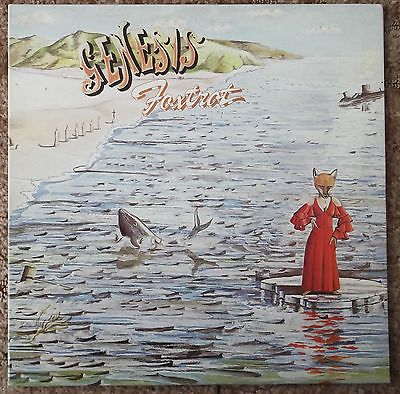
GENESIS "FOXTROT"
Gatefold sleeve
Vinyl LP
1972 original release vinyl LP on the CHARISMA (Mad Hatter) record label Cat n# CAS 1058 Made in ENGLAND
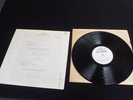
The album cover is in NM condition. no splits or tears, minor soiling ,the inner poly lined sleeve is in EX/NM condition, no splits or tears, some fading.
The vinyl itself is in NM condition. there are 2 or 3 light papercuts/scuffs seen under a 1500watt strong light which can barely be heard when the LP is played, there are no deep scratches on this LP.
If you need anymore information and pictures please get in touch, thanks.
Sorry if the shipping charges seem a bit high, the reason being i use heavy/strong packaging and the high cost of the Royal Mail price structure
THIS IS AS GOOD EXAMPLE OF WELL LOOKED AFTER OLD LP RECORD
Full track list
Side one
1. "Watcher of the Skies" Mike Rutherford, Tony Banks 7:21
2. "Time Table" Banks 4:47
3. "Get 'Em Out by Friday" Rutherford, Banks, Peter Gabriel, Phil Collins, Steve Hackett 8:35
4. "Can-Utility and the Coastliners" Rutherford, Banks, Gabriel, Collins, Hackett 5:45 .
Side two
1. "Horizons" Hackett 1:39
2. "Supper's Ready"
a. "Lover's Leap"
b. "The Guaranteed Eternal Sanctuary Man"
c. "Ikhnaton and Itsacon and Their Band of Merry Men"
d. "How Dare I Be So Beautiful?"
e. "Willow Farm"
f. "Apocalypse in 9/8 (Co-Starring the Delicious Talents of Gabble Ratchet)"
g. "As Sure As Eggs Is Eggs (Aching Men's Feet)" .
All tracks produced, composed, and arranged by Tony Banks, Phil Collins, Peter Gabriel, Steve Hackett, and Mike Rutherford. .
The Band
Tony Banks – organ, acoustic & electric pianos, Mellotron, 12-string guitar, backing vocals
Phil Collins – drums, percussion, backing vocals
Peter Gabriel – lead vocals, flute, bass drum, tambourine, oboe
Steve Hackett – electric guitar, 6-string guitar, 12-string guitar
Mike Rutherford – bass guitar, bass pedals, cello, 12-string guitar, backing vocals .
Foxtrot is the fourth studio album from the English progressive rock band Genesis, released in October 1972 on Charisma Records. It reached number 12 in the UK and failed to enter the US chart.
Production
When Tony Stratton-Smith of Charisma Records heard the album for the first time, he said to Richard MacPhail: "This is the one that makes their career".[1]
Songs
The album opens with "Watcher of the Skies", a Banks and Rutherford composition. It begins with a Mellotron introduction from Banks. The lyrics were written during the band's rehearsals at an airfield during their 1972 Italian tour; the two wondered what an empty Earth would look like in this state if surveyed by an alien visitor. Streetly Electronics, manufacturers of the instrument, have since supplied a tape set titled "Watcher Mix".[2]
"Can-Utility and the Coastliners", written mostly by Hackett,[3] is based on the legend of King Canute, who supposedly ordered the seas to retreat to mock the sycophancy of his followers.
"Horizons", an instrumental solo performed by Hackett, starts with the central idea of the prelude from Bach's first cello suite[citation needed] and then develops its own piece, baroque style.
In an interview with Phoenix FM Hackett stated that some of the tracks on his solo album Voyage of the Acolyte (1975) were rehearsed by Genesis during the writing and recording of Foxtrot.[4]
"Supper's Ready" was originally a long acoustic piece similar to "Stagnation" from Trespass (1970) or "The Musical Box" from Nursery Cryme (1971). Unwilling to produce another similar track, the band thought the song needed to take a different direction. Gabriel then put forward his idea of what became "Willow Farm".
Sleeve design
The cover artwork for Foxtrot was created by Paul Whitehead, a former art director for the London-based magazine Time Out who also created artwork for the albums Trespass (1970) and Nursery Cryme (1971). All three original paintings were later stolen from Charisma Records when it was sold to Virgin Records in 1983. Whitehead has hypothesized that the staff of Charisma got wind of the imminent sale and responded by looting the building.[7] The cover artwork for Nursery Cryme appears in miniature on the back cover of Foxtrot.
The "fox on the rocks" (spelled "focks" on the rocks in the original LP printed lyrics) is mentioned in the lyrics of the "Willow Farm" section of "Supper's Ready", and is featured in the album artwork. This figure in a red dress with a fox's head became one of Gabriel's earliest stage costumes.
Release
Foxtrot was released in the UK in October 1972. It is the first Genesis album to enter the top 20 in the UK album chart with a peak of number 12 during its seven-week residency on the chart. Like their previous three albums, it failed to enter the US chart.[8] In Italy, the album reached number one.[8]
Reception
Retrospective reviews of the album have been largely positive. Allmusic wrote that Foxtrot was "the first time that Genesis attacked like a rock band, playing with a visceral power." They considered this a positive change, commenting that "Genesis has grown muscle without abandoning the whimsy" and concluding "This is the rare art-rock album that excels at both the art and the rock, and it's a pinnacle of the genre (and decade) because of it."[9] BBC Music, in contrast, described the album as largely a by-the-numbers follow-up to Nursery Cryme, with the only major difference from its predecessor being "the production, which suddenly brings all that chiming acoustic filigree up close and personal." They also ridiculed the lyrics of all the songs, especially "Supper's Ready." They considered the album an overall good work due to the musical compositions and performances.[10]
In the Q & Mojo Classic Special Edition Pink Floyd & The Story of Prog Rock, the album came No. 2 in its list of "40 Cosmic Rock Albums".
BBC Review
Featuring their side-long epic, 'Supper's Ready'. Apocalyptic prog!
Chris Jones 2007
Following the identity-sealing statement that was Nursery Cryme, Genesis were now intent on capitalising on their momentum. They continued to play every college gig going while writing song suites about godlike entities overseeing our destiny and dressing like a fox on stage. An average life for a mid-level band in the UK in 1972, then.
They’d fully incorporated the blast of a Mellotron into their sound and Phil Collins jazz leanings were pushing them in a slightly more interesting direction, away from the ponderous prog nonentity that awaited contemporaries like Gentle Giant. What’s more their live sound had become bolstered by the addition of Mike Rutherford’s bass pedals, allowing him to add yet more ringing twelve string into the mix while blasting the front three rows with his feet. Opener “Watcher Of the Skies”, with its tricky time signatures, displays this power to the max.
What follows is a consolidation of the promise shown on Nursery Cryme. The first big difference is the production, which suddenly brings all that chiming acoustic filigree up close and personal. The songs flow easily and the cod-historical tendency is toned down in favour of science fiction (“Watcher…”), an ill-judged ‘contemporary issues’ song (“Get ‘Em Out By Friday”) and biblical allegory (“Supper’s Ready”). You do still get the history-as-moral song with “Timetable” and one more which, for no good reason at all apart from the awful pun contained in the title, is about King Canute: “Can-Utility And The Coastliners”.
But the really big stuff on Foxtrot resides in their first bona fide masterpiece: The side-long epic, “Supper’s Ready”. These days Peter Gabriel himself probably couldn’t tell you exactly what the whole thing’s about, but it involves more puns, the Book of Revelations, atomic war and flowers. Someone probably has a webpage explaining it all…But never mind, for it’s an exhilarating, if slightly lumpy ride through some of the band’s best writing and playing. The best sections include the multi-voiced romp through insanity of “Willow Farm” and the clever-cloggery of “Apocalypse in 9/8 (co-starring the delicious talents of Gabble Ratchet)”. Guess which time signature that was in…
It allowed Gabriel to do even more dressing up, making their shows the hottest tickets in town. Unfortunately the album still stalled on the brink of the big league which contained proggers like Yes and Crimson. Genesis just needed one little extra push. And their next album would supply that. But with Foxtrot everyone had begun to take notice.
REVIEW
Review Summary: A quirky yet sophisticated progressive album that remains as one of the pillars of the genre.
1972 was truly an important year for progressive music. There were several artists that undeniably pushed the barriers of music and raised the bar really high. The most popular releases back then were "Close to the Edge" by Yes and "Thick as a Brick" by Jethro Tull. These albums were artistic statements whose influential impact on art rock cannot be denied. These bands were labeled as progressive.
Most of the bands that belonged to the progressive scene were known for composing music that had several intricacies; whether it was odd-time signatures, more technical use of the instruments, or 15+ minutes suites, these bands showed very respectable musicianship skills. Genesis definitely falls into this progressive category, and Foxtrot was the first album where they actually fulfilled this progressive approach towards music.
First of all, this album has every element one would expect from a progressive album; crafty use of time signatures, extended instrumental passages, symphonic keyboards, intricate guitar and bass lines, unconventional use of vocals, and highly poetic lyrics. However, something that distinguished Genesis from fellow progressive acts is the fact that they were the ones that mastered the subtle art of restraint. Every element is thrown in such a delicate way, musicianship never becomes overbearing or exceedingly pretentious. Now, pretentiousness is often associated with progressive music, and it's not hard to se why. Most of progressive music is more often thought-out and calculated than actually heartfelt, since creativity is something that has no real limits. But Genesis's compositions were more organic and heartfelt than most of their contemporary bands'.
Genesis's sound, however, is not easy to categorize. It's mellow and sophisticated, but at the same time it's quirky and colorful. They used 12-string acoustic guitars, mellotrons, organs, and keyboards. These elements were usually used to craft quirky, somewhat cartoonish verses connected by soothing atmospheric passages. Peter Gabriel had a very theatrical way of using his vocals, singing with many different accents and varying levels of intensity. When there are keyboards or guitar solos, they aren't thrown in a flashy way. They are more melodic and often convey some imagery that relates to the topic of the lyrics. However, that doesn't mean they aren't highlights of the music. Tony Banks is a very skilled keyboardist and classically trained piano player. And guitar player Steve Hackett was one of the first guitarists that used the tapping technique to speed up melodic patterns in solos. The rhythmic section is also really solid, Phil Collins is a very powerful drummer with a very delicate touch. And Rutherford's bass lines are perfect in the task of gluing everything together, sometimes becoming more than just a rhythmic instrument. It's also important to state that most of their songs are stories that successfully achieve the goal of creating visual imagery in one's mind.
Foxtrot is Genesis at their quirkiest, songs like Get 'Em Out by Friday and Supper's Ready show what Genesis is all about; quirkiness versus seriousness. Get 'em out by Friday is a story about the rudeness and cruelty that the government shows towards people who's economy is so limited, they can hardly keep up with the payments of the home they're renting. It shows Peter Gabriel taking the role of every character involved in the story, and the intensity of his vocals varies depending on what character he's representing. The rest of the band also follow this dynamic of shifting between mellow and intense to support Gabriel's performance. Most progressive acts were also known for overbearing lyrics. Yes had a very stream-of-consciousness approach towards lyrics, and King Crimson's lyrics were dark and haunting. Peter's lyrics are grandiose, articulate, sophisticated and theatrical. It's easy to notice that Gabriel was a very educated young man who was highly influenced by old English literature. His lyrics were sometimes hard to decipher, but they flowed smoothly and elegantly while still conveying fantastic imagery.
The highlight of the album is it's closing suite Supper's Ready. This song is a 23 minute monster that showcases the entire band's best performances in the whole album. Peter Gabriel's vocals are truly unique, especially in the "Willow Farm" middle section, where he sounds incredibly odd by mocking different accents, sounding clinical and almost bipolar. The acoustic passages of this song are just beautiful, excellent use of 12-string guitar. The keyboards takes the role of being an atmospheric element in the beginning of the song, and towards the end takes the role of being in the lead, with Banks's most impressive keyboard solo of his entire career. The guitar solo in the second quarter of the song is also a highlight of the song, Steve Hackett uses his tapping technique and other different techniques to create an odd sounding but still epic solo. This song is not just Genesis's best song, but also a landmark in progressive music right next to Yes's Gates of Delirium and Jethro Tull's Thick as a Brick. This album, however, is not perfect. It has got a couple of flaws which are thankfully easy to forgive. For instance, the mellotron intro to Watcher of the Skies drags too much, it would have worked better if it was a minute shorter. Also Time Table is somehow an underwhelming song compared to the rest of the songs, however this song is highlited by an emotional and memorable chorus. The production values are also a little rough around the edges, but this was perfected in their upcoming album Selling England by the Pound which may be the reason it's often considered Genesis's best album (though that's a debatable subject).
All in all, Foxtrot is a hugely influential album, and one of the genre's best. Whether it's for Watcher of the Skies's commanding 6/4 beat, Get'em Out by Friday's catchy and quirky verses linked by atmospheric passages, or Supper's Ready's vocal madness; Foxtrot is an album that is hard to forget. I would seriously recommend it not just to prog fans, but to every person who considers himself as a music aficionado. This album was one of the first that showed what progressive music is all about without the necessity of being self-indulgent and super pretentious.It .
Thanks for taking the time to look at this auction
RECORD COLLECTOR GRADING SYSTEM
In order to assist everyone who buys and sells rare discs, Record Collector magazine has originated a set of standards for the condition
of second-hand records, cassettes and CDs. Anyone buying or selling records through the magazine must use our conditions to state what
amount of wear and tear the disc, its sleeve and/or contents have been subject to. The seven standard condition categories, and a description
of what each one means, are listed below:
MINT: The record itself is in brand new condition with no surface marks
or deterioration in sound quality. The cover and any extra items such
as the lyric sheet, booklet or poster are in perfect condition. Records
advertised as Sealed or Unplayed should be Mint.
EXCELLENT: The record shows some signs of having been played, but there
is very little lessening in sound quality. The cover and packaging
might have slight wear and/or creasing.
VERY GOOD: The record has obviously been played many times, but
displays no major deterioration in sound quality, despite noticeable
surface marks and the occasional light scratch. Normal wear and tear on
the cover or extra items, without any major defects, is acceptable.
GOOD: The record has been played so much that the sound quality has
noticeably deteriorated, perhaps with some distortion and mild
scratches. The cover and contents suffer from folding, scuffing of
edges, spine splits, discoloration, etc.
FAIR: The record is still just playable but has not been cared for
properly and displays considerable surface noise; it may even jump.
The cover and contents will be torn, stained and/or defaced.
POOR: The record will not play properly due to scratches, bad surface
noise, etc. The cover and contents will be badly damaged or partly
missing.
BAD: The record is unplayable or might even be broken, and is only of use as a collection-filler.
price rating