GENESIS "NURSERY CRYME" RARE 1971 GERMAN FIRST PRESSING PHILLIPS GATEFOLD LP
$
23


Favourite Auctions
To save auctions to your favourites, please login
If you don't have an account, please register
Description
GENESIS "NURSERY CRYME" RARE 1971 GERMAN FIRST PRESSING PHILLIPS GATEFOLD
GENESIS "NURSERY CRYME" LABEL: PHILLIPS 6369 916 RELEASED: NOVEMBER 12, 1971 GERMAN EARLY (FIRST?) PRESSING ~ GATEFOLD w/ LYRICS INSIDE RECORDED AT TRIDENT STUDIOS LONDON MASTERING/LACQUERS: Deutsche Grammophon Gesellschaft PRESSED AT Deutsche Grammophon Gesellschaft Pressing Plant ENGINEER: DAVID HENTSCHEL PRODUCER: JOHN ANTHONY SLEEVE ART/DESIGN: PAUL WHITEHEAD (BASED ON 'THE MUSICAL BOX') MATRIX (SIDE A): 10 AA6369916 1Y 320 1 Q 1B AO MATRIX (SIDE B): 10 AA6369916 2Y 320 1 Q 2A AU
CONDITION: VINYL: EX JACKET: VG+
~~~~~~~~~~~~~~~~~~~~~~~ I've been going thru my massive vinyl record collection these past few weeks and pulling out some LPs that I thought that someone else would want for their collection. I've been collecting records for over 45 years and it's time to pass some of them on to the next generation of collectors.
This week on EBay I am offering up this rare original 1971 German Pressing of the classic Genesis album 'Nursery Crime'. I believe this is a true First Pressing based on the record's details and my research.
This is my original copy, purchased at a Manhattan Record Show back in the early 70's, shortly after it's release, that I've taken great care of for many years. See details on Condition below.
This is on the German Phillips label and has all the Matrix, label and Jacket indications of a First Pressing. See details below.
~~~~~~~~~~~~~~~~~~~~~~~~~~~~~~~~~~~~~~~~~~~~~~~~~~ THE STORY BEHIND "NURSERY CRYMES"
The first two Genesis albums had overtly biblical connotations and titles, which created a misunderstanding as to what the band were all about.
Their 1969 debut 'From Genesis To Revelation' hinted at their progressive tendencies, 'Trespass' continued the trend with lengthy songs, but 'Trespass' didn't sell well, except in certain pockets of Italy and Belgium, so Genesis tried to gain fans by frequent touring instead.
The lack of success of 'Trespass', the grind of constant touring, and a case of significant stage fright, all led co-founder, guitarist Anthony ‘Ant’ Phillips to leave the group after a show in July 1970.
'Trespass' was recorded in June 1970, before Ant left, but wasn't released until October 1970, after he left the band.
Shortly after Phillips left, drummer John Mayhew was either fired or drafted, depending on who you believe, and Genesis was stripped down to just Tony, Peter, and Mike, three gifted posh boys with grandiose visions.
Despite losing their guitarist and drummer, the band was self-confident enough to start looking for new musicians instead of splitting up.
Auditions were held to find a drummer who could handle the complex music the 3 main members wanted to play.
The band put an ad in Melody Maker: “Tony Stratton-Smith requires drummer sensitive to acoustic music and 12-string guitar”.
After seeing their ad, ex-Flaming Youth drummer Phil Collins auditioned. Phil was one of the last drummers auditioned, so he had the advantage of hearing the others, and what they lacked. Phil won the boys over and got the job.
Phil Collins was the secret ingredient just waiting to be added to the mix, a drummer who could cope with difficult time signatures without sacrificing an ounce of power, as well as being a useful second vocalist. Mike later claimed: “When Phil joined, the drumming became very important. It added another dimension."
Although Peter Gabriel remained the band’s primary vocalist, Collins’ distinctive, emotive vocals added a new dimension to the band’s sound, blending seamlessly with Gabriel’s. Phil's drumming was also astounding. Inventive, powerful, musical and it really drove the songs.
With Collins on board, they played thru the summer of 1970 to support 'Trespass'. By this point, 'The Knife', was their first real theatrical song in their live show and the band gained many new fans thru their stage act.
With Phillips gone, and to replace his guitar, the band added a Hohner electric piano with a fuzzbox, fed thru distortion pedals, and placed it on Tony's Organ.
That was the beginning of Tony’s multi-keyboard noodling and the band's new 'proggy' sound. Tony would play keyboards with one hand, and 'guitar' with the other.
It was during this late 1970, do or die, period that Banks, Collins and Rutherford truly gelled, establishing a musical telepathy between them that exists to this day.
Realizing they needed a guitarist, they hired Mick Barnard, who played with the band thru the Winter. Barnard's skills weren't what the music required. He was nowhere near as proficient on 12-string as Ant Phillips was. Still, they continued to tour while seeking out a better guitarist.
Whereas new drummer Phil Collins responded to an ad placed by Genesis, new guitarist Steve Hackett was found when Peter Gabriel, responded to a December 1970 ad in Melody Maker placed by Hackett. “Imaginative guitarist-writer seeks involvement with receptive musicians, determined to strive beyond existing stagnant music form.”
Gabriel phoned up Hackett, suggested he listen to 'Trespass', come see the band live, and see what he thought.
As 1971 dawned, Banks and Gabriel went to Hackett’s flat in Pimlico and were blown away by Steve's playing, especially his 12-string work and his unusual tunings. Hackett was asked to join, and out went Mick Barnard.
Hackett was an excellent, innovative guitarist. He was a master of mood and emotion, and could play with a pastoral quality that fit Genesis' music perfectly. He also could perform something called 'fretboard tapping', a 2-handed finger technique that would go on to alter the course of electric guitar history. It's used on several songs on this album.
Hackett was exactly what the band needed; a fantastic, experienced, Ego-less guitarist, equally comfortable playing 6 or 12 strings, acoustic or electric. With his skills, and his knowledge of guitar pedals, he added interesting new sounds to the musical palette of Genesis.
Steve Hackett brought his intense musicianship and intricate guitar work with him into Genesis and they were never the same.
Hackett was also responsible for another major change in the band that would help create their classic Prog sound.
Steve was a huge fan of King Crimson and loved their use of the Mellotron to create strange futuristic sounds.
Steve convinced Tony Stratton-Smith to purchase a used, fire-damaged, Mark II Mellotron from King Crimson and that instrument became integral to the Genesis sound from that point onwards.
Tony Banks loved the Mellotron and could create all sorts of new sounds from it. It was a transformative instrument. What Tony did with it was incredible.
Hackett and Collins brought a wealth of new musical ideas and energy to the group. Steve and Tony complemented each other brilliantly as musicians.
Both Collins and Hackett made significant early contributions and 'Nursery Cryme' is where the ‘classic Genesis formula’ and 'Genesis sound' finally falls into place. It soon became clear how important the addition of Phil Collins and Steve Hackett really was.
With Phil Collins and Steve Hackett, the perfect line-up was in place and the band's potential could be fully explored, taking the relatively new progressive rock scene to new heights.
In addition to the Mellotron, Charisma purchased a new Hiwatt stack, a Les Paul and a 12-string for Steve. He was all set to take over Anthony Phillips shoes.
~~~~~~~~~~~~~~~~~~~ Charisma then sent the new band out on the legendary ‘Six Bob Tour’, which featured 3 Charisma bands, Van der Graaf Generator, Lindisfarne and Genesis, playing up and down the UK, for 6 Shillings ('Bobs'), a spoof on the UK's recent conversion to decimalization.
Genesis really honed their craft and their sound on that tour. They picked up some folky stylings from Lindisfarne and Proggy sounds from VdG, blending them into their new sound.
The tour made no money, but got Genesis seen by new fans around the Country and perfected their new sound.
~~~~~~~~~~~~~~~~~~~~~~~~~~~~~~~~~~~~~~~~~~~~~~~ Between tour dates, the band camped out at Rod Mayall’s small, cramped, studio in West Hampstead, across the street from the famous Klooks Kleek club, writing the songs that would become 'Nursery Cryme'.
Many other bands hung out at Mayall's studio and Genesis absorbed whatever they could from them, sharpening their collective vision and remaining serious students of music.
The band took a break from touring in early summer to rehearse their new material. The band rehearsed extensively at an old, decommissioned malting house, near Rutherford’s parents’ home in Surrey. It had “bare floor-boards and pigeon shit" but served it's purpose. There they gelled as a band.
They returned to touring briefly, but they soon retreated to Luxford House, a luxurious country house in Sussex, rented for them by Tony Stratton-Smith, to focus on making 'Nursery Cryme.'
At the time, bands retreating to the rural areas around England to write, rehearse, jam and ‘get it together in the country’ was a popular trend. Genesis took full advantage of the situation.
Band members have said: “It was an idyllic summer...We had a place to work...the creative freedom, the free flow of ideas, the scale of ambition...emboldened and liberated...it all came together in a very symbiotic, charmed way.”
Anxiety in the band was high about writing new material without Anthony, but Luxor House was where the 'new' guys, Phil and Steve, became incorporated into the posh school boy 'clique' of Tony, Peter and Mike. They were now a unified band.
By August, they were well rehearsed, tight, disciplined, and went into Trident Studios in London’s Soho to make 'Nursery Cryme'.
Genesis chose both John Anthony and David Hentschel, old friends, to Engineer and Produce. The recording sessions went smoothly and quickly.
While recording 'Salmacis', the Mellotron, cranked up thru 2 Hiwatt stacks, was too intense and powerful to be recorded well at Trident, so they moved to nearby AIR Studios to finish recording the song.
'Nursery Cryme', the band's 3rd album, was released on November 12th, 1971.
'Nursery Cryme' marked a significant moment in the band’s evolution. It's considered the first 'true' Genesis album, where they finally honed their distinctive English musical sound, textures and moods; "Edwardian rock," based on 19th century stories, greek mythology and rural life.
It was the first album with the classic lineup of Gabriel, Hackett, Banks, Rutherford and Collins. It signaled a major change in the direction and sound of their music, and revealed that they could survive without creative force Anthony Phillips.
After recording 'Nursery Cryme' the band went back on the road in support of the album.
The crowds were impressed with the new songs and Gabriel's on-stage antics. Word of mouth spread about the band and Genesis started playing larger and larger venues. They were finally on track to becoming one of the most iconic prog-rock acts of all time.
~~~~~~~~~~~~~~~~~~~~~~~~~~~~~~~~~~~~~~~~~~~~~~~ Peter Gabriel's vocals improved greatly on 'Nursery Cryme', partly 'pushed' by Phil Collins' early vocal work and competition. He started to focus on weird verse structures, complicated chord progressions and role-playing theatrics. He expanded his incredible sense of the absurd, and his lyrics became more intricate and more entertaining than ever before.
On the lighter tracks, the delicate instrumentation provided a perfect vessel for Peter Gabriel’s vocals. His singing made these tunes come to life. Gabriel's commanding voice retains a vice-like grip on his listeners.
The 'Nursery Cryme' tour was the point where Gabriel decided to liven things up, adding theatrics, characters, and increasingly outrageous costumes to live performances. The theatricality was further enhanced by the bizarre stories he invented to serve as introductions to the songs.
~~~~~~~~~~~~~~~~~~~~~~~~~~~~~~~~~~~~~~~~~~~~~~~ 'Nursery Cryme', outside of certain pockets in the UK and Europe, was barely noticed when it was released, making First Pressings quite rare. Back in 1971, Genesis were a niche within a niche.
The album received critical acclaim for its adventurous and intricate compositions, combining elements of folk, rock, and classical music.
Songs about decapitation by croquet mallet, rampantly charging giant weeds, intersex Gods, sexual assault, and suicidal fat men, were very unconventional subjects at the time, but the storytelling lyrics, often filled with surreal and whimsical imagery, captivated listeners and added depth to the music, slowly winning over new fans.
There were questions raised in 1971 about whether Rock should be heading in a new Prog direction. It was music far removed from rock’s R&B and Blues roots, and more based on literature, folk tales & mythology. Many were not impressed by the new Prog style.
Initial sales for 'Nursery Cryme' were slow, but today it's regarded as one of Genesis' best albums and a progressive rock classic.
This album played a pivotal role in establishing the band’s progressive rock sound and laid the foundation for their future success.
With the "classic" line-up of Tony Banks, Phil Collins, Peter Gabriel, Steve Hackett and Mike Rutherford, the band's musical, compositional and songwriting skills were at their peak.
The progressive nature of the compositions showed tremendous originality, inventiveness and musicianship. They set the standards for other Prog bands to follow.
The delicate guitar work and the subdued brass, flute and woodwind passages perfectly mixed with the wailing guitar riffs and swirling organ melodies of heavier passages showing off the band's strengths and became the blueprint for the 'Genesis sound' and their subsequent Prog Rock masterpieces.
'Nursery Cryme' is a classic Genesis album because of it's 3 amazing, long, prog rock tracks; The Musical Box, The Return Of The Giant Hogweed and The Fountain Of Salmacis. These 3 songs make up most of the album.
The songs on this album include:
The Musical Box For Absent Friends The Return Of The Giant Hogweed Seven Stones Harold The Barrel Harlequin The Fountain Of Salmacis
~~~~~~~~~~ This album starts off with "The Musical Box." It's one of the all time great prog rock songs and the type of song that only Genesis could create. One of their best songs, and deservedly a fan favorite.
The song is a dark fairy tale, one full of death and lust. It highlights the band's trademark sound of mixing light, folky, twelve-string guitars and flute, with heavy keyboards, strong rhythms and crisp electric guitars.
The song has moments of intense attack as well as moments of tenderness and restraint. It has a truly magical feel to it, with all members contributing their musical skills and their profound technical prowess.
“The Musical Box” singlehandedly shows us what the new line-up had to offer. It's nearly everything that made Genesis great, all wrapped up in one 12 minute roller coaster ride.
It's a long expansive song, full of tension, beauty, dynamics, 12-string guitars, powerful keyboards and scorching electric guitar solos.
A perfect Prog masterpiece by this new line-up of Genesis.
Steve Hackett's guitars literally scream in places, but is soft and beautiful in others. Phil's drumming is amazing; jazzy, rhythmic, and driving with perfectly placed percussive accents.
Tony Banks plays amazing organ and mellotron, swishing and swooping along with the different moods of the song. Banks and Hackett trade off on many solos and they often sound like one another, blending perfectly.
The track opens in a lush dreamy soundscape with soft acoustics, flute, and a baroque sounding keyboard.
The opening part of 'Magical Box' was originally called 'F#' and was a piece that Mike Rutherford and Tony Phillips had worked up previously. It was fleshed out once Hackett and Collins joined the group.
It starts very hypnotic, with creepy lyrics and use of flute. The music alternately soothes and tenses the listener. Peter Gabriel starts out gently singing 'Play me Old King Cole...' over a light, folky background. Then the drums get heavier & heavier, joined by Steve's electric guitar lines, then Tony's Organ kicks in and all hell breaks loose.
There's a long, tight jamming section thru the middle bit, with Peter's voice getting louder and louder, then Hackett’s double-tracked guitars pierce through Tony's majestic organ during the song's grand finale with Peter now screaming 'Won't you touch me, touch me...now! now! now! now!' by the end of the song. it’s such a epic ending to this fantastic track.
The Musical Box, one of the most audacious and effective opening tracks ever, is the obvious standout track on this album.
~~~~~~~~~~~~~~~~~~~~ The strange, adventurous, story that Peter Gabriel creates in this song is nothing short of sheer brilliance. Peter has said that 'The Musical Box' was about a “controlled English landscape under which festered violence and sex”.
The story behind 'The Musical Box' is complex and isn't completely supported by the lyrics, so Peter insisted that his introductory explanation from the live concerts be printed alongside the lyrics inside the gatefold cover of this album. It reads:
'While Henry Hamilton-Smythe minor (8) was playing croquet with Cynthia Jane De Blaise-William (9), sweet-smiling Cynthia raised her mallet high and gracefully removed Henry's head. Two weeks later, in Henry's nursery, she discovered his treasured musical box. Eagerly she opened it and as "Old King Cole" began to play, a small spirit-figure appeared. Henry had returned - but not for long, for as he stood in the room his body began ageing rapidly, leaving a child's mind inside. A lifetime's desires surged through him. Unfortunately the attempt to persuade Cynthia Jane to fulfill his romantic desire led his nurse to the nursery to investigate the noise. Instinctively Nanny hurled the musical box at the bearded child, destroying both.'
When Genesis performed this song live, Gabriel would wear his creepy, sinister, old man mask on stage, theatrically recreating the part perfectly.
~~~~~~~~~~~~~~~~~~~~~~~~~~~~~~~~~~~~~~~~~~~~~~~~~~ "For Absent Friends" is by far the most personal song on the album.
The lyrics are about two elderly widowed people going to church to pray for their dead spouses. This one's a very melancholy song, but there's also a sense of moving on that makes me think this was meant to be the band's attempt at a true farewell song to Anthony Phillips. It pays its respects to those we've lost, as well as looks forward to new possibilities.
This song is sung softly by Phil and he's mostly accompanied by Steve's delicate 12-string guitars. A fine example of the emotional capabilities and powers that allowed Genesis rise to the top of the progressive rock pack.
It was a short acoustic song, written by the band's newest members, Steve Hackett & Phil Collins, but written about the oldest members of the band who had moved on.
It fits well on the album, providing some light interlude between the two heavier songs that take up the bulk of side one.
"The Musical Box" was the last song to have any major contributions from Anthony Phillips, so to follow it up with this song about losing people you love, fits well.
~~~~~~~~~~~~~~~~~~~~~~ “The Return Of The Giant Hogweed” is classic sci-fi Prog and classic Genesis.
It's a long, heart-warming story about a race of weeds that take over the earth. It's amazing, cinematic and hilarious, all rolled into one.
The song starts out gently, with Tony playing keyboards that sound like a guitar. Meanwhile Steve is playing some amazing 2-hand fretboard 'tapping' that sounds like nothing before it.
There's some feedback-drenched guitar lines, then, Peter gives it his all on the first line, which makes it so epic.
Then, the battle is on, with some interesting jamming, showing off some terrific Hackett/Banks interplay. Somehow, it really captures the feeling of Armageddon by enraged plant life.
The organ is slamming, Steve’s guitar is crunchy, Phil is blazing away behind the kit, and even Mike is doing some great bass lines.
Steve Hacket does some amazing electric guitar work, experiments, and 2-handed 'tapping' technique, years before a certain kid from California would 'invent' the style.
The middle bit is somewhat challenging to the listener, with it's quirky melodicism, but in a good, proggy way. It features some great guitar work by Hackett and terrific electric piano by Banks over a rolling rhythm.
Once the Giant Hogweeds gain victory, the music gets rather intense.
Phil's drumming become crushing, Banks gets crazed on the Mellotron, Hackett's guitar soars and everyone plays to their limits. This is what prog rock was invented for.
Gabriel sings the song from 2 points of view; those attempting to stamp the Hogweed out and the narrator telling the back-story.
Peter’s singing is theatrical, powerful, entertaining, and humorous. From the “Turn and run!” screams at the beginning, to the crazy ‘Dance of the Giant Hogweed’ and it's "Heracleum Mantegazziani!” near the end, Gabriel is just fantastic. There was no singer like him at the time.
The song is a total delight, both as a piece of oddball storytelling and as an exercise in heavy Prog Rock.
~~~~~~~~~~~~~~~~~~~~~~~~~~~~~~~~~~~ 'Harold The Barrel' is the oddest track on the album. It's an inappropriately upbeat, disturbing tale of a suicide.
It reveals the story of a man drawing a crowd while standing on the window ledge of his room, ready to jump.
It's a very clever piece of songwriting that shifts quickly between various perspectives, from Harold, to a news reporter, to various eye witnesses, figures of authority, Harold's mother and back to Harold himself standing on a window ledge.
Gabriel does a fantastic job singing the voices of all the different characters. It's full of funny voices, wild sounds, and call & response sections.
The melody twists through a complex, dizzying succession of chord changes with Banks playing excellent piano work throughout.
There's some dark humor and some weird lyrics such as the image of Harold the Barrel cutting off his toes and serving them all for tea, and his Mother's concern that his shirt's too dirty to die in. We never learn why Harold intends to jump, and Banks’ plaintive piano chords at the end is the only suggestion that Harold did indeed jump from his ledge.
It's all very strange, very Gabriel, and very British, in a Monty Python kind of way.
~~~~~~~~~~~~~~~~~~ “Harlequin” is a short, pastoral song, much in the style of the band's 'Trespass' album.
This brief mellow tune is full of Tony Bank's eerie organ melodies, Steve's beautiful 12-string guitar work and the fantastic vocal harmonies of Gabriel and Collins. Their voices blend so well.
Mike Rutherford's lyrics have a lot of character and still possess some great imagery. It proves that beautiful Prog music doesn't need to have various complex sections, with weird chord progressions, and odd time signatures to be a fantastic piece of music.
~~~~~~~~~~~~~~~~~~~~~~~~~~~~~~~~~~~~~~~~~~~~~~~~ Seven Stones is a tale of an old man telling three stories, each dealing with life lessons. The elderly man finally realizes that life, and it's fate, is all based on chance.
This song is mostly built around Tony Banks swelling, sweeping, emotional Mellotron.
The song evokes tenderness and longing, with Peter's soft flute and vocals, and Tony's lonesome Mellotron. Steve adds plenty of tasty twelve string guitars.
Peter's vocals are fabulous; strong and emotional. They are multi-tracked giving them a celestial choir-like feel, but also a sense of pleading and desperation. Phil adds excellent background harmonies.
~~~~~~~~~~~~~~~~~~~~~~~~~~~~~~~~~~~~~~~~~~~~~~~~~~ The final track 'Fountain of Salmacis' is one of the highlights of this record. A stellar and epic conclusion to this great album.
The song is bold, confident, cinematic, and dynamic, the most adventurous track on Nursery Cryme.
The bizarre story is an old one from Greek Mythology, but the updated lyrics were written by Mike. It tells the cautionary tale of being careful what you wish for.
The legend claims that a frisky nymph named Salmacis unsuccessfully attempted to have sex with the handsome Hermaphroditus, the son of Aphrodite. Hermaphroditus kept rejected her but she persisted, catching him bathing in a fountain. This resulted in their two bodies being fused together forever, and Hermaphroditus becoming androgynous and effeminate, a hermaphrodite.
Hermaphroditus cursed the water, and anyone who dared drink from the fountain of Salmacis would suffer the same fate.
Genesis thought the story would make a great song for this album full of strange stories and mythical tales.
This majestic song grabs you right away from it's intro. Tony plays a beautiful, spiraling, blend of Organ and Mellotron, which really creates a spooky ancient vibe.
There's a calm, classical section with Steve playing excellent guitar, and then the middle section is fantastic. Every band member is playing perfectly and they really fuse as a band, cohesive and flowing. There's symphonic crescendos and a swelling mellotron, all held together by the powerful rhythm section, Rutherford's melodic basslines locked into Collins' incredible jazzy drumming.
The ending is cinematic and amazing, with Hackett’s guitar and the mellotron blazing away. Near the end, Hackett plays some beautiful guitarwork and a great solo, before Tony swoops in with his Mellotron to finish out the song.
Peter's vocals over the whole song are perfect. Theatrical and powerful. He adds some terrific Flute playing as well.
"Fountain of Salmacis" is fabulous. One of the epic Prog mellotron tracks of all time and a great way to end this album.
~~~~~~~~~~~~~~~~~~~~~~~~~~~~~~~~~~~~~~ THE ALBUM COVER
The record jacket for 'Nursery Cryme' is one of the most iconic of all the Genesis albums.
The album cover art, drawn by Paul Whitehead, who also designed the 'Trespass' jacket, was inspired by the story behind 'The Musical Box' and introduces us to the strange stories contained within.
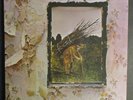
It's a whimsical Victorian scene with Cynthia standing on an endless croquet lawn, playing a human-head croquet game. Her mallet is raised and ready to strike again, beheaded Henrys lie on the grass around her, as Nursey wheels out from the distant mansion.
The cover art wraps around, covering the entire jacket. Whitehead signed it "1871 – a happening 100 years earlier"
Paul Whitehead also gave this album it's clever, play on words, title.
~~~~~~~~~~~~~~~~~~~~~~~~~~ CONDITION: I tried to show good hi-resolution photos of the cover, labels and vinyl in my pictures.
I purchased this copy back in the early 70's, 50 years ago, at one of the rare NYC record shows in those days. I loved this album when it came out, and grabbed up this nice import copy when I saw it. I've taken great care of it since.
VINYL: The vinyl looks excellent. Clean and bright. Maybe some paper lines and possibly a light hairline, but it still looks terrific. No serious scuffs, palpable scratches, or dings. It looks terrific and I'm sure you'll be very happy with it.
The Deadwax has the First Pressing marks, with the '10 AA' matrix numbers. See the full Matrix above.
I tried to show some close-up pictures of the vinyl to show how nice it looks. I'm sure you'll be pleased with it.
I haven't messed with it or cleaned it, other than my trusty 'DiscWasher' brush, in 50 years, since Nixon was in office. It could use a good deep cleaning to make it even better looking and better sounding than it already is.
LABELS: This is pressed with the early 70's Blue German Phillips label. The labels have the early '„A Charisma Recording“' markings with the 'PM Rights Society' mark. The label also has the early "Alle Urheber...Sendung!" copyright notice along the label rim.
The labels are clean and bright. No marks or damage. The spindle holes are still sharp and clean, suggesting minimal playing and my careful handling over the years.
JACKET: As you can see from my pictures, this still looks very nice for a 50 year old OG copy. The back of the jacket has the original 'boxed D' price code.
This thick gatefold jacket is notorious for showing ringwear, dirt, scuffs and damage, but this copy is still quite nice. No ringwear, no writing, no marks, but there is still the original $5 record show price sticker on the top left.
I didn't try removing it and just left it all these years, but I suspect is can be removed with lighter fluid or other tricks. I'll leave that up to the winning bidder.
There's some very minor shelf wear to the edges, but no seam splits. The corners are slightly 'bumped', but the fantastic wrap-around artwork is bold and bright. The inner gatefold is clean and crisp. The spine is straight. It looks good for such an old record. A nice survivor.
Overall, I'll call the whole record VG+/EX-, but the vinyl is very clean and EX, a grading I rarely use for a used record.
The vinyl has been in a poly-lined sleeve for years and this record has been sleeved and stored properly for decades. It's still quite nice for an original 1971 German pressing.
This copy is all original, and a real gem. I'm sure you'll love it.
~~~~~~~~~~~~ ** NOTE: I'm selling this rare 'Collector' record "AS IS" and "NO RETURN". It's rare and as described and I'm sure you'll be very happy with it.
~~~~~~~~~~~~~~~ I’m recently retired and downsizing and letting go some gems and rarities from nearly 45 years of vinyl record collecting. Check out the many other fantastic 45s and 33s coming soon to my page!
All records have been carefully evaluated and graded by me. I visually inspect all records under bright light, personally gently clean them with a soft cloth and then, if unsure, play them on a modern high-end turntable to get a true picture of condition. Please look at all the high-resolution pictures I added. They are all my own and are of the actual record being sold. The pictures are part of the description and can show small details, label variations, and condition better than I can put into words.
My grading is fair and honest. I have had over 3,400 happy and satisfied EBay customers over the years, with 100% positive feedback, and I have been buying/selling on EBay for well over 25 years, so please bid with confidence!
I'm a One-man operation, this is a hobby, not my job. I do this for fun. I do this because I love music, love collecting vinyl and want others to share in that same experience. I take my time listening, researching, grading, listing and packaging. I will NOT sell any record that I personally would not want in my collection.
As you well know, packing and shipping rare records requires special care and attention, therefore, shipping cost within the lower 48 states is $5.00 on this item. If you would like insurance, or anything faster than Media/Economy Mail, please let me know and I can arrange it for you. I’ll work with you to make sure you’re happy!
I will gladly combine multiple records, or other items on my page, and make the shipping much less for you. I don’t inflate the shipping costs; they are what they are. I strive to keep them as low as possible. See my feedback for comments on my quality packing and shipping.
All items are packaged with sturdy cardboard mailers and appropriate padding. I take pride in my packaging and shipping and package all my records as if I were sending them to myself. I refuse to use cheap flimsy packaging material when sending my vinyl. I treat them as if they were my own and mail them the same way.
All orders are processed and shipped within 2 business days of receipt. We package and ship our vinyl records with the greatest care, using proper packaging to ensure that your rare and collectible vinyl records arrive in pristine condition.
Payments can be made by any of the multiple options that Ebay offers.
I will be happy to exchange feedback with anyone I complete a transaction with.
THANK YOU for looking, sticking with me, and reading if you got this far. -- JOHN
price rating



![KINKS BBC SESSIONS 1964 - 1977 UK LP [90097]](https://www.popsike.mobi/php/thumbnail.php?url=https://www.popsike.pics/pix/20240620/355807239811.jpg)