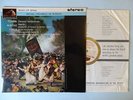
JAPANISCHE 12´LP-ANGEL 1-512-STEREO (MFSL)" HERBERT VON KARAJAN ", bitte lesen
€
61
$
71


€ 61
Sold For
Feb 28, 2016
Sold Date
Feb 18, 2016
Start Date
14
Number Of Bids
Germany
Country Of Seller
eBay
Auctioned at
Favourite Auctions
To save auctions to your favourites, please login
If you don't have an account, please register
Description
- Angebot : " Eine " ORIGINAL LIMITIERTE JAPANISCHE 12´ LP - ANGEL MFSL ( MOBILE FIDELITY SOUND LAB ) 1 - 512 - STEREO mit den phantastischen
- " BERLINER PHILHARMONIKERN " unter dem exellenten Dirigenten " HERBERT VON KARAJAN ", komplett mit Cover & Beilagen von 1972 !
- --------------------------------------------------------------------------------------------------------------------------------------------------------------------------------------------------------------------------------------------------------------
- Zustand : Original 12´ LP und Cover sowie Beilagen in neuwertigen Zustand ( M- / M- ) - ( 43 Jahre alt ) - ( Empfehlung für Mintsammler ).
- Mängel - Platte : Die 12´ LP befindet sich in einem tadellosen Zustand, praktisch wie neu - ( Original 12´ LP )
- Mängel - Cover - Beilagen : Auch praktisch keine Mängel, alles in Top Zustand ( Original Cover und Beilagen ).
- Beilagen : Eine 4 seitige aufklappbare Hinweis - Beilage in Cover Größe mit bebilderter Auflistung aller bis Dato auf dem Markt befindlichen Japanischen 12´
- MFSL - LP´s und Band - Kassetten. Unter anderen sind auch die 12´ " Beatles " LP´s " Revolver " und " The Magical Mystery Tour " sowie 12´ " Pink Floyd "
- LP " The Dark Side Of The Moon " abgebildet. Auf der Rückseite ist die Herstellung dieser hochwertigen Tonträger beschrieben worden und auch die Pflege.
- Als zweites ein Fragebogen in dem man Fragen mit Antworten des Herstellers ankreuzen kann, in Din a 4 Größe mit Rücksende - Abschnitt. Als drittes ein
- Zertifikat mit Limited Garantie auf gelben Papier auch mit Rücksende - Abschnitt falls man irgendwelche Reklamationen hat ( Siehe Angebotsbilder ).
- Tonträger - Format : 12´ LP ( Langspielplatte - 30 cm ) mit 1 Titel.
- Symphonie - Orchester : " BERLINER PHILHARMONIKER " ( Sagenhaftes Deutsches Symphonie - Orchester ).
- Dirigent : " HERBERT VON KARAJAN " ( Einer der weltbesten Klassik - Dirigenten aller Zeiten ).
- LP - Bezeichnung : " TCHAIKOVSKY : SYMPHONY NO. 6 IN B MINOR - OP. 74 ( PATHETIQUE ) " !
- Aufgenommen in : Berlin ( Deutschland ) - ( Master Recording der EMI ).
- Erschienen : 1972 ( auf normalen schwarzen Venyl ).
- Land : Japan ( Nippon )
- Matriz - Nummer : A. Seite : MFSL - I - 512 - A4 ( geritzt ) H 141 * * A JG / 2 ( gestanzt ) / B. Seite : MFSL - I - 512 - B2 ( geritzt ) H 121 * JG / 2 ( gestanzt ).
- Genre : Klassik ( Symphonie ).
- Abspielgeschwindigkeit : 33 U/pM.
- Angebotsbild : Zeigt Original Scans der Cover Vorder und Rückseite der Beilagen beidseitig sowie der Label.
- Besonderheit : Die 12´ LP ist im " MFSL ( Mobile Fidelity Sound Lab ) " im Half - Speed Verfahren auf hochwertigeren Venyl
- von Original Master Recording Bändern produziert worden und ist bis heute das beste was es auf diesem Gebiet Weltweit gibt.
- Beschreibung : Hier eine sehr interessante Original Japanische 12´ LP - Angel MFSL 1 - 162 - Stereo, mit den alles überragenden " Berliner Philharmoniker " unter
- dem genialen Salzburger Dirigenten " Herbert von Karajan ", mit der " Symphonie Nr. 6 in B. Minor - Op. 74 ( Pathetique ) " von " Tschaikowski ", aufgenommen in der
- Deutschen Klassik Hauptstadt " Berlin ", die 1972 in Japan auf den Markt kam. Diese außergewöhnliche Japanische 12´ LP in dem traumhaften neuwertigen Zustand,
- dürfte für einen Klassik - Anhänger das " Non Plus Ultra " sein, da es zu damaliger Zeit bis heute nichts besseres auf Venyl zu erwerben gab. Die Wiedergabe auf
- einer guten Anlage ist absolut überragend und dürfte bis heute unerreicht sein ( Audioophile Top - Qualität ). Auch die Aufmachung der 12´ LP ( Label ) sowie des
- Cover´s mit einer sehr informativen Beschreibung dieses Werkes in Englisch sowie die Beilagen dürfte als einmalig anzusehen sein, sodaß man mit diesem Angebot
- mit Sicherheit seine helle Freude haben wird !
- -------------------------------------------------------------------------------------------------------------------------------------------------------------------------------------------------------------------------------------------------------------------------------------------
- Titel : 12´ LP ( MFSL ) - Angel 1 - 512 - STEREO - " Berliner Philharmoniker " unter Dirigent : " Herbert
- von Karajan " - Tschaikowski : Symphonie Nr. 6 in B. Minor - op. 74 ( Pathetique ) " - Japan - 1972 !
- Seite 1 :
- " TCHAIKOVSKY : SYMPHONY NO. 6 IN B MINOR - OP. 74 ( PATHETIQUE ) - Beginning " ( 27´05 )
- 1. Adagio - Allegro non troppo ( 18´09 )
- 2. Allegro con grazia ( 8´51 )
- Seite 2 :
- " TCHAIKOVSKY : SYMPHONY NO. 6 IN B MINOR - OP. 74 ( PATHETIQUE ) - Conclusion " ( 18´21 )
- 3. Allegro Molto vivace ( 8´10 )
- 4. Finale ( Adagio lamentoso - Andante ) - ( 10´06 )
- Orchester : " BERLINER PHILHARMONIKER " ( Deutsches Symphonie - Orchester von Weltruf ).
- Dirigent : " HERBERT VON KARAJAN " ( Genialer Österreichischer Klassik - Dirigent aus Salzburg ).
- Producer : Michel Glotz
- Engineer : Wolfgang Gühlich
- Art Direction : Marvin Schwartz
- Design : Tri - Arts
- Karajan Photos - Cover : Christian Steiner
- Liner : Siegfried Lauterwasser
- Editorial Coordinator : Janice May
- Library of Congress Catalog Card Number 72 - 750558 applies to this recording.
- -------------------------------------------------------------------------------------------------------------------------------------------------------------------------------------------------------------------------------------------------------------------------------------------
- Text : Cover Rückseite in Englisch über " Berliner Philharmoniker " und " Herbert von Karajan " sowie dieses Japanische 12´ LP - Album !
- TCHAIKOVSKY the symphonist has long been a favorite target for sticklers for form in music but is it not really better to accept, and with gratitude, what his genius was
- able to give us ? In the end is the name given to a work always of paramount importance ? The most common criticisms are pf the balletic element in so much of his music,
- and that sometimes the form tends towards the suite rather than the formal symphony, but if he had been more classically minded musically this might well have stultified
- his supreme melodic and other gifts and his profusion. No one knew his weakness in the matter of strict Symphonie form better than Tchaikovsky himself. As late as 1878,
- when the composer was 38, he wrote to Mme. von Meck : " l cannot complain of poverty of imagination, or lack of inventive power; but on the other hand, l have always
- suffered from my want of skill in the management of form. Only after strenuous labor have l at last succeeded in making the form of my compositions correspond, more or
- less, with their contents. Formerly l was careless and did not give sufficient attention to the critical overhauling of my Sketches. Consequently my 'seams' showed, there
- was no organic union between my individual episodes. This was a very serious defect, and l only irnproved gradually as time went on; but the form of my works will never
- be exemplary, because, although l can rnodify. I can not radically after the essential qualities of my musical temperament." Tchaikovsky essayed his first symphony, to which
- he gave the title " Winter Dreams " in 1866, when he was 26 years of age and in the first year of his professorship at the Moscow Conservatory. Then followed, six years
- later, the Symphony No. 2 in C minor. Next came the Symphony No. 3 in D major, which the manuscript teils us was written between 11 June 17 and August 13, 1875, and
- was performed for the first time in November of that year. Even in this one feels that the composer was not using fully his own language. Then followed two events of mo -
- mentous importance in the composer's life, one a stark tragedy and the other wholly beneficent. The first was his disastrous marriage. While working on the opera Eugene
- Onegin, Tchaikovsky received a letter from Antonina Ivanovna Milyukov declaring that she had been passionately in love with him since her Student days at the Moscow
- Conservatory. Tchaikovsky did not even remember her but ultimately, under her threat of suicide, he agreed to marry her and the marriage took place on 19 July 18, 1877.
- Such a marriage could only end in disaster and less than three months later the composer his wife for good, and in despair and desperately ill set off for Ciarens, on the
- banks of Lake Geneva, and then on to Italy, Antonina, by the way, out - lived her husband by a quarter of a Century, ultimately dying in 1917, in a mental hospital where
- she had been confined for many years. The other event of supreme significance was the offer of substantial financial support by Nadezhda von Meck, a wealthy widow
- who was the composer's senior by nearly ten years, designed to free him from irksome work and responsibilities and enable him to concentrate upon composing. A con -
- dition of the annuity was that they should not meet in person. In this combined mood of emotional despair and financial freedom he continued workon Eugene Onegin, and
- the Symphony No. 4, upon which he had also been engaged before he fled to Ciarens. The Fourth Symphony ( in F minor ) was firstperformed in Moscow in February 1878.
- Taneyev asked the composer whether it should be considered as program music, to which Tchaikovsky replied that it certainly had a poetic basis and described the meaning
- as generally similar to that expressed by Beethoven in his Symphony in C minor, adding : " If you have not understood it it is because l am no Beethoven." In a letter to Mme.
- von Meck he expounded at greater length but interesting and valuable as these details are they smack rather of ideas superimposed on existing music rather than a " program "
- to which the music was written. . . . Eleven years separate the Fifth Symphony from its predecessor, years in which the composer was able to live in comfort if not luxury be -
- cause of the annuity paid to him by Mme. von Meck, and years in which his fame gradually spread abroad. He spent less and less time in Moscow. Most of the summers were
- spent in the country and he frequently visited other countries. His first conducting tour abroad started at the end of 1887. On returning home he took possession of a country
- house and soon set to work on the Symphony in E minor. Written between June and August, it was first performed in St. Petersburg and under the com poser's direction, in
- November of that year. It was received with enthusiasm the audience but doubts were expressed by some critics, and Tchaikovsky himself seems to have regarded the ac -
- clamation rather as a tribute to earlierworks than the new one. With the Symphony in B minor we come not only Tchaikovsky's last work in this form but also to his swan song.
- Five days after its first performance, in St. Petersburg on October 28, 1893, and under the composer's direction, Tchaikovsky was stricken with cholera as a result of recklessly
- drinking some unboiled water, and he died on November 6. A few weeks after the first performance of the Symphony in E minor. Tchaikovsky set off on another European con -
- ducting tour and in 1891 he paid his only visit to the United States. The works upon which he was engaged in these last years included the Sleeping Beauty and Nutcracker bal -
- lets, and the operas The Queen of Spades and lolanthe. After conducting a performance of the ever popular suite from the Nutcracker music in March 1892 ( the complete ballet
- was not produced until later in the year ) Tchaikovsky went to Vichy and on his return started work on a new symphony, but the Sketches did not satisfy him and he destroyed
- them. Early in 1893 he started work on the Symphony in B minor, but he did not complete the orchestration until after a visit to England in June, during which the degree of Doctor
- of Music was conferred upon him by Cambridge University, along with Boito, Bruch, Saint - Saens and Grieg, the last in absentia. Again we hear a program, but Tchaikovsky de -
- clined to disclose it, saying " Let them guess it who can." The title " Pathetique " was suggested by the composer's brother Modeste. In form the symphony is highly unusua in that
- it both begins and ends with a slow movement, and in havinga movement which is in 5/4 time throughout. The mournful Adagio theme of the first movement is introduced on the
- bassoon, and the gloom is emphasized by the dark colors of the orchestration. The first four notes of this theme are also the germ of the principal subject of the Allegro non troppo
- section which follows. A second, contrasting and ineffably sweet theme is then heard on the muted strings. The development is concerned atmest entirely with the earlier this is
- raised to intense emotional heights, but the movement ends in the mood of despair in which it opened. In the second movement, Allegro con grazia, the 5/ 4 time is subdivided into
- 2 p us 3. The form is basically that of a minuet and trio, and in character it may be called an intermezzo. The third movement, Allegro molto vivace, is a superb march based on an
- exhilarating theme with an accompaniment in triplets, which, incidentally, tax the sustaining power of all but the finest orchestras. The finale, Adagio lamentoso, plunges us into the
- depths of despair. It is a masterpiece of construction in which the notes of the principal tune are given alternately to the first and second violins, the former playing harmony on the
- odd and the melody on the even numbered notes and the latter reversing the process. The final note of despair is sounded by a single stroke on the gong, after which the music
- fades away gently in the depths of the orchestra. Let Sir Donald Tovey have the last word. Many years ago he wrote : " It is not for merely sentimental or biographical reasons
- that Tchaikovsky's sixth and last symphony has become the most famous of his works. Nowhere else has he concentrated so great a variety of Music within so effective a
- sheme; and the slow finale, with its complete simplicity of despair, is a stroke of genius which solves all the artistic Problems that have proved most baff ling to Symphonie
- writers since Beethoven. The whole work carries conviction without the sightest sense of effort !
- Copyright : W. A. Chislett
- HERBERT VON KARAJAN'S performances of the Tchaikovsky Symphonie 4, 5 and 6 are a welcome addition to Angels catalog of distinguished recordings by the maestro. For
- these readings, Karajan conducts the Berlin Philharmonie to which he was appointed director for life in 1955. This directorship and the resulting extension of his prodigious range
- of activities led Time Magazine to write in 1956 : " He is the most powerful musician in Europe, perhaps the world." Karajan was then Director of the Society of Friends of Music in
- Vienna; a leading conductor of the Philharmonia Orchestra in London; Star Conductor and Stage Director at La Scala, Milan; and Artistic Director of both the Vienna State Opera
- and the Salzburg Festival. The intervening years have confirmed Time's contention. Karajan may have relinquished his directorship of the Vienna State Opera ( 1964 ) and various
- commitments, but others have been quick to fill the schedule. He records prolificaliy. His guest appearances are phenomenal in number. He has conducted his way many times
- around the world, and his trips to America are frequent, including the lengthy and acclaimed tours he has made with the Berlin Philharmonie. In 1970 his 4 1/2 hour " Götterdäm -
- merung " completed the Ring cycle begun at Salzburg eight years earlier. New York Times correspondent Jane Boutwell called the Salzburg Festival " possibly the most remark -
- able oneman performance since Richard Wagner opened the Bayreuth Festspielhaus in 1876." For the 1971 Salzburg Easter Festival Karajan mounted a production of " Fidelio "
- which critics termed " definitive." The 1972 " Tristan und Isolde " offering received equally felicitous reviews ( Angel is releasing the recording of the Karajan " Tristan, " as pro -
- duced at Salzburg, in the fall of 1972. ) In the field of orchestral music, the mutuai affinity of Karajan and the Berlin Philharmonie is a modern legend, strongly reaffirmed for to -
- day's American audiences by the avail ability of recordings such as the Tchaikovsky Symphonies.
- ---------------------------------------------------------------------------------------------------------------------------------------------------------------------------------------------------------------------------------------------------------------------------------------------
- Companion 12' MFSL Albums on Angel :
- 12´ LP - Angel 36 884 - Stereo - Japan
- TCHAIKOVSKY : SYMPHONY NO. 4 IN F MINOR, OP. 36.
- Herbert von Karajan conducting the Berlin Philharmonie Orchestra.
- 12' LP - Angel - 36 885 - Stereo - Japan
- TCHAIKOVSKY : SYMPHONY NO. 5 E MINOR, OP. 64.
- Herbert von Karajan conducting the Berlin Philharmonie Orchestra.
- HERBERT VON KARAJAN Chef des Berliner Philharmonischen Orchesters und der Wiener Philharmoniker, Musikalischer Leiter der Wiener Staatsoper und der
- Salzburger Festspiele, Dirigent der Mailänder Scala, Regisseur, Schallplattenproduzent - in die Einmaligkeit solcher Spitzenstellungen hat sich kaum jemals ein Musiker
- hinaufgearbeitet. Herbert von Karajan, 1908 in Salzburg geboren begann seinen Weg in UIm, setzte ihn in Aachen ( als jüngster Generalmusikdirektor ) fort und erreichte
- bereits 1947 Berlin !
- -------------------------------------------------------------------------------------------------------------------------------------------------------------------------------------------------------------------------------------------------------------------------------------------
- Manufactured and distributed by : MFSL . Inc. Chatsworth California 91 311 under License from Capitol Records Inc. - USA
- P - 1972 ( The Gramophone Company Ltd. )
- -------------------------------------------------------------------------------------------------------------------------------------------------------------------------------------------------------------------------------------------------------------------------------------------
- Versand : Porto und Verpackung - Deutschland : mit dem " Hermes - Versand " versichert als Päckchen 4,50 Euro - Europa : per Post unversichert als Brief 7,50 Euro
- Welt : je nach Postgebühren in das jeweilige Land - Versicherte Versendung : auf Anfrage per e.mail ( bei teuren Platten ) - Kombiversand
- innerhalb eines Monats auf e.mail Anfrage des Interessenten möglich, dabei können sich die Versandkosten verändern, bitte beachten !
- Auch bitte die Zustellzeit der Post, bis zu 4 Wochen in sehr weit gelegene Länder, beachten.
- Kein Pay Pal / No Pay Pal
- Bezahlung : Innerhalb von Deutschland und Europa bitte nur Banküberweisung, ist bei jeder europäischen Bank mit " IBAN " und " BIC " kostenlos !
- Weltweit mit allen bekannten Kreditkarten. Akzeptiere nur Zahlungen in " Euro " vor allem aus dem Ausland, bitte beachten !
- Bitte keine Schecks, da diese bei der Einlösung zu teuer sind ( Scheckgebühren ) !
- Benachrichtigung : Melde mich nach Auktionsende per e.mail bei dem Käufer mit allen weiteren Angaben, um den Kauf ordnungsgemäß abzuschließen.
- Nach Zahlungseingang versende ich nochmals eine e.mail an den Käufer mit Zahlungeingang - Bestätigung und das die oder der Artikel auf dem Weg sind.
- Bei Unzufriedenheit oder Reklamation, die beim Verkauf von gebrauchten Tonträgern oder anderen Sachen auch mal auftreten können, bitte ich den Käufer
- vor Abgabe der Bewertung per e.mail mit mir in Verbindung zu treten, es gibt immer eine Lösung zur Zufriedenheit beider Seiten.
- Bemerkung : Für diesem Privatverkauf gilt das europäische Handelsrecht ! Da es ein Privatverkauf ist, kann ich leider kein Rückgaberecht einräumen !
price rating