Kai and Jay Quintet - Bennie Green with Strings - 1950s Chicago Jazz - Stardust
$
25


Favourite Auctions
To save auctions to your favourites, please login
If you don't have an account, please register
Description
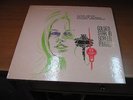
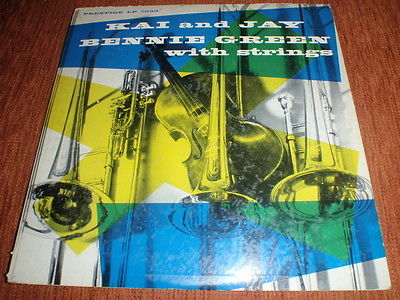
Kai and Jay Quintet
Bennie Green with strings
Prestige Records, Inc., New York, 1954, PRLP-7030
Condition of jacket: Very good, some light rubbing and ring wear. Top edge partially split at both left and right sides. Some abrasion to edges.
Condition of record: Very good to excellent, very glossy, appears almost like new, with some very minor scuffing and a light scratch on Track 4 of Side 1
Side One:
1. There's a Small Hotel
2. Stardust
3. Serenade to Love
4. Embraceable You
5. Don't Argue
6. How Long Has this Been Going On
Side Two:
1. Riviera
2. Dinner for One
3. Hip Bones
4. Wind Bag
5. We'll Be Together Again
6. Bags' Groove
From the back of the jacket:
JAY and KAI QUINTET
Jay Jay Johnson & Kai Winding, trombones; Dick Katz, piano; Peck Morrison, bass; Al Harewood, drums
Recorded December 3, 1954
Jay Jay Johnson and Kai Winding have formed a group. Why didn't such a natural combination band together before? It's almost like asking why jazz musicians don't work more often. The important fact is that they are together and Jazz will benefit.
Their association is not necessarily a new one (on a permanent basis that is) and although it may not have been the dream of each to have a combo jointly, it very likely might have been a subconscious desire because there has always been a respect for and enjoyment of each others' playing.
They started from opposite directions, Kai from his birthplace in Aarhus Denmark and Jay Jay from his in Indianapolis. Kai came to the United States with his parents in 1934. Both served their apprenticeship with various small-name bands. After this came the name bands. Kai played with Benny Goodman and Stan Kenton. At the same time Jay Jay was with Benny Carter and Count Basie. And then came New York. Who that knew them, will ever forget the halcyon days of the Forties when the music that they tagged "bop" flowered on both 52nd St. and Broadway. I remember nearly falling off my chair at the Spotlite Club in 1946 when I first heard Jay Jay sit in with Dizzy Gillespie and rip off intricate ensemble and solo passages with fluency equal to that of Diz. There were other nights at the same club, and Jay Jay fronting a quartet with an old grey felt beanie hanging on the bell of his horn to give a singularly delightful tonal effect. Then there was the Roost in 1948 with Kai coming into his own in a group with Charlie Parker, Miles Davis and Allen Eager and blowing mightily every night from under the artificial tree.
Their careers have crossed and run parallel at different times. When the great Miles Davis band recorded for Capitol, Kai was in on the first sessions and Jay Jay replaced him on the later ones. The Chubby Jackson All Star Band (Prestige 105) had both as its trombone section and their "conversation" choruses on "Flying The Coop" were actually the forerunners of their present group.
Don't get the idea that I'm going overboard into the sea of nostalgia. I'm just standing by the rail on the ship of reality looking back over the horizon. Jay Jay and Kai played great in those days but they are playing greater today. They have combined as mature and polished musicians who still have the love of jazz and the fire to play it. The years in which Jay Jay inspected blueprints at the Sperry factory and Kai worked in the studios reading ordinary scores during the early Fifties did not dull their ardor. During this period both were playing at sessions and recording occasionally. Kai returned to the jazz scene on a full time basis first. In June of 1954 Jay Jay left Sperry and by August the duo was established as a touring unit.
The three musicians who were chosen as the supporting rhythm trio are not among the best-known but the reasons for their choice is made evident by their work in this album.
A Baltimorean by birth, pianist Dick Katz is perhaps the best known. Dick received his main musical education in New York, graduating from the Manhattan School of Music in 1950. Aftr studying with Teddy Wilson at Julliard in that same year, he freelanced until 1953 when he joined Tony Scott with whose quartet he remained for a year before responding to the call of Kai and Jay Jay. Dick, who lists among his favorite pianists John Lewis, Art Tatum, Al Haig, Hank Jones and Teddy Wilson, recorded quite a bit with Scott. His solos here are not as lengthy as those but show clearly that his thinking and facility in execution have reached a new point of sharpness.
Al Harewood is a Brooklyn boy whose brother drummed in local clubs. In 1944 when his brother left for service, Al started fooling around with the drums, never studying formally but playing along with records. In 1947 his brother got him his first "gig" and he's been with it ever since. A friend of his, Arthur Edgehill (a fine drummer himself) introduced him to Jay Jay. Al's work is always pulsating, tasty, never obtrusive.
Bassist Peck Morrison has worked with Lucky Thompson, Billy Graham, Art Farmer and Lou Donaldson. He has also made numerous R & B record date including King Pleasure's "Red Top". When asked about his favorites he replied, "Always dug Jimmy Blanton's playing'. His own playing is steady and sure and shows the results of the wonderful practical experience mentioned above. He's a not-so-old pro.
The selection of tunes and their renditions point up the cohesion and great empathy in the 'boning of Kai and Jay Jay. Listen to DONT ARGUE where each takes a bar (Kai starts) in stating the theme and makes it sound like one 'bone, or to DINNER FOR ONE where the blend is a beautiful thing all by itself.
They play in the same idiom and their sounds and ideas run in the same channel at odd times although each has his own distinct personality. Kai is brasher, Jay Jay drier. Both speak the same language of jazz with different dialects.
Jay Jay Johnson and Kai Winding have formed a group. Jazz will benefit.
Composing and arranging credits; solo order.
WE'LL BE TOGETHER AGAIN — Jay Jay (arr., solo)
DON'T ARGUE — Kai (comp., arr., 1st solo)
HOW LONG HAS THIS BEEN GOING ON — Kai (arr.. solo)
BAGS' GROOVE — Jay Jay (arr., 1st solo)
RIVIERA — Jay Jay (comp., arr., 2nd solo, open); Kai (1st solo, muted)
DINNER FOR ONE — Kai (arr., 1st solo, open); Jay Jay (2nd solo, muted)
HIP BONES — Jay Jay (comp., arr., 1st solo)
WINDBAG — Kai (comp., arr., 1st solo)
engineering by Van Gelder
supervision by Bob Weinstock
BENNIE GREEN with STRINGS
Bennie Green, trombone; Alan Lane, Harold Sonn, Autrey McKissack, Max Waxier, Adam Micevich, Donald White, strings; John Malachi, piano; Tommy Potter, bass, Osie Johnson, drums
THERE'S A SMALL HOTEL • SERENADE TO LOVE
EMBRACEABLE YOU • STARDUST
Recorded May 13, 1952 in Chicago
The wedding of the jazz soloist with a string section is a risky thing. The soloist must be complemented by the strings but also retain his power. The strings cannot venture past their limit of sweetness or the soloist, however strong he may be, becomes emasculated.
Bennie Green emerges here with his warmth and strength intact, well transmitted by his large sound. The ballad standards serve him well but he is especially provocative in Osie Johnson's Serenade to Love.
The string section is capably manned by a mixture of some of Chicago's best symphony and studio musicians. Bennie recorded this set while in the Windy City with Earl Hines.
Hines' rhythm section of that time is also present. John Malachi is well known as the pianist with the Billy Eckstine band and later as Billy's accompanist. He is now in the same role with Sarah Vaughan. Tommy Potter was the bassist in that famed Eckstine band and also did yeoman work with Charlie Parker for many years. Osie Johnson, an equally talented drummer and arranger, wrote all the arrangements for this date. Since leaving the Hines group a few years ago establishing headquarters in New York, he has won wide recognition. His swinging drums and pen are much in demand.
These selections are in what might be described as a "relaxed jazz groove". Bennie Green again proves that his capabilities lie in many directions.
notes by IRA GITLER
price rating