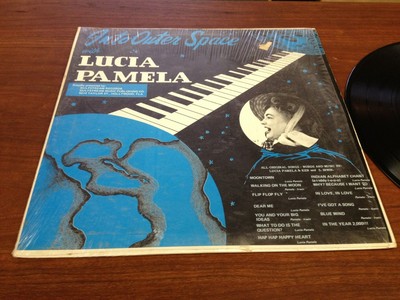
Lucia Pamela Into Outer Space 12" VINYL 33 RPM LP Vg/ Vg+
$
88


Favourite Auctions
To save auctions to your favourites, please login
If you don't have an account, please register
Description
Lucia Pamela Into Outer Space 12" VINYL 33 RPM LP Vg/ Vg+
Check out my other items!!
THE RECORD IS IN VG
THE COVER IS IN Vg+
THE STAMP NUMBER IS fiorino
MINT or M : Perfect! A mint record should look like it has just left themanufacturer, with NO flaws what so ever. It should look as though it had neverbeen handled. No scuffs or scratches, blotches or stains. No stickers addresslabels, writing on the covers or labels. No tears or seam splits. No wear tothe cover or record period! Age of the record has nothing to do with it. A MINTrecord from 1949 should look like a MINT record from 1996. The number one complaint from collectors about grading over theyears, have been the deteriorating standards that dealers and private sellershave had when grading. It is only natural for most people to turn to the"MINT" grade and read "highest prices" listed in priceguides. Since most price guides have a high and low price range, the assumedgrade most often is NOT mint, but near mint (NM). MINT COVERS: Simply put, amint cover should appear to have never had a record inside it. No wear to thecorners or any marring on the face or back of the cover. EP jackets and 45single picture sleeves also apply to this rule. The record inside can cause animpression (rounded shape in the face of the cover/sleeve) Many dealers orsellers feel that the artwork (the ink) has to be worn or starting to rub off,before there is any ring wear.
NOPE!! Mint means perfect and nothing else!
SPECIAL NOTE: It has been brought to my attention that because stickersmay involve promo and special track listings that were applied from thefactory, it is still not a standard practice. Promo stickers and large whiteprogramming labels (on the bottom of the covers) are considered a turn off.Therefore even these stickers would lower the grade from a MINT status toperhaps only EX. For stickers that show special announcements, such as"Featuring the hit song...etc", were not applied to all thecommercial releases. Some earlier copies may not have the sticker since thesong in question had not even charted yet. It was to advertise the whole LP anddraw attention to the buyer. Some stickers are worth money! That means theyactually have value. Most companies applied the stickers to the shrinkwrap andthus, one should save these items, but if applied to the covers, lower thecovers grade. If you wish to place value on the sticker (most are anywhere from50 cents to $2.00) then do so but make mention of the sticker being on thecover to potential buyers! MINT VINYL: This should be very simple to define. A mint recordshould look perfect, as described earlier. Any defect from the factorypressing, such as bubbles or pits in the vinyl are not acceptable! Even if theydo not cause any problem when played. It should, as we said, be a perfectpressing. Records often were packaged by hand and the simple placing of therecord into a paper sleeve can caused minor scuffs. Probably veryinsignificant, but they are flaws as never the less. For this reason, it isimpossible to call a sealed record mint, thus any sealed record that is sold,should be sold only with the guarantee that it is assumed to be un-played.Sealed records have sold for more than the high end of price guides. If you areselling sealed records, be advised that many collectors shy away fromthem. A sight unseen record is hard to sell. A sealed record is evenharder to sell.
----------------------------------------------------------- NEAR MINT or NM: Sometimes dealers use M- (Mint Minus)grade.
You may need to ask the dealer if he/she uses the M- grade the same way as NM.They should mean the same thing however many people have had used severalconfusing grades all based around the Mint status. We define NM and or M- asbeing almost mint. This grade should be, for the most part, the most widelyused grade for records that appear virtually flawless. Virtually flawlessrecords are not perfect. A very minor scuff and very little else can appear onthe vinyl. This will most likely have occurred during packaging, or removingthe record from the inner sleeve but had been handled with extreme care. Itshould play without any noise over the flaw. The flaw should be very hard tosee. If a scuff covers more than a few tracks yet can be seen, it will not beNM, however it may come very close. Use strong judgment when evaluating thevinyls condition. NEAR MINT COVERS: The cover should look as close to perfect withonly minor signs of wear and or age. Minor impressions to the cover (due to theouter edge of the vinyl resting inside) may be acceptable, however the artworkshould be as close to perfect as can be.
--------------------------------------------------------------
EXCELLENT or EX or VG++: This is truly NOT Goldmine definedgrade, however it is becoming more and more mainstream among collectors andsellers. It is also a very conservative grade for those who don't want to gradeNM, for fear they may over grade the record and cover. In which case it is veryacceptable yet should not command the highest price based on NM value. Only NMrecords or better are considered collectable and WILL command top dollar.Anything less, the prices drop dramatically. However many very rare(collectable) items can command very close to NM value, simply because NMcopies may not even exist. This will be explained under a different topic... FAQ: How to value your collection based on grade (future updatesforthcoming)
-----------------------------------------------------------------------------------------------
EX VINYL: An excellent (EX or VG++) condition for vinyl willallow minor scuffs which are visible but only slightly. There may be more thana few, so be careful not call a record that has wear to more than 15% of thesurface. The wear should be minimal and of course should play mint! Anyscratches that can be felt with your fingernail can NOT be called scuffs.Scuffs lay on top of the grooves. If any break in the grooves are felt, theyARE scratches. And most often, they will be heard when played (soft clicks oreven loud pops). Once again, no scratches can make this grade!
-----------------------------------------------------------------------------------------------
EX COVER: Artwork should still be as close to perfect as can be. Someimpression to the cover (minor outer ring wear) but no ink wear! Some slightcreases to the corners, but not wrinkled and obtrusive to the eye. The cornerscan show white (where the artwork pasted slick was) meaning, slight wear. Noseam splits or writing on the cover or taped repairs can make this grade. Ifyou don't think a cover is NM than call it EX or less. There will be obviousreactions to the EX grade. But if you use a EX grade and price a bit lower,your risk of over grade will be reduced dramatically. You will also make morepeople happy, rather than trying to call it NM.
----------------------------------------------------------------------------------------------
VERY GOOD PLUS or VG+: What does this mean? Some people will call a lessthan NM record VG+ and skip the EX grade. Goldmine defines it as Excellent(EX), yet commands only 50% of the value (for most records). It can easily bedefined as 2 ways. VG+ should be the next grade below a NM value when grading45 singles. EX can be used for EP's. 45 singles have only 2 songs and EP's(7" by the way) can have anywhere from 3, 4, 6 and 8 (rarely found) songson the record. With 45 singles one side may be NM and the other side may not.If the flip side is not NM but still plays well (or great, no noise), VG+ is aconservative grade. Very few 45's should be called EX unless they are ofrarities. Use careful judgment when buying and selling them with this grade!
-----------------------------------------------------------------------------------------------
VG+ VINYL: Now for LP's (the big ones <G>). VG+ will show wear,surface scuffs,(or spiral scuffs that came from turn table platters orjukeboxes for 45 singles) and some very light scratches. Surface scuffs arecaused from blunt (not sharp) objects. Often the minor scuffs are caused frominner sleeves. The vinyl should still have a great luster, but the flaws willbe noticeable to the naked eye. Sometimes holding the record up to a verybright light, you will see many tiny lines across the surface. If the flawsdon't cause any surface noise, the vinyl can make the VG+ grade. Most (but notall) VG+ records should still play like a NM record. But because the vinyl hasmore than 15% (yet less than 30%) wear to the surface, it can make this grade.Remember, the record still should look as though it was handled with extremecare. Sometimes people find records that have no scuffs that are visible, yet acareless needle scratch causes a break in the grooves. Play the record. Ifthere is any obtrusive clicks or pops, which cause the the song to be lessthan enjoyable, it may not even be VG+! Scratches are not acceptable to aserious collector in any way. If you call a record 95% NM but note the recordas having 1 track with a bad scratch, many will only consider it as VG(explained next). You should seldom call a record "A Strong VG, playsmostly VG+". It does not explain the overall condition well enough. Usethis very cautiously when grading.
--------------------------------------------------------------------------------------------------
VG+ COVERS: Now that we defined the EX grade, a few extra flaws willmake this grade.
A virtually clean cover, but may have small writing on it. (Magic marker in bigletters will not cut it. They are an eye soar, so be weary of over grading).The artwork should look clean with slightly more aging. The back of the coverusually gives away the age of the cover. Flat white paper will be somewhatyellow yet no stains or mildew from water damage. Some minor wear to the seamsor spine, but no tears or holes popping through. The corners will be slightlydog eared yet no crackly bends, defacing the artwork. In essence, a VG+ covershould have no more than 3 flaws mentioned. If all apply, it is less than VG+.(see next grade below)
------------------------------------------------------------------------------------------------
VERY GOOD or VG: The Very Good Grade does not mean Very good at all. Atleast not in the visual sense. A Very Good (VG) record will appear well playedbut still have some luster. The vinyl may be faded, slightly grayish, yetappears to have been handled as carefully as it could have been helped. Recordsthat get continuous playing time will start to deteriorate. More and moresurface scuffs and scratches, and audible sound defects WILL be heard. Theyshould not overpower the dynamics of the music. With VG records, the surfacenoise will be minor crackle or a slight hiss, but should only be heard inbetween tracks or in low musical passages. IMPORTANT NOTE: With Jazz and Classical recordings, the music canbecome very low to the point where no music is even heard. If any crackle,tics, clicks or pops are heard, these records will have very little value to aserious collector! Classical and Jazz is seldom wanted if they are in less thanVG+ condition. It is wise to play these records (as should all records) whenevaluating grades. Some classical records may look VG+ or even NM, however playless than than perfect. Beware of over grading these. They are difficult tograde and conservative grading is a must with them. Also equally as important.Most dealers truly will not have a lot of time playing every single LP theysell. It just is impossible. However when records have questionable flaws, therecord should be tested at least where the flaw occurs in the playing surface.Visually noting the flaw may not be good enough. If the record skips, you willhave made a mistake and the value would thus be less.
------------------------------------------------------------------
VG COVERS: VG covers will look worn, used. There may be some seamsplitting (but not completely separated!). There will be some ring wear,where the ink has begun to wear off. Giving the cover a look of snow falling.If the artwork looks snowy all over, it is less than VG condition. There may besome writing on the cover (still not LARGE letters in Magic Marker).
It will look aged, and more yellowish due to contaminations in the air(sometimes looking like cigarette smoke). Still it should be decent. If damagedbeyond any formable beauty, it will not make this grade. VG should at leaststill have some attractive life to it, and not have taped seams or water damageto it. If you decide to tape repair a cover, to prevent further damage, useclear scotch tape and place it on so that it is not obtrusive to the eye. Ifonly a small split, only tape the split. Don't run tape across the entire spineor seams. Too much tape means too little interest. Use as little as possible.If the split is minor, it is best to just leave it alone. Note the flaw and gofrom there with the grade.
------------------------------------------------------------------------
GOOD or G (including the G+ and VG- grades): A good record will lookvery well played, dull, grayish and possibly abused. However a Good recordshould still play. It will have distracting surface noise. Such as crackle thatis continuous or some hiss. Will also have some loss of dynamics causedfrom grooves being worn. It should play without any skips or any obtrusivelyloud pops or repeated clicks, caused by deep scratches. If you can't enjoy therecord, it is not no longer even good. Good means that it will play with someform of decency, so one can still enjoy the music even though you can stillhear noise caused from the wear. NOTE: Rock and Roll records generally play loud. G condition recordsfor them will be the most likely thing that will still sell well. Jazz andClassical and easy listening in G condition are almost worthless to acollector, since the musical passages often get very low and surface noise istoo distracting to the listener. Also check on 45 singles for the length oftime. Records that play longer than 3 minutes, may not be as dynamic and thusany where will be heard more than the music (overpower the dynamics). Useconservative judgment when grading these types of singles.
--------------------------------------------------------------------
GOOD COVER: a Good cover will have just about everything wrong with it.It will have seam splits (possibly taped repaired, but only with scotch tape.No duct tape or masking tape repairs. these are big turn offs. May have magicmarker writing on the cover but still if they are in huge letters, it is a bigturn off. In essence, the cover will looked trashed, but some artwork willstill be noticed. If the artwork is worn, it is POOR and the cover isworthless. Huge tears or gouges in the cover will also make the cover POOR. Becareful about sealed records, that have been water damaged. Mildew still canget inside and cause great damage to the cover, and the disc. Use common senseand you will save yourself from an over grade. NOTE:Sealed records that havewater damage should be opened. Otherwise you will be in trouble later on whenthe cardboard starts to deteriorate inside the shrinkwrap. Attempt to dry thecovers using a hair dryer (be sure to remove the record first!)
-------------------------------------------------------------------------------------
G+ and VG-: This is separate from the above. Many records that appear in VGcondition often play less than very good. Goldmine defines them as better thanGood, but less than Very Good. The value should not increase more than thevalue of a Good record. Meaning they all should be priced somewhere within thesame guideline (most often it is 10 to 15% for Good, and only 15% for Good Plus(G+) and Very Good Minus (VG-). With a G+ record, it willlook just as the described condition for Good, yet may play better than itlooks. Dynamics for are usually good enough to overpower the surface noise.Same for VG-, However VG- and G+ are of the same value. It is more of avisually and audible combined grade. There should be no large price increasefor these records. Price them like G records and you should not have a problem.
---------------------------------------------------------------------
FAIR, & POOR: The easiest way to define this is if does not meet thelowest grade above (GOOD), it is trash. It is worthless. Unless it is so rare,it won't sale worthy at all. It is ok to throw them away or give them tosomeone who just wants to have them. It won't be playable for the most part,and so they are not much good hanging onto them. Very few poor records arecollectable. Some rare colored vinyl or picture discs are ok, and can still benice to have, but they won't be good enough to play again.
_____________________________________________________________________
SPECIAL NOTE ABOUT VINYL QUALITY:
Many people will buy reissues of past oldies. The era in which the vinyl ispressed makes a big difference to the way it will last and how well it willsound for years to come. Original 50's and 60's used quality materials toproduce LP's. Smaller labels used less than great vinyl. A good pressing isoften identified by it's thickness. Also the depth of the grooves. These willgenerally be better for the person who seeks quality originals. There is stillthe question as to the use of styrene. These are more brittle and damagedeasily when played on poor equipment. Finding good playing styrene can only befound by playing them. Some styrene will play better than others. Styrene made45s are all over the place. When they get worn, the grooves turn a brownish oreven white grayish color. They may play but a great loss of dynamics will benoticed
as well, more surface noise will be a result. Most records of this natureare worthless. ---------------------------------------------------------------------- Quick rundown in abbreviated Grading System MINT NM EX or VG++ VG+ VG G (with minor exceptions to G+ and VG-) F and P (Trash) (some records in Fair condition will be wanted but very,very few. GRADES THAT DON"T EXIST: Be weary of these grades! M+ (Mint Plus) : They are trying to say the record is better thanMINT! No such animal. If you see this grade, avoid the record like the plague.Mint is the highest grade anything can ever be. And 99 out of 100 times therecord won't even be mint! Man is not perfect! So how can a an man made productbe better than perfect? Answer: Impossible! NM- : Near Mint Minus. Just another way of trying to get top bookvalue for a record that is less than NM. If a seller uses this grade, askwhat it means (thoroughly) as opposed to the NM or M- grade. It's your dollarand if they are selling it as less than NM yet for top dollar, you may be outof luck trying to convince them that it was an over grade on their part. If arecord is slightly less than NM, then use EX or VG++. EX+: If you read the above the same rule holds true here. No suchthing as EX+. It is just another confusing grade that does not have any definedlevel of agreement among collectors. People who use this grade don't want tolose money on there collectables. By upping the grade, means upping the price.Just be fair. Use conservative grades When you grade a record, put yourself inthe shoes of the potential buyer. Would you want to get a record with thisgrade and discovery some overlooked flaws? If you sell a record for big $$$ beprepared for criticism. People will examine the record with more than just aquick glance once they receive it. Over grading will only make you look bad.And too many unhappy customers, means very few repeats (or perhaps no customersin the long run). VG+++: Come on, 2 plus marks are enough! No such animal! G++ : Ok so I use it once in a blue moon. But at least I describethe way the record plays, to a tee! The price does not go up. The gradeis just a good selling point. Realistically though it does not exist. Use itrarely if ever. Other considerations:
Most dealers give a separate grade to the record and its sleeve or cover. In anad, a records grade is listed first, followed by that of the sleeve or jacket.
With Still Sealed (SS) records, let the buyer beware, unless it's a U.S.pressing from the last 10-15 years or so. It's too easy to reseal one. Yes,some legitimately never-opened LP's from the 1960's still exist. But if you'relooking for a specific pressing, the only way you can know of sure is to openthe record. Also, European imports are not factory-sealed, soif you see them advertised as sealed, someone other than the manufacturersealed them.
Posted with eBay Mobile
price rating