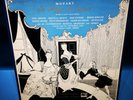
Mozart Le Nozze di Figaro, Four Records Set, Cesare Siepi, Erich Kleiber Conduct
$
70


Favourite Auctions
To save auctions to your favourites, please login
If you don't have an account, please register
Description
Four records set in perfect condition, seldom listened Mint
Respectfully well handled at all times
A score/ lyric booket plus extra
Almost in brand new condition "in and out"
A COMPLETE RECORDING
Hard to find
MOZART. LE NOZZE DI FIGARO. Cesare Siepi (bass) Figaro; HiIde Gueden (sop) Susanna; Alfred PoeII (bar) Count Almaviva; Lisa della Casa (sop) Countess Almaviva; Suzanne Danco (sop) Cherubino: Hilda Ressi-Majdan (contr) Marcelline; Fernando Corena (bass) Bartolo; Murray Dickie (ten) Don Basilio; Hugo Meyer-Welfing (ten) Don Curzio; Harald Priiglhaf (bass) Antonio; Anny Fel- bermayer (sop) Barbarina; Vienna State Opera Chorus; Vienna Philharmonic Orchestra / Erich Kleiber
The 1955 Kleiber Figaro, which I alluded to in my review of the reissued Giulini version in January, is another of the classics of the gramophone: beautifully played by the Vienna Philharmonic, conducted with poise and vitality and a real sense of the drama unfolding through the music. It's very much a Viennese performance, not perhaps as graceful or as effervescent as the Giulini but warm, sensuous and alive to the interplay of character. At the centre is Hilde Gueden, whose Susanna has echoes of Viennese operetta singing although she remains a true Mozartian stylist— her "Deh vieni" is impeccably graceful and perfectly timed. Lisa della C,asa's Countess may not be one of the most dramatic but the voice is full yet focused, and "Dove sono" is a delight in particular. Suzanne Danco's Cherubino is not exactly impassioned, and is really as much girlish as boyish, but it is still neat and musical singing. The balance among the men is affected by the casting of Figaro with a weightier singer than the Count. But Alfred Poell's Count makes up in natural authority and aristocratic manner what he lacks in sheer power, and he shows himself capable, too, of truly sensual singing in the Act 3 duet with Susanna. Siepi's Figaro, dark and rich, has a touch of menace but even more of wit. Good performances, too, from Corena's verbally athletic Bartolo and Dickie's alert, ironic Basilio. But the true star is Erich Kleiber. The beginning of the opera sets your spine a-tingling with theatrical expectation. Act 1 goes at pretty smart tempos, but all through he insists on full musical value. There is no rushing in the confrontations at the end of Act 2; all is measured and properly argued through. And, as I said of the Giulini version, everything is truly sung: the singers are never allowed, even had they wanted to, to skimp on the music to convey the drama, and they have rather to use the music to convey it. With Kleiber and the VPO behind them, they do so convincingly. The transfer to CD presents the sound as well as one could hope for from a set made more than 30 years ago, and—once again—no lover of the opera should be without it. S.S.
price rating