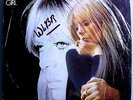
NICO+VELVET UNDERGROUND CHELSEA GIRL RARE ORIG 1967 VERVE STEREO LP STUNNING
$
150


Favourite Auctions
To save auctions to your favourites, please login
If you don't have an account, please register
Description
NICO (WITH THE VELVET UNDERGROUND) – CHELSEA GIRL – ORIGINAL 1967 U.S. PRESSING – ORIGINAL 1967 VERVE RECORDS STEREO LP V6-5032
· ORIGINAL U.S. PRESSING
· FEATURES THE ENTIRE ORIGINAL LINE-UP OF VELVET UNDERGROUND ON FOUR TRACKS
· THIS IS THE ORIGINAL, AUTHENTIC, FIRST U.S. PRESSING; THIS IS NOT A REISSUE, AN IMPORT, OR A COUNTERFEIT PRESSING.
· ORIGINAL, THICK CARDBOARD COVER (AMERICAN STYLE)
THIS IS THE ORIGINAL, AUTHENTIC, FIRST U.S. PRESSING; THIS IS NOT A REISSUE, AN IMPORT, OR A COUNTERFEIT PRESSING.
· ORIGINAL, THICK CARDBOARD COVER (AMERICAN STYLE)
· ORIGINAL GLOSSY, LIGHTLY LAMINATED COVER
· THICK, HEAVY VINYL PRESSING
· CLEAN, WEAR-FREE LABELS
· ORIGINAL GLOSSY, LIGHTLY LAMINATED COVER
·
(?PLEASE SEE THE IMAGE OF THE COVER, LABEL OR BOTH, SHOWN)
(Note: this is a REAL image of the ACTUAL item offered. This is NOT a "recycled" image from our previous auction. What you see is what you'll get. GUARANTEED!)
________________________________________________________________________________________
Although Chelsea Girl (1967) was the first long-player from the German-born Christa Päffgen, it was not her debut solo effort. Prior to becoming involved with the Velvet Underground and while under the direction of Andrew Loog Oldham, Nico issued an obscure 7" on the mod pop Immediate label. The song selection on that 1965 single -- which featured a cover of Gordon Lightfoot's "I'm Not Sayin'" and an Oldham co-composition with Jimmy Page called "Last Mile" -- foreshadowed the eclectic nature of this LP. Although the dissolution between the vocalist and core instrumental quartet was not without its share of acrimony, the non-percussive contingent of the Velvet Underground is heavily featured on Chelsea Girl: along with then-unknown singer/songwriter Jackson Browne (guitar) -- the vocalist's concurrent love interest -- there is Lou Reed (guitar), Sterling Morrison (guitar/bass), and John Cale (piano/bass/viola), who contrast what they had been doing with the larger combo. These sides are decidedly "unplugged," providing a folky and Baroque setting for Nico's dark and brooding vocal inflections. There is an introspective foresight in Browne's "Fairest of the Seasons," "These Days," and "Somewhere There's a Feather." The minimalist string section features a quaint, yet effective arrangement giving the material a distinctly European feel. These orchestrated folk leanings are similar to the sound emanating from other burgeoning groups such as the Incredible String Band, Pentangle, and the Fairport Convention spin-off Fotheringay.The same can be said of her almost unrecognizable reworking of Bob Dylan's "I'll Keep It With Mine." The noir black-widow charm ultimately saves the performance, as does Cale's remarkable classical intonations. With Reed's "Wrap Your Troubles in Dreams" -- a track which actually predates the Velvet Underground -- there is a sense of history that Nico brings to her interpretation, as if the melody were, in fact, a traditional German folk tune. There is a palpable distinction between those lighter cuts and the menacing Velvet Underground-conceived material. At the center of the project are the extended "It Was a Pleasure Then" and the stunning semi-autobiographical Reed/Morrison title track. The juxtaposition of such honest and at times harrowing imagery to Nico's inherently bleak delivery is nothing short of an inspired artistic statement which has since long outlasted its initial socially relevant context -- similar to the more modern contributions of Laurie Anderson, Ann Magnuson, and Patti Smith. An unqualified masterpiece
(EXCERPT FROM AN ONLINE REVIEW BY LINDSAY PLANER, ALL MUSIC GUIDE /ALLMUSIC.COM/)
Nico's debut solo album might be the most contentious entry on the list of 25 most overlooked folk-rock albums of the '60s, as many might feel that neither the LP nor the artist fall into that wide chasm we call "folk-rock." This is, after all, a platter from a just-ex-member of the Velvet Underground, one of the noisiest and most controversial bands of all time. There are no drums and little electric guitar on the record, whose arrangements favor ornate baroque orchestrations with strings and flute. And Nico herself would rarely touch upon folky territory in her lengthy subsequent solo career, taking the opportunity to disown the record when asked about it.
Yet Nico's own background in folk was not negligible. For years, apparently, she'd been bugging whoever would listen to let her perform and record Bob Dylan's "I'll Keep It With Mine," which Dylan himself had yet to release on his own vinyl, and which (she said) Bob had written for her during their brief affair in Europe in 1964. She had, according to session drummer Bobby Graham, done a Joan Baez cover on an unreleased 1965 French-language EP. She'd done a pop version of Gordon Lightfoot's "I'm Not Sayin'" on her '65 flop debut single, backed by an acoustic ballad produced and co-penned by the young Jimmy Page, who (along with Brian Jones) also played guitar on the track. More recently, she'd been working as a solo artist in the Dom club in New York, where her sole accompaniment was one guitar, played variously by Tim Hardin, Tim Buckley, fellow Velvet Undergrounders John Cale and Sterling Morrison, Ramblin' Jack Elliott, and teenage paramour Jackson Browne.
Most of those sidemen would end up contributing songs to Chelsea Girl, which is notable not so much for Nico's oddly low, deadpan vocals (which sometimes wavered into flatness) as the well-selected repertoire and the adroit combination of acoustic folk with gorgeous (if somewhat fruity) quasi-classical chamber music. Perhaps it was consciously or subconsciously inspired by the similar baroque-folk approach Judy Collins had used (with much more commercial reward) on her recent In My Life album, which likewise cherry-picked underexposed tunes by up-and-coming singer-songwriters. (Collins, as it happened, also had eyes on "I'll Keep It with Mine," beating Nico to it by covering it as a non-LP track on a 1965 single.)
Chelsea Girl, however, was odder and less apt to capture a wide audience, both by virtue of the singer's almost macabre vocals and the more obtuse songs that were selected. But those songs, obscure as they were both in renown and in their lyrical flavors, were quite good ones -- by Browne, Hardin, Cale, Morrison, Lou Reed, and Dylan -- that for the most part had not yet been included on releases by anyone. (In some cases, versions by the composers themselves have yet to be released.) Certainly the Reed-Morrison collaboration "Chelsea Girls" is a devastating portrait of Warholian decadence every bit the equal of any such number the Velvet Underground tackled on their albums. It was also the first airing for Browne's much-loved "These Days," though his "The Fairest of the Seasons" (co-written with Greg Copeland) and "Somewhere There's a Feather" are equally attractive in their almost timid daintiness. Hardin's "Eulogy to Lenny Bruce," to be included on the composer's live album the following year, is as funereal as anything Nico did in her goth phase, though here accompanied solely by guitar.
Only "It Was a Pleasure Then" (written by Nico with Cale and Reed), with its cacophonous guitar shrieks and rumbles underpinning rhythm-less melismatic stream-of-consciousness, sounds at all like the Velvet Underground. (It sounds a lot like the Velvet Underground, actually, enough so that it could have fit on their early albums without causing too much of a jolt.) The only cut that fails to convince, ironically enough, is "I'll Keep It With Mine," whose bouncy strings seem to be trying way too hard to make this into an appropriately upbeat feel-good number.
Though it was produced by one of folk-rock's top aides-de-camp, Tom Wilson (who'd worked on Dylan's early electric recordings and grafted electric guitar and drum onto Simon & Garfunkel's "The Sound of Silence"), Chelsea Girl did not, as Verve was probably hoping, make Nico into a pop star for the artsy. Both Nico and others involved in the record, in fact, heavily criticized Wilson's role in the sessions. Cale and Browne have recalled how Wilson seemed to spend more time on the phone than paying attention to what was going on in the studio, while Nico (as quoted in Richard Witts's biography Nico: The Life & Lies of an Icon) griped, "I cried when I heard the album. I cried because of the flute. I hate it so much! It is a great mistake. The arrangements in general were not so good. Even so, I could bear the string sound. But I wish I could take the flute off. There should be a button on record players, a 'No Flute' Button....I wish I could un-orchestrate Chelsea Girl. The flute, anyway." Nico was soon free to record wholly dissimilar albums, occupied primarily by her own material, in which there were no flutes, no folk, and barely even any rock in the conventional term, focusing on music of the most uncompromising, avant-garde sort. But while Chelsea Girl ended up being something of an anomaly in the context of her career as a whole, it remains her most accessible work -- though, by the standards of '60s folk-rock, it's downright avant-garde in many respects.
(EXCERPT FROM AN ONLINE ARTICLE BY RICHIE UNTERBERGER)
For its extraordinary contribution to the contemporary music, superb production, craftsmanship, fine musicianship, revolutionary significance and influence it exerted on numerous generations of musicians, songwriters and general public, or for some other inherent quality, this album was voted one of top-200 albums of all time in one of the largest poll of critics, music reviewers, show business professionals and producers ever organized: the poll, which was conducted by Paul Gambaccini, the legendary BBC Radio A&R man, surveyed more than 50 top music professionals (including Roy Carr, Jonathan Cott, Robert Christgau, Cameron Crowe, Chet Flippo, Ben Fong-Torres, Charlie Gillett, Greil Marcus, Murray the K., Lenny Kaye, Bruce Morrow (a/k/a "Cousin Brucie"), Tim Rice , Lisa Robinson, Robert Shelton, Ed Ward, Joel Whitburn, Pete Wingfield, etc.). For more details, see: "Critics Choice: Top-200 albums" , Omnibus Press, Library of Congress Catalog No.7855565
The PROMOTIONAL, RADIO STATION-, AUDITION OR DEMONSTRATION COPIES AND RELEASES (such as the one we have here) were often distributed among the radio stations before the record was released to the public, sometimes as much as four months ahead. These records are generally considered to be the "first among equals", which is to say the VERY FIRST generation and the VERY FIRST pressings of the particular title; a PROTOTYPE and the earliest known official pressing of the record.
In My Life album, which likewise cherry-picked underexposed tunes by up-and-coming singer-songwriters. (Collins, as it happened, also had eyes on "I'll Keep It with Mine," beating Nico to it by covering it as a non-LP track on a 1965 single.)
WE GRADE THE VINYL AS NM-
The record is pressed on a beautiful, thick, inflexible vinyl, which was usually used for the first or very early pressings. Usually, the sound on such thick vinyl pressings is full-bodied, vivid, and even dramatic. Do not expect to obtain such a majestic analog sound from a digital recording!
COVER
THE COVER IS NICE --- ABOUT EXCELLENT OR VERY GOOD++
Cover has A MINOR HAIRLINE CREASE AT UPPER RIGHT CORNER AND JUST A TAD BIT OF CORNER RUBBING, NICE CLEAR TIGHT SPINE. BEAUTIFUL COVER FOR ITS AGE OF NEARLY 50 YRS!
___________________________________________________________________
price rating




![[SOUL/FUNK] EXC LP LABELLE Self Titled {Original 1971 WARNER BROTHERS Issue]](https://www.popsike.mobi/php/thumbnail.php?url=https://www.popsike.pics/pix/20200529/124203916164.jpg)