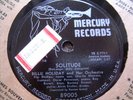
POLA NEGRI-POLISH SILENT MOVIE/TALKIE-RUSSIAN SONGS 78
$
103


Favourite Auctions
To save auctions to your favourites, please login
If you don't have an account, please register
Description
=> The World of Movies and Movie Stars.....
This week, I offer a kaleidoscope of rare MOVIE sound treasures.
Enter POLA NEGRI. Alluring..... as her same generation Silent Movie peer, Nazimova, her movies and her recordings give clear document to her mystique and popularity.
This is one of her recordings of Russian popular fare. This 10" HMV is in a good E to near E+ condition.
About Pola Negri courtesy of Wikipedia
Pola Negri (3 January 1897 – 1 August 1987) was a Polish stage and film actress who achieved worldwide fame for her tragedienne and femme fataleroles from the 1910s through the 1940s during the Golden Era of Hollywood film. She was the very first European film star to be imported into Hollywood, and also started several important women's fashion trends. She is known for being one of the most popular stars of the silent film era, and her varied career included work as an actress in silent and talking films, theater, and vaudeville; as a singer and recording artist; as an author; and as a ballerina.
Polish theatre and film career
After Negri returned from her stay at the sanatorium, she successfully auditioned for the Warsaw Imperial Academy of Dramatic Arts, from which she graduated in 1914. Her graduating performance was as Hedwig in Ibsen’s The Wild Duck, which resulted in offers to join a number of the prominent theatres in Warsaw.[6] By the end of World War I, Negri had established herself as a popular stage actress. She made an appearance in the Grand Theatre (in Sumurun), as well as in Small Theatre (Aleksander Fredro's ?luby panie?skie) and at the Summer Theatre in the Saxon Garden, a popular summer variété theatre.
Negri debuted in film in 1914 in Slave to her Senses (Niewolnica zmys?ów). She also appeared in a variety of films made by the Warsaw film industry, including Pokoj Nr. 13 (Room No. 13), Jego Ostatni Czyn (His Last Gesture), Students (Studenci), and The Wife (?ona).[7] Negri gained much popularity during her short screen career in Warsaw, acting with many of the most renowned Polish film artists of the time, including Józef W?grzyn, W?adys?aw Grabowski, Józef Galewski and Kazimierz Junosza-St?powski.
[edit]Ernst Lubitsch and German silent film career
In 1917, Negri's popularity provided her with an opportunity to move to Berlin, Germany, to appear as the dancing girl in a German revival of Max Reinhardt's theatre production of Sumurun. In this production, she met Ernst Lubitsch,[8] who at the time was producing comedies for the German Film studio UFA. Negri was also signed to UFA's roster and began making films for them. Some of the films that she made with UFA include Der Gelbe Schein (The Yellow Ticket, 1917), Wenn das Herz in Haß erglüht (If the Heart Burns With Hate, 1917), and Comtesse Doddy (1918).
In 1918, Lubitsch convinced UFA to let him create a large-scale film with Negri as the main character. The result was Die Augen der Mumie Ma (The Eyes of the Mummy Ma, 1918), which was a popular success and led to a series of Lubitsch/Negri collaborations, each larger in scale than the previous film. The next was Carmen (1918, reissued in the United States in 1921 as Gypsy Blood), which was followed by Madame Dubarry (1919, released in the United States as Passion). Madame DuBarry became a huge international success, and managed to bring down the American embargo on German films and launch a demand for German films that briefly threatened to dislodge Hollywood's dominance in the international film market. Negri and Lubitsch made three German films together after this, Sumurun (aka One Arabian Night, 1920), Die Bergkatze (aka The Mountain Cat or The Wildcat, 1921), and Die Flamme (The Flame, 1922), and UFA employed Negri for films with other directors, including Vendetta (1920) and Sappho (1921), many of which were purchased by American distributors and shown in the United States.
Hollywood responded to this new threat by buying out key German talent, beginning with the procuration of the services of Lubitsch and Negri. Lubitsch was the first director to be brought to Hollywood, with Mary Pickford calling for his services in her costume film Rosita (1923). Paramount Pictures mogul Jesse Lasky saw the premiere of Madame DuBarry in Berlin in 1919, and Paramount invited Negri to come to Hollywood in 1921. She signed a contract with Paramount and arrived in New York in a flurry of publicity on September 12, 1922. This ended up making Negri the first ever Continental star to be imported into Hollywood, setting a precedent for imported European stars that would go on to include Greta Garbo, Marlene Dietrich, Ingrid Bergman, Sophia Loren, and many others.
[edit]Paramount period
Pola Negri and Rod La Rocque in a publicity portrait for Forbidden Paradise(1924)Negri ended up becoming one of the most popular Hollywood actresses of the era, and certainly the richest woman of the movie industry at the time,[9] living in a mansion in Los Angeles modeled after the White House. While in Hollywood, she started several ladies' fashion trends, some of which are still fashion staples today, including red painted toenails, fur boots, and turbans.[10] Negri was a favorite photography subject of the famous Hollywood portrait photographer Eugene Robert Richee,[11] and many of her best-known photographs were taken during this period.
Negri's first two Paramount films were Bella Donna (1923) and The Cheat (1923), both of which were directed by George Fitzmaurice and were remakes of Paramount films from 1915. Negri's first spectacle film was the Herbert Brenon-directed The Spanish Dancer (1923), which was based on the Victor Hugo Novel Don César de Bazan. The initial screenplay was intended as a vehicle for Rudolph Valentino before he left the Paramount lot, and was reworked for Negri. Rosita, Lubitsch's film with Mary Pickford, was released the same year, and also happened to be based on Don César de Bazan. According to the book Paramount Pictures and the People Who Made Them, "Critics had a field day comparing the two. The general opinion was that the Pickford film was more polished, but the Negri film was more entertaining."[12]
Initially Paramount utilized Negri as a mysterious European femme fatale and as a clotheshorse as they did with their other major actress Gloria Swanson, and staged an ongoing feud between the two actresses which actor Charlie Chaplin remembered in his autobiography as "a mélange of cooked-up jealousies and quarrels."[13] Negri was concerned that Paramount was mishandling her career and image, and arranged for her former director Ernst Lubitsch to direct her in the critically acclaimed Forbidden Paradise (1924). It would be the last time the two worked together in any film. By 1925, Negri's on-screen continental opulence was starting to wear thin with some segments of the American audience, a situation which was parodied in the Mal St. Clair-directed comedy A Woman of the World (1925), which Negri starred in.
Pola Negri with Paul Lucas in a publicity still for Three Sinners (1928)Paramount then began to cast Negri in international peasant roles in films such as the Mauritz Stiller-directed and Erich Pommer-produced Hotel Imperial (1927) in an apparent effort to give her a more down-to-earth, relatable image.[14] Although Hotel Imperial reportedly fared well at the box office, her next film Barbed Wire (1927) and a number of her subsequent films performed poorly in the United States due to the poor publicity surrounding her behavior at her former lover Rudolph Valentino's New York funeral and her rebound marriage to Georgian prince Serge Mdivani, although internationally her films continued to fare well.
In 1928, Negri made her last film for Paramount Pictures, The Woman From Moscow, opposite actor Norman Kerry. Negri claims in her autobiography that she opted not to renew her contract with Paramount, choosing instead to retire from films and live as a wife and expectant mother in the Château de Rueil-Séraincourt in Vigny, France, which she owned at the time.[15] That same year, she wrote a short volume featuring her reflections on art and film entitled La Vie et Le Rêve au Cinéma (Life and Dreams in the Movies).[16]
More MOVIE and Movie Stars recordings:View Seller other auctions
<
price rating




![Modest Mouse This is a long drive with nothing to.. [LP] Up Records with Posters](https://www.popsike.mobi/php/thumbnail.php?url=https://www.popsike.pics/pix/20141207/191440029997.jpg)