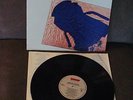
RIPPLE The Beat Goes On SILVETTI Spring Rain Salsoul UK 12" Tom Moulton remaster
$
38


Favourite Auctions
To save auctions to your favourites, please login
If you don't have an account, please register
Description
Record: Excellent (EX) Cover: Very Good (VG) Labels: Clean! Ripple,Silvetti The Beat Goes On And On / Spring Rain 2003 United Kingdom Salsoul SALSA 12 009 12" Stereo 33 RPM Vinyl Single SB-60712
Ripple,Silvetti
The Beat Goes On And On / Spring Rain
2003 United Kingdom Salsoul 12" Single Vinyl Record
Hard to find UK ONLY clean classic disco Moulton remasters
Condition
Vinyl: Excellent (EX)
Sleeve: Very Good (VG) Stickered Salsoul sleeve has short split seam at top with small vertical tear, price label on back but otherwise no cuts or marks
Please see item specifics section above for more details
Tracks:
Ripple / Silvetti* – The Beat Goes On And On / Spring Rain Ripple - The Beat Goes On And On / Spring Rain Label: Suss'd Records – SALSA 12 009, Salsoul Records – SALSA 12 009 Format: Vinyl, 12", 33 ⅓ RPM, Compilation, Remastered Country: UK Released: 2003 Genre: Electronic, Funk / Soul Style: Disco A Ripple– The Beat Goes On And On (Original Jim Burgess 12" Mix) Mixed By – Jim Burgess Producer – Floyd Smith Written-By – B. Lee*, B. Sherrer*, F. Smith*, K. Carter*, V. Burks*, W. Carter* 7:52 B Silvetti*– Spring Rain (Original 12" Mix) Mixed By – Tom Moulton Producer – Silvetti* Written-By – B. Silvetti* 5:52 Remastered By – Tom Moulton Re-mastered by Tom Moulton from the original master tapes. Track A's duration on cover (7:52) differs from the one on the label (6:56). A: Originally released 1977. B: Originally released 1975.
RIPPLE The Beat Goes On SILVETTI Spring Rain Salsoul UK 12" Tom Moulton remaster Ripple was an American funk band from Michigan. The group was signed to GRC Records and Salsoul Records in the 1970s and scored several hit singles, the biggest of which were "I Don't Know What It Is, but It Sure Is Funky"[1] and "The Beat Goes On and On," the latter on Salsoul Records, joined by the Salsoul Orchestra. After moving to Atlanta, Georgia, Wally, Kenny, and Brian restructured the group, adding Victor Burks (keyboards) and Barry Lee (guitar). The group toured extensively around the Southeast, the highlight of which was opening for George Clinton and Parliament Funkadelic on their "Mothership Connection" tour. Wally, Kenny, Brian, Victor, and Barry went on to record their seminal album, Sons of the Gods. "The Beat Goes On and On", from that album, became a disco/hustle classic that still receives airplay today. The signature "oh-la oh-la ay" line from "I Don't Know What It Is, but It Sure Is Funky" was later incorporated into Marcia Griffiths' smash hit, "Electric Boogie (Electric Slide)," along with Kid 'n Play's 1988 hit "Rollin' with Kid 'n Play." Band members Keith Samuels - guitar, lead vocals Simon Kenneth Carter - bass, vocals Brian Sherrer - drums, percussion, timbales Walter (Wally) Carter - conga, percussion, vocals Dave Ferguson - trumpet, flugel horn, percussion William (Bill) Hull - tenor sax, flute, percussion Curtis Reynolds - organ, piano, vibe master, vibraphone, vocals Victor Burks - keyboards, vocals Barry Lee - guitar Juan Fernando Silvetti Adorno (27 March 1944 – 5 July 2003), professionally known as Bebu Silvetti or simply Silvetti, was an Argentine-Mexican pianist, composer, conductor, arranger, and record producer. In the 1970s he moved to Mexico and became a citizen. Popularly known for the 1977 instrumental disco hit, "Lluvia De Primavera" ("Spring Rain" in English), the album was produced in Spain and for the 1980 modern instrumental mariachi album. Silvetti was also a successful, Grammy-winning producer for a wide variety of Latin and international music performers. He was the father of six children, including the actress Anna Silvetti [es].[1] Silvetti also worked in the music of successful films and telenovelas in Mexico. Biography Early life Silvetti was born in the city of Quilmes, Argentina, located in the province of Buenos Aires, approximately 17 kilometers from the capital city of Buenos Aires. He started his piano education at the age of six. During his teenage years he formed his own jazz quartet and a few other musical groups. At 19, Silvetti left Argentina to go to Spain where he stayed a few years working as a pianist at some of the most popular jazz clubs of the time. Career In the early 1970s he moved to Mexico and started arranging and composing. He recorded his first album, which contained his hit offering, "Spring Rain." The LP was released in the US on Salsoul Records. Other albums followed. Silvetti continued arranging, composing and producing mostly for other artists. After 10 years working in Los Angeles, California, he eventually settled in Miami, Florida, where he produced, arranged, and composed for a wide variety of Latin and international artists.[2] During his career, Silvetti worked with performers such as Jose Jose, Plácido Domingo, Luis Miguel, Paul Anka, Engelbert Humperdinck, Vikki Carr, Ana Cristina, Roberto Carlos (singer), Rocío Dúrcal, Rocío Jurado, Jerry Rivera, Tamara, Los Kjarkas, Daniela Romo, Armando Manzanero, José Luis Perales, Daniel Barenboim, Juan Gabriel, Maggie Carles, Los Nocheros, Marco Antonio Solís, Ricardo Montaner, Paloma San Basilio, Raúl di Blasio, Vic Damone and Selena. Silvetti achieved many successes and accolades throughout his long and prolific career. In 2004, Silvetti was honored posthumously as recipient of the 2003 Latin Grammy Award for Producer of the Year[3] for his work on "Hasta Que Vuelvas" by Luis Miguel, "Quién Da un Peso Por Mis Sueños" by Armando Manzanero featuring Alex Lora and the albums Rocío Dúrcal ... En Concierto Inolvidable by Rocío Dúrcal and Suma by Ricardo Montaner. In 2002, he received the Billboard Producer of the Year Award.[4] In 2001, he topped Billboard's year-end "Hot Latin Tracks Producer Chart."[5] Death Bebu Silvetti died at the age of 59 from respiratory failure caused by complications from lung cancer treatment.[6] At the time of his death, he reportedly had composed more than 600 songs, over 200 TV and radio commercials, and a number of film and TV soundtracks.[7] Musical legacy His hit track "Spring Rain" was remixed by DJ YOSHITAKA for the Japanese music game beatmania IIDX 13 DistorteD. The song name was changed to "Spring Rain (Lluvia De Primavera)" to signify the remix. Denki Groove's song "Shangri-La", a remix of which was the ending theme of the 2009 anime series Kūchū Buranko, is based around looped samples of "Spring Rain". Silvetti is credited as a co-writer of the song. Select discography World Without Words (as Silvetti) (1976) Super Disco Sound (1976) The Sensuous Sound of Silvetti: Spring Rain (as Silvetti) (1977) Concert From The Stars (as Silvetti) (1978) I Love You (as Silvetti) (1980) Silvetti en México (as Bebu Silvetti) (1980) Lluvia De Primavera (as Bebu Silvetti) (1994) Íntimos (Armando Manzanero and Bebu Silvetti) (1997) Boleros Eternos (Carlos Greco and Bebu Silvetti) (2006) Disco is a genre of dance music and a subculture that emerged in the late 1960s "from the United States' urban nightlife scene". Its sound is typified by four-on-the-floor beats, syncopated basslines, string sections, brass and horns, electric piano, synthesizers, and electric rhythm guitars. Discothèques originally a French invention, imported to the United States with the opening of Le Club, a members-only restaurant and nightclub located at 416 East 55th Street in Manhattan, by French expatriate Olivier Coquelin, on New Year's Eve 1960.[5] Disco started as a mixture of music from venues popular among African-Americans, Hispanic and Latino Americans, gay Americans, and Italian Americans[6] in New York City (especially Brooklyn) and Philadelphia during the late 1960s to the mid-to-late 1970s. Disco can be seen as a reaction by the 1960s counterculture to both the dominance of rock music and the stigmatization of dance music at the time. Several dance styles were developed during the period disco's popularity in the 1970's in the United States, including "the Bump", "the Hustle", "the Watergate", and "the Busstop".[7] During the 1970s, disco music was developed further, mainly by artists from the United States as well as from Europe. Well-known artists included the Bee Gees, ABBA, Donna Summer, Gloria Gaynor, Giorgio Moroder, Baccara, The Jacksons, Michael Jackson, Boney M, Earth Wind & Fire, Rick James, ELO,[8] Average White Band, Chaka Khan, Chic, KC and the Sunshine Band, Thelma Houston, Sister Sledge, Sylvester, The Trammps, Barry White, Diana Ross, Kool & the Gang, and the Village People.[9][10] While performers garnered public attention, record producers working behind the scenes played an important role in developing the genre. By the late 1970s, most major U.S. cities had thriving disco club scenes, and DJs would mix dance records at clubs such as Studio 54 in Manhattan, a venue popular among celebrities. Nightclub-goers often wore expensive, extravagant outfits, consisting predominantly of loose, flowing pants or dresses for ease of movement while dancing. There was also a thriving drug subculture in the disco scene, particularly for drugs that would enhance the experience of dancing to the loud music and the flashing lights, such as cocaine and quaaludes, the latter being so common in disco subculture that they were nicknamed "disco biscuits". Disco clubs were also associated with promiscuity as a reflection of the sexual revolution of this era in popular history. Films such as Saturday Night Fever (1977) and Thank God It's Friday (1978) contributed to disco's mainstream popularity. Disco declined as a major trend in popular music in the United States following the infamous Disco Demolition Night on July 12, 1979, and it continued to sharply decline in popularity in the U.S. during the early 1980s; however, it remained popular in Italy and some European countries throughout the 1980s, and during this time also started becoming trendy in places elsewhere including India[11] and the Middle East,[12] where aspects of disco were blended with regional folk styles such as ghazals and belly dancing. Disco would eventually become a key influence in the development of electronic dance music, house music, hip hop, new wave, dance-punk, and post-disco. The style has had several revivals since the 1990s, and the influence of disco remains strong across American and European pop music. A revival has been underway since the early 2010s, coming to great popularity in the early 2020s. Albums that have contributed to this revival include Confessions on a Dance Floor, Random Access Memories, Future Nostalgia, and Kylie Minogue's album itself titled Disco.[13][14][15][16] Modern day artists like Dua Lipa, Bruno Mars and Silk Sonic have continued the genre's popularity, bringing it to a whole new younger generation.[17][18] Etymology The term "disco" is shorthand for the word discothèque, a French word for "library of phonograph records" derived from "bibliothèque". The word "discotheque" had the same meaning in English in the 1950s. "Discothèque" became used in French for a type of nightclub in Paris, after they had resorted to playing records during the Nazi occupation in the early 1940s. Some clubs used it as their proper name. In 1960, it was also used to describe a Parisian nightclub in an English magazine. The Oxford English Dictionary defines Discotheque as "A dance hall, nightclub, or similar venue where recorded music is played for dancing, typically equipped with a large dance floor, an elaborate system of flashing coloured lights, and a powerful amplified sound system. " Its earliest example is use as the name of a particular venue in 1952, and other examples date from 1960 onwards. The entry is annotated as "Now somewhat dated".[19] It defines Disco as "A genre of strongly rhythmical pop music mainly intended for dancing in nightclubs and particularly popular in the mid to late 1970s.", with use from 1975 onwards, describing the origin of the word as a shortened form of discotheque.[20] In the summer of 1964, a short sleeveless dress called the "discotheque dress" was briefly very popular in the United States. The earliest known use for the abbreviated form "disco" described this dress and has been found in The Salt Lake Tribune on July 12, 1964; Playboy magazine used it in September of the same year to describe Los Angeles nightclubs.[21] Vince Aletti was one of the first to describe disco as a sound or a music genre. He wrote the 13 September 1973 feature article Discotheque Rock '72: Paaaaarty! that appeared in Rolling Stone magazine.[22] Musical characteristics Disco bass pattern. Playⓘ Rock & disco drum patterns: disco features greater subdivision of the beat, which is four-to-the-floor Playⓘ The music typically layered soaring, often-reverberated vocals, often doubled by horns,[citation needed] over a background "pad" of electric pianos and "chicken-scratch" rhythm guitars played on an electric guitar. Lead guitar features less frequently in disco than in rock. "The "rooster scratch" sound is achieved by lightly pressing the guitar strings against the fretboard and then quickly releasing them just enough to get a slightly muted poker [sound] while constantly strumming very close to the bridge."[23] Other backing keyboard instruments include the piano, electric organ (during early years), string synthesizers, and electromechanical keyboards such as the Fender Rhodes electric piano, Wurlitzer electric piano, and Hohner Clavinet. Donna Summer's 1977 song "I Feel Love", produced by Giorgio Moroder with a prominent Moog synthesizer on the beat, was one of the first disco tracks to use the synthesizer.[24] The rhythm is laid down by prominent, syncopated basslines (with heavy use of broken octaves, that is, octaves with the notes sounded one after the other) played on the bass guitar and by drummers using a drum kit, African/Latin percussion, and electronic drums such as Simmons and Roland drum modules. Philly dance and Salsoul disco the sound was enriched with solo lines and harmony parts played by a variety of orchestral instruments, such as violin, viola, cello, trumpet, saxophone, trombone, flugelhorn, French horn, English horn, oboe, flute, timpani and synth strings, string section or a full string orchestra.[citation needed] Most disco songs have a steady four-on-the-floor beat set by a bass drum, a quaver or semi-quaver hi-hat pattern with an open hissing hi-hat on the off-beat, and a heavy, syncopated bass line.[25][26] A recording error in the 1975 song "Bad Luck" by Harold Melvin & the Blue Notes where Earl Young's hi-hat was too loud in the recording is said to have established loud hi-hats in disco.[25] Other Latin rhythms such as the rhumba, the samba, and the cha-cha-cha are also found in disco recordings, and Latin polyrhythms, such as a rhumba beat layered over a merengue, are commonplace. The quaver pattern is often supported by other instruments such as the rhythm guitar and may be implied rather than explicitly present. Songs often use syncopation, which is the accenting of unexpected beats. In general, the difference between disco, or any dance song, and a rock or popular song is that in dance music the bass drum hits four to the floor, at least once a beat (which in 4/4 time is 4 beats per measure).[citation needed] Disco is further characterized by a 16th note division of the quarter notes as shown in the second drum pattern below, after a typical rock drum pattern. The orchestral sound usually known as "disco sound" relies heavily on string sections and horns playing linear phrases, in unison with the soaring, often reverberated vocals or playing instrumental fills, while electric pianos and chicken-scratch guitars create the background "pad" sound defining the harmony progression. Typically, all of the doubling of parts and use of additional instruments creates a rich "wall of sound". There are, however, more minimalist flavors of disco with reduced, transparent instrumentation. Harmonically, disco music typically contains major and minor seven chords,[citation needed] which are found more often in jazz than pop music. Production The "disco sound" was much more costly to produce than many of the other popular music genres from the 1970s. Unlike the simpler, four-piece-band sound of funk, soul music of the late 1960s or the small jazz organ trios, disco music often included a large band, with several chordal instruments (guitar, keyboards, synthesizer), several drum or percussion instruments (drumkit, Latin percussion, electronic drums), a horn section, a string orchestra, and a variety of "classical" solo instruments (for example, flute, piccolo, and so on). Disco songs were arranged and composed by experienced arrangers and orchestrators, and record producers added their creative touches to the overall sound using multitrack recording techniques and effects units. Recording complex arrangements with such a large number of instruments and sections required a team that included a conductor, copyists, record producers, and mixing engineers. Mixing engineers had an important role in the disco production process because disco songs used as many as 64 tracks of vocals and instruments. Mixing engineers and record producers, under the direction of arrangers, compiled these tracks into a fluid composition of verses, bridges, and refrains, complete with builds and breaks. Mixing engineers and record producers helped to develop the "disco sound" by creating a distinctive-sounding, sophisticated disco mix. Early records were the "standard" three-minute version until Tom Moulton came up with a way to make songs longer so that he could take a crowd of dancers at a club to another level and keep them dancing longer. He found that it was impossible to make the 45-RPM vinyl singles of the time longer, as they could usually hold no more than five minutes of good-quality music. With the help of José Rodriguez, his remaster/mastering engineer, he pressed a single on a 10" disc instead of 7". They cut the next single on a 12" disc, the same format as a standard album. Moulton and Rodriguez discovered that these larger records could have much longer songs and remixes. 12" single records, also known as "Maxi singles", quickly became the standard format for all DJs of the disco genre.[27] Club culture Nightclubs See also: Circuit parties Blue disco quad roller skates. By the late 1970s, most major US cities had thriving disco club scenes. The largest scenes were most notably in New York City but also in Philadelphia, San Francisco, Miami, and Washington, D.C. The scene was centered on discotheques, nightclubs and private loft parties. In the 1970s, notable discos included "Crisco Disco", "The Sanctuary", "Leviticus", "Studio 54", and "Paradise Garage" in New York, "Artemis" in Philadelphia, "Studio One" in Los Angeles, "Dugan's Bistro" in Chicago, and "The Library" in Atlanta.[28][29] In the late 1970s, Studio 54 in Midtown Manhattan was arguably the best-known nightclub in the world. This club played a major formative role in the growth of disco music and nightclub culture in general. It was operated by Steve Rubell and Ian Schrager and was notorious for the hedonism that went on within: the balconies were known for sexual encounters and drug use was rampant. Its dance floor was decorated with an image of the "Man in the Moon" that included an animated cocaine spoon. The "Copacabana", another New York nightclub dating to the 1940s, had a revival in the late 1970s when it embraced disco; it would become the setting of a Barry Manilow song of the same name. In Washington, D.C., large disco clubs such as "The Pier" ("Pier 9") and "The Other Side", originally regarded exclusively as "gay bars", became particularly popular among the capital area's gay and straight college students in the late '70s. By 1979 there were 15,000-20,000 disco nightclubs in the US, many of them opening in suburban shopping centers, hotels, and restaurants. The 2001 Club franchises were the most prolific chain of disco clubs in the country.[30] Although many other attempts were made to franchise disco clubs, 2001 was the only one to successfully do so in this time frame.[31] Sound and light equipment Major disco clubs had lighted dance floors, with the lights flashing to complement the beat. The reflective light disco ball was a fixture on the ceilings of many discothèques. Powerful, bass-heavy, hi-fi sound systems were viewed as a key part of the disco club experience. "[Loft-party host David] Mancuso introduced the technologies of tweeter arrays (clusters of small loudspeakers, which emit high-end frequencies, positioned above the floor) and bass reinforcements (additional sets of subwoofers positioned at ground level) at the start of the 1970s to boost the treble and bass at opportune moments, and by the end of the decade sound engineers such as Richard Long had multiplied the effects of these innovations in venues such as the Garage."[32] Typical lighting designs for disco dance floors include multi-colored lights that swirl around or flash to the beat, strobe lights, an illuminated dance floor, and a mirror ball. DJs Disco-era disc jockeys (DJs) would often remix existing songs using reel-to-reel tape machines, and add in percussion breaks, new sections, and new sounds. DJs would select songs and grooves according to what the dancers wanted, transitioning from one song to another with a DJ mixer and using a microphone to introduce songs and speak to the audiences. Other equipment was added to the basic DJ setup, providing unique sound manipulations, such as reverb, equalization, and echo effects unit. Using this equipment, a DJ could do effects such as cutting out all but the bassline of a song and then slowly mixing in the beginning of another song using the DJ mixer's crossfader. Notable U.S. disco DJs include Francis Grasso of The Sanctuary, David Mancuso of The Loft, Frankie Knuckles of the Chicago Warehouse, Larry Levan of the Paradise Garage, Nicky Siano of The Gallery, Walter Gibbons, Karen Mixon Cook, Jim Burgess, John "Jellybean" Benitez, Richie Kulala of Studio 54, and Rick Salsalini. Some DJs were also record producers who created and produced disco songs in the recording studio. Larry Levan, for example, was a prolific record producer as well as a DJ. Because record sales were often dependent on dance floor play by DJs in the nightclubs, DJs were also influential in the development and popularization of certain types of disco music being produced for record labels. Dance Disco dancers typically wore loose slacks for men and flowing dresses for women, which enabled ease of movement on the dance floor. In the early years, dancers in discos danced in a "hang loose" or "freestyle" approach. At first, many dancers improvised their own dance styles and dance steps. Later in the disco era, popular dance styles were developed, including the "Bump", "Penguin", "Boogaloo", "Watergate", and "Robot". By October 1975 the Hustle reigned. It was highly stylized, sophisticated, and overtly sexual. Variations included the Brooklyn Hustle, New York Hustle, and Latin Hustle.[29] During the disco era, many nightclubs would commonly host disco dance competitions or offer free dance lessons. Some cities had disco dance instructors or dance schools, which taught people how to do popular disco dances such as "touch dancing", "the hustle", and "the cha cha". The pioneer of disco dance instruction was Karen Lustgarten in San Francisco in 1973. Her book The Complete Guide to Disco Dancing (Warner Books 1978) was the first to name, break down and codify popular disco dances as dance forms and distinguish between disco freestyle, partner, and line dances. The book topped the New York Times bestseller list for 13 weeks and was translated into Chinese, German, and French. In Chicago, the Step By Step disco dance TV show was launched with the sponsorship support of the Coca-Cola company. Produced in the same studio that Don Cornelius used for the nationally syndicated dance/music television show, Soul Train, Step by Step's audience grew and the show became a success. The dynamic dance duo of Robin and Reggie led the show. The pair spent the week teaching disco dancing to dancers in the disco clubs. The instructional show aired on Saturday mornings and had a strong following. Its viewers would stay up all night on Fridays so they could be on the set the next morning, ready to return to the disco on Saturday night knowing with the latest personalized steps. The producers of the show, John Reid and Greg Roselli, routinely made appearances at disco functions with Robin and Reggie to scout out new dancing talent and promote upcoming events such as "Disco Night at White Sox Park". In Sacramento, California, Disco King Paul Dale Roberts danced for the Guinness Book of World Records. He danced for 205 hours, the equivalent of 8½ days. Other dance marathons took place afterward and Roberts held the world record for disco dancing for a short period of time.[33] Some notable professional dance troupes of the 1970s included Pan's People and Hot Gossip. For many dancers, a key source of inspiration for 1970s disco dancing was the film Saturday Night Fever (1977). Further influence came from the music and dance style of such films as Fame (1980), Disco Dancer (1982), Flashdance (1983), and The Last Days of Disco (1998). Interest in disco dancing also helped spawn dance competition TV shows such as Dance Fever (1979). Fashion Dancers at an East German discothèque in 1977. Due to the constant scarcity of consumer goods in the then socialist part of Germany, particularly more exotic fashion items like disco wear, people often sewed them themselves. Disco fashions were very trendy in the late 1970s. Discothèque-goers often wore glamorous, expensive, and extravagant fashions for nights out at their local disco club. Some women would wear sheer, flowing dresses, such as Halston dresses, or loose, flared pants. Other women wore tight, revealing, sexy clothes, such as backless halter tops, disco pants, "hot pants", or body-hugging spandex bodywear or "catsuits".[34] Men would wear shiny polyester Qiana shirts with colorful patterns and pointy, extra wide collars, preferably open at the chest. Men often wore Pierre Cardin suits, three piece suits with a vest, and double-knit polyester shirt jackets with matching trousers known as the leisure suit. Men's leisure suits were typically form-fitted to some parts of the body, such as the waist and bottom while the lower part of the pants were flared in a bell bottom style, to permit freedom of movement.[34] During the disco era, men engaged in elaborate grooming rituals and spent time choosing fashion clothing, activities that would have been considered "feminine" according to the gender stereotypes of the era.[34] Women dancers wore glitter makeup, sequins, or gold lamé clothing that would shimmer under the lights.[34] Bold colors were popular for both genders. Platform shoes and boots for both genders and high heels for women were popular footwear.[34] Necklaces and medallions were a common fashion accessory. Less commonly, some disco dancers wore outlandish costumes, dressed in drag, covered their bodies with gold or silver paint, or wore very skimpy outfits leaving them nearly nude; these uncommon get-ups were more likely to be seen at invitation-only New York City loft parties and disco clubs.[34] Ripple,Silvetti The Beat Goes On And On / Spring Rain 2003 United Kingdom Salsoul SALSA 12 009 12" Cover: Very Good (VG) Stickered Salsoul sleeve has short split seam at top with small vertical tear, price label on back but otherwise no cuts or marks Record: Excellent (EX) Labels: Clean! SB-60712
This exquisite slice of retro music history is a vinyl sound recording (not a CD). Please reference Item Specifics above for additional detail. Strict Goldmine grading -- Over 26 years on Ebay! Combine Items to Save!
©A Sound Deal
price rating