SPEAKERS CORNER 4-LPs SXL-2087-90: Mozart - Le Nozze Di Figaro, KLEIBER 1994 DEU
$
170


$ 170
Sold For
Apr 1, 2020
Sold Date
Jan 16, 2020
Start Date
1
Number Of Bids
USA
Country Of Seller
eBay
Sold at
Favourite Auctions
To save auctions to your favourites, please login
If you don't have an account, please register
Description
****Welcome to our listing, thanks very much for looking!
****See our own website! We have lots of out of print LPs and CDs! Find us on the web at -
hearthedifference.net
****Shipping cost is only an estimate - it depends on the actual weight and size of the package as well as the service required. We do not profit from shipping costs, so if we overcharge, we will refund the difference back to you. It's always best to wait for our invoice before paying for your item. We will combine shipping for multiple items purchased.
****Please see our other listings - new items added daily!
****To access our eBay store click on the little red door at the top right section of any of our eBay listings or, click on -
http://stores.ebay.com/Hear-The-Difference
Background -
Some listeners consider this 1959 recording of Le nozze di Figaro the greatest ever made. The cast was as good as it got for the time, and it remains hard to top today. With the virile Cesare Siepi as Figaro, the seductive Hilde Gueden as Susanna, the sweet Lisa della Casa as the Countess, the robust Alfred Poell as the Count, and the irrepressible Suzanne Danco as Cherubino, the cast is wonderful separately and magnificent together, forming a real ensemble, with acting ability to match the singing ability. What really makes this performance great is the conducting of Erich Kleiber and the playing of the Wiener Philharmoniker. Kleiber keeps things light, moving, and above all, dramatic. Though the plot's twists are well-known, Kleiber's deft pacing makes them somehow surprising. The music would have been well-known to the point of tedium by the Viennese orchestra, but the players make everything in the score sparkle and shine as if newly minted. Though the sound is antique by today's digital standards, it was superlative by late-'50s standards and should present no insuperable barriers for enjoyment. - James LeonardLorenzo da Ponte wrote the libretto for Mozart's Figaro after falling out with Antonio Salieri, who, as imperial court composer, had obtained the position of court poet for da Ponte. At the time of the opera's composition and first performances, there was a climate of antagonism among factions of Italian musicians and poets living in Vienna, among whom was counted Salieri. Although the efforts of the anti-Mozart Italian clique did not succeed in having Mozart's Figaro banned from the stage, the opera did receive fewer than ten performances in Vienna immediately after its première at the Burgtheater on May 1, 1786. Figaro would have tremendous success in Prague, however, before spreading to other parts of Europe and becoming a classic of the opera buffa repertory. So began the fortuitous Mozart/da Ponte relationship, from which would come two further masterworks, Don Giovanni (1787) and Così fan tutte (1789-1790).
Mozart admired Pierre Auguste Caron de Beaumarchais' politically radical play Le mariage de Figaro (1781), the second play in what would become a trilogy based on the autobiographical character Figaro. Beaumarchais' Le barbier de Séville had been performed in 1775 and the third play of the trilogy, La mère coupable, would be premièred in 1793. In his Figaro plays, Beaumarchais, who himself was a participant in the Revolution, working towards anti-aristocratic revolutionary ideas, sharply spoofs pre-Revolution French society.
Mozart's music for Figaro consists of conventional dry and accompanied recitative, aria, and ensemble pieces. The overture, despite having no development section, is essentially in sonata form. Mozart musically conveys the range of Figaro's perturbation in his Act One cavatina, "Se vuol ballare," by whimsically changing the character of his music to correspond with Figaro's machinations. Mozart also imbues Figaro's rondo-form aria, "Non più andrai, farfallone amoroso," with colorful musical depictions of Cherubino's forthcoming military service through dotted rhythms and trumpet arpeggio fanfares. The Countess' cavatina, "Porgi amor," conveys the character's elevated social status through its graceful melodic language. The duet ("Aprite, presto, aprite") between Susanna and Cherubino in Act Two bristles expectantly with its moto perpetuo string writing and nervous, patter vocal declamation. In the Count's and Susanna's Act Three duet ("Crudel! Perchè finora"), the minor mode conveys the Count's initial grief and a shift to major mode, after Susanna agrees to come to the garden, confirms a sense of momentary resolution. Later, in the Count's accompanied recitative ("Hai già vinta la causa!"), the orchestra adds an extra emphasis to his verbal expression of anger and agitation through impetuous dotted rhythms and string tremolos. Through furiously rapid-scale passages and trills, the orchestra maintains this angry intensity in the Count's vengeance aria ("Vedrò mentr'io sospiro"). Barbaina's Act Four cavatina, "L'ho perduta...me meschina!" introduces a minor mode melody of classic Mozartean pathos. The finale of Act Four brings the principal characters to beg the Count's forgiveness and the music swells from a pious hymn-like ensemble to a triumphant fanfare-laden exultation. - Jennifer Hambrick
Erich Kleiber decided to become a conductor while still a student at the Prague Conservatory after hearing Gustav Mahler conducting his Sixth Symphony. As choirmaster at the German Theater in Prague, he made his conducting début in 1911 directing the music for a stage comedy. A composer in his student years, his works include violin and piano concertos, orchestral and chamber works.
Following a series of appointments as conductor at Darmstadt, Barmen-Eberfeld, Düsseldorf, and Mannheim, he became general music director of the Berlin State Opera in 1923. In addition to the mainstream repertory, Kleiber introduced unfamiliar works such as Schoenberg's Pierrot Lunaire, Janacek's Jenufa, Bittner's Das Rosengärtlein, and, after an astounding 132 rehearsals, gave the first U.S. performance of Berg's Wozzeck in 1924. His U.S. debut as an orchestral conductor was with the New York Philharmonic Orchestra in 1930.
As conductor of the Berlin Philharmonic Orchestra and a friend of Alban Berg, Kleiber was planning a Berlin performance of the five symphonic interludes from Berg's opera Lulu, but, incensed by the Nazi regime's hostility to atonal music and growing political interference in his choice of programs, he resigned his Berlin post in 1934, left Germany, and appeared as guest conductor in London, Prague, Brussels, Buenos Aires, Amsterdam, and Salzburg. In 1939, Kleiber took up residence in Buenos Aires and became an Argentine citizen. He conducted opera at the Teatro Colón, trained the Buenos Aires Symphony Orchestra and toured extensively in South America with various orchestras. From 1943 he was with the Havana Philharmonic Orchestra, leaving for Europe in 1948.
In postwar Europe, Kleiber was ready to return to his roots. In 1951, he accepted the position of conductor at the Berlin State Opera, then located in the Communist sector of East Berlin, and from 1950 to 1953 conducted at London's Covent Garden opera house. Once again, however, he became dissatisfied with the atmosphere of repression and resigned his Berlin post in 1955. Before his relatively early death, he appeared as guest conductor of orchestras in London, Vienna, Cologne, Stuttgart, and other European centers.
Despite his early enthusiasm for twentieth century music, Kleiber is best remembered for minutely rehearsed and finely balanced interpretations of Beethoven, Mahler, and Bruckner. Even when in Berlin, where much of the Classical and Romantic repertory was familiar to the performers, he usually called five rehearsals before a concert. A perfectionist by nature, he insisted on complete faithfulness to the score. In his words, "[t]here are only two enemies of good performance: one is routine and the other improvisation."
Kleiber's recorded performances are confined mainly to the last 10 years of his life when under contract to Decca. His Beethoven Fifth Symphony has been called the finest recorded interpretation of this much-recorded work. His son Carlos, himself a distinguished conductor, made an equally celebrated recording of the same work in 1975. Nevertheless, Erich Kleiber was never satisfied with his own interpretation of Beethoven's Third ("Eroica") Symphony, and would not allow Decca to release it. After his death, a performance by the Vienna Philharmonic Orchestra became available on CD, as did the Rosenkavalier he recorded in 1954. - Roy Brewer
-
LPs made by SPEAKERS CORNER / Decca Records, in GERMANY
-
LPs released in 1994
-
LPs are recorded in STEREO
-
Record Catalog Number: SXL 2087-8-9-90
Mozart // Erich Kleiber, etc.
Le Nozze Di Figaro
Tracks - Mozart: Le Nozze Di Figaro
A. Overture, Act 1 (Part 1)
B. Act 1 (Conclusion)
C. Act 2 (Part 1)
D. Act 2 (Conclusion)
E. Act 3 (Part 1)
F. Act 3 (Conclusion)
G. Act 4 (Part 1)
H. Act 4 (Conclusion)
Performers / Credits / Other Information -
• Composed By – Wolfgang Amadeus Mozart
• Conductor – Erich Kleiber
• Orchestra – Vienna Philharmonic Orchestra*
Libretto included
CONDITION Details:
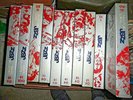
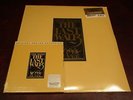
The 4-LP outer box is in near mint minus overall condition - appears almost as new. The box is solid with very light shelf wear evident. The colors on the box are superb, clear and clean (see pictures with this listing as they are of the actual item).
The set comes with a paper insert / libretto.
The 4LPs are in near mint minus overall condition. We found that the vinyl looked superb on this LP set. There are NO serious marks on the vinyl. However, this is a vintage set from 1994 and as such, some noise would have to be expected. The LPs retain much of their original gloss and sheen. They may have a bit of dust and perhaps a finger print or two on them so they should be cleaned before playing. There are NO serious spindle marks on the record labels either - a terrific collector's grade condition copy.
A Short Note About LP GRADING -
- Mint = Only used for sealed items.
- Near Mint = Virtually flawless in every way.
- Near Mint Minus = Item has some minor imperfections, some audible.
- Excellent = Item obviously played and enjoyed with some noise.
- Very Good Plus = Many more imperfections which are noticeable and obtrusive.
For best results, always thoroughly clean your LPs before playing them.
LPs can be audiophile quality pressings (any collector of fine MFSL, half speeds, direct to discs, Japanese/UK pressings etc., can attest to the difference a quality pressing can make to an audio system).
Don't let this rarity slip by!!!price rating