The Most Classic of Classic Rock Vinyl - The Beatles - The White Album - 1968
$
35


Favourite Auctions
To save auctions to your favourites, please login
If you don't have an account, please register
Description
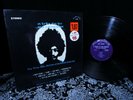
Embossed and Numbered - see photos.
From Wikipedia: The Beatles Original copies had the band's name blind embossed on a white background and were numbered. Studio album by the Beatles Released 22 November 1968 Recorded 30 May – 14 October 1968 Studio EMI and Trident, London Genre
- Rock
- pop
- folk
- 93:33 (stereo version)
- 92:28 (mono version)
(1967) The Beatles
(1968) Yellow Submarine
(1969) The Beatles North American chronology Magical Mystery Tour
(1967) The Beatles
(1968) Yellow Submarine
(1969)
The Beatles, also referred to colloquially as the White Album, is the ninth studio album and only double album by the English rock band the Beatles, released on 22 November 1968. Featuring a plain white sleeve, the cover contains no graphics or text other than the band's name embossed.[a] This was intended as a direct contrast to the vivid cover artwork of the band's previous LP Sgt. Pepper's Lonely Hearts Club Band (1967). The Beatles is recognised for its fragmentary style and diverse range of genres, including folk, country rock, British blues, ska, music hall, proto-metal and the avant-garde. It has since been viewed by some critics as a postmodern work, as well as one of the greatest albums of all time.[1]
The album features 30 songs, 19 of which were written during March and April 1968 at a Transcendental Meditation course in Rishikesh, India. There, the only western instrument available to the band was the acoustic guitar; several of these songs remained acoustic on The Beatles and were recorded solo, or only by part of the group. The production aesthetic ensured that the album's sound was scaled down and less reliant on studio innovation than most of their releases since Revolver (1966). The Beatles also broke with the band's tradition at the time of incorporating several musical styles in one song by keeping each piece of music consistently faithful to a select genre.
At the end of May 1968, the Beatles returned to EMI Studios in London to commence recording sessions that lasted until mid-October. During these sessions, arguments broke out among the foursome over creative differences and John Lennon's new partner, Yoko Ono, whose constant presence subverted the Beatles' policy of excluding wives and girlfriends from the studio. After a series of problems, including producer George Martin taking an unannounced holiday and engineer Geoff Emerick suddenly quitting during a session, Ringo Starr left the band for two weeks in August. The same tensions continued throughout the following year and led to the band's break-up.
The Beatles received favourable reviews from most music critics; detractors found its satirical songs unimportant and apolitical amid the turbulent political and social climate of 1968. It topped record charts in Britain and the United States. No singles were issued in either territory, but "Hey Jude" and "Revolution" originated from the same recording sessions and were issued on a single in August 1968. The album has been certified 24× platinum by the RIAA. A remixed and expanded edition of the album was released in 2018 to celebrate its 50th anniversary.
Background[edit]
See also: The Beatles in IndiaBy 1968, the Beatles had achieved commercial and critical success. The group's mid-1967 release, Sgt. Pepper's Lonely Hearts Club Band, was number one in the UK for 27 weeks, until the start of February 1968,[2] having sold 250,000 copies in the first week after release.[3] Time magazine declared that Sgt. Pepper constituted a "historic departure in the progress of music – any music",[4] while the American writer Timothy Leary wrote that the band were "the wisest, holiest, most effective avatars (Divine Incarnate, God Agents) that the human race has ever produced".[5] The band received a negative critical response to their television film Magical Mystery Tour, which aired in Britain in December 1967, but fan reaction was nevertheless positive.[6]
The songs that appear on The Beatles were demoed at George Harrison's home, Kinfauns, in May 1968.Most of the songs for The Beatles were written during a Transcendental Meditation course with Maharishi Mahesh Yogi in Rishikesh, India, between February and April 1968.[7][8] The retreat involved long periods of meditation, conceived by the band as a spiritual respite from all worldly endeavours – a chance, in John Lennon's words, to "get away from everything".[9] Lennon and Paul McCartney quickly re-engaged themselves in songwriting, often meeting "clandestinely in the afternoons in each other's rooms" to review their new work.[10] "Regardless of what I was supposed to be doing," Lennon later recalled, "I did write some of my best songs there."[11] Author Ian MacDonald said Sgt Pepper was "shaped by LSD",[12] but the Beatles took no drugs with them to India aside from marijuana, and their clear minds helped the group with their songwriting.[13] The stay in Rishikesh proved especially fruitful for George Harrison as a songwriter, coinciding with his re-engagement with the guitar after two years studying the sitar.[14] The musicologist Walter Everett likens Harrison's development as a composer in 1968 to that of Lennon and McCartney five years before, although he notes that Harrison became "privately prolific", given his usual subordinate status within the group.[15]
The Beatles left Rishikesh before the end of the course. Ringo Starr was the first to leave, less than two weeks later, as he said he could not tolerate the food;[16] McCartney departed in mid-March,[13] while Harrison and Lennon were more interested in Indian religion and remained until April.[13] Lennon left Rishikesh because he felt personally betrayed after hearing rumours that the Maharishi had behaved inappropriately towards women who accompanied the Beatles to India.[17][18] McCartney and Harrison later discovered the accusations to be untrue[19] and Lennon's wife Cynthia reported there was "not a shred of evidence or justification".[20][b]
Collectively, the group wrote around 40 new compositions in Rishikesh, 26 of which would be recorded in rough form at Kinfauns, Harrison's home in Esher, in May 1968. Lennon wrote the bulk of the new material, contributing 14 songs.[13] Lennon and McCartney brought home-recorded demos to the session, and worked on them together. Some home demos and group sessions at Kinfauns were later released on the 1996 compilation Anthology 3.[21] The whole set of Esher demos was released in the remixed 50th anniversary deluxe edition in 2018.[22]
Style and production[edit]
Sessions[edit]
The album was recorded largely at Abbey Road Studios.The Beatles was recorded between 30 May and 14 October 1968, largely at Abbey Road Studios in London, with some sessions at Trident Studios.[23] Their time in Rishikesh was soon forgotten in the tense atmosphere of the studio, with sessions occurring at irregular hours.[24] The group's self-belief led to the formation of a new multimedia business corporation, Apple Corps, an enterprise that drained the group financially with a series of unsuccessful projects.[25]
The group block-booked time at Abbey Road through July.[26] The open-ended studio time led to a new way of working out songs. Instead of tightly rehearsing a backing track, as in previous sessions, the group recorded all the rehearsals and jamming, then added overdubs to the best take.[27] The production aesthetic ensured that the album's sound was scaled down and less reliant on studio innovation than Revolver and Sgt. Pepper.[28] Harrison's song "Not Guilty" was left off the album, though 102 takes were recorded.[27]
Only 16 of the album's 30 tracks feature all four band members performing.[c] Several backing tracks do not feature the full group, and overdubs tended to be performed by the composer of the song.[44] McCartney and Lennon sometimes recorded simultaneously in different studios with different engineers.[45] George Martin's influence had gradually waned, and he left abruptly to go on a holiday during the recording sessions, leaving his young protégé Chris Thomas in charge of production.[46][47]
During the sessions, the band upgraded from 4-track recording to 8-track. As work began, Abbey Road Studios possessed, but had yet to install, an 8-track machine that had supposedly been sitting unused for several months. This was in accordance with EMI's policy of testing and customising new gear extensively before putting it into use. The Beatles recorded "Hey Jude" and "Dear Prudence" at Trident because it had an 8-track console.[48] When they learned that EMI also had one, they insisted on using it, and engineers Ken Scott and Dave Harries installed the machine (without studio management authorisation) in Abbey Road's Studio 2.[49]
The band held their first and only 24-hour session at Abbey Road during the final mixing and sequencing for the album. This session was attended by Lennon, McCartney and Martin; Harrison had left on a trip to the US the day before. Unlike most LPs, there was no customary three-second gap between tracks, and the master was edited so that songs segued together, via a straight edit, a crossfade, or an incidental piece of music.[50]
Genres and length[edit]
The Beatles contains a wide range of musical styles, which authors Barry Miles and Gillian Gaar view as the most diverse of any of the group's albums.[51][52] These styles include rock and roll, blues, folk, country, reggae, avant-garde,[53] hard rock,[54] music hall[55] and psychedelic music.[56] The only western instrument available to the group during their Indian visit was the acoustic guitar, and thus many of the songs were written and first performed on that instrument.[57] Some of these songs remained acoustic on The Beatles and were recorded solo or by only part of the group (including "Wild Honey Pie",[58] "Blackbird",[59] "Julia",[60] "I Will"[61] and "Mother Nature's Son").[62]
Author Nicholas Schaffner views the acoustic slant as reflective of a widespread departure from the LSD-inspired psychedelia of 1967, an approach initiated by Bob Dylan and the Beach Boys and adopted in 1968 by artists such as the Rolling Stones and the Byrds.[63] Edwin Faust of Stylus Magazine described The Beatles as "foremost an album about musical purity (as the album cover and title suggest). Whereas on prior Beatles albums, the band was getting into the habit of mixing several musical genres into a single song, on The White Album every song is faithful to its selected genre. The rock n' roll tracks are purely rock n' roll; the folk songs are purely folk; the surreal pop numbers are purely surreal pop; and the experimental piece is purely experimental."[64]
Martin said he was against the idea of a double album at the time and suggested that the group reduce the number of songs to form a single album featuring their stronger work; the band refused.[65] Reflecting on the album years later, Harrison said that some tracks could have been released as B-sides or withheld, but "there was a lot of ego in that band."[66] He also supported the idea of the double album, to clear out the group's backlog of songs. Starr felt that the album should have been two separate records, which he jokingly called "The White Album" and "The Whiter Album". McCartney said that the record was fine as it was: "It was great. It sold. It's the bloody Beatles' White Album. Shut up!"[66]
Personal issues[edit]
During the recording sessions for The Beatles, each member of the band began to increasingly assert themselves as individual artists who frequently found themselves at odds. McCartney described the sessions as a turning point for the group because "there was a lot of friction during that album. We were just about to break up, and that was tense in itself";[67] Lennon said, "the break-up of the Beatles can be heard on that album".[68] Recording engineer Geoff Emerick had worked with the group since Revolver, but became disillusioned with the sessions. He overheard Martin criticising McCartney's vocal performance while recording "Ob-La-Di, Ob-La-Da", to which McCartney replied, "Well you come down and sing it".[69] On 16 July, Emerick announced that because of the frequent bickering and tension, he was no longer willing to work with the Beatles and left the studio in the midst of a session.[69]
The new relationship between John Lennon and Yoko Ono caused tension in the studio with the other Beatles.[70]The Beatles sessions marked the first appearance in the studio of Lennon's new domestic and artistic partner, Yoko Ono, who accompanied him to Abbey Road to work on "Revolution 1"[71] and who was thereafter a more or less constant presence at Beatles recording sessions.[72] Ono's presence was highly unorthodox as, up to that point, the Beatles had generally worked in isolation, rarely allowing visitors, wives and girlfriends to attend recording sessions.[73] Lennon's devotion to Ono over the other Beatles made working conditions difficult by impeding communication between Lennon and McCartney, as well as the intuitive aspect that had previously been essential to the band's music.[74] McCartney's girlfriend at the time, Francie Schwartz, was also present at some sessions,[75] as were the other two Beatles' wives, Pattie Harrison and Maureen Starkey.[76]
Peter Doggett writes that "the most essential line of communication" had been broken between Lennon and McCartney by Ono's presence on the first day of recording.[77] Beatles biographer Philip Norman comments that the two shared a disregard for the other's new compositions; Lennon found McCartney's songs "cloyingly sweet and bland", while McCartney viewed Lennon's as "harsh, unmelodious and deliberately provocative".[78] Harrison and Starr chose to distance themselves partway through the project,[44] flying to California on 7 June so that Harrison could film his scenes for the Ravi Shankar documentary Raga.[79] Lennon's, McCartney's and Harrison's individual projects outside the band in 1968 were further evidence of the group's fragmentation.[80] In Lennon's case, the album cover of his experimental collaboration with Ono Two Virgins featured the couple completely naked, a gesture his bandmates found bewildering and unnecessary.[81]
On 20 August, Lennon and Starr were working on overdubs for "Yer Blues" in Studio 3, and visited McCartney in Studio 2 where he was working on "Mother Nature's Son". The positive spirit of the session disappeared immediately, and engineer Ken Scott later claimed that "you could cut the atmosphere with a knife".[45] Starr abruptly left the studio on 22 August during the session for "Back in the U.S.S.R.",[82] feeling that his role in the group was peripheral compared to the other members, and upset at McCartney's constant criticism of his drumming on the track.[83][84] Abbey Road staff later commented that Starr was usually the first to arrive at the studio, waiting in the reception area for the others to arrive.[85] In his absence, McCartney played the drums on "Dear Prudence". For "Back in the U.S.S.R.", the three remaining Beatles each made contributions on bass and drums, and the drum part is a composite of Lennon, McCartney, and Harrison's playing.[85] Lennon, McCartney, and Harrison pleaded with Starr to reconsider. He returned on 5 September to find his drum kit decorated with flowers,[37] a welcome-back gesture from Harrison.
The Beatles – The Beatles
More images
Label: Apple Records – SWBO-101, Apple Records – SWBO 101 Format: 2 x Vinyl, LP, Album, Numbered, Stereo, 1st Press, Capitol Text, Scranton Pressing Country: US Released: Nov 25, 1968 Genre: Rock, Pop Style: Pop Rock, Psychedelic Rock, Experimental, VocalTracklist
Hide Credits A1 Back In The U.S.S.R. 2:45 A2 Dear Prudence 4:00 A3 Glass Onion 2:10 A4 Obladi Oblada 3:10 A5 Wild Honey Pie 1:02 A6 Bungalow Bill 3:05 A7 While My Guitar Gently Weeps Written-By – George Harrison Written-By – George Harrison 4:46 A8 Happiness Is A Warm Gun 2:47 B1 Martha My Dear 2:28 B2 I'm So Tired 2:01 B3 Blackbird 2:20 B4 Piggies Written-By – George Harrison Written-By – George Harrison 2:04 B5 Rocky Racoon 3:33 B6 Don't Pass Me By Written-By – Richard Starkey Written-By – Richard Starkey 3:52 B7 Why Don't We Do It In The Road 1:42 B8 I Will 1:46 B9 Julia 2:57 C1 Birthday 2:40 C2 Yer Blues 4:01 C3 Mother Nature's Son 2:46 C4 Everybody's Got Something To Hide Except Me And My Monkey 2:25 C5 Sexy Sadie 3:15 C6 Helter Skelter 4:30 C7 Long, Long, Long Written-By – George Harrison Written-By – George Harrison 3:08 D1 Revolution No. 1 4:13 D2 Honey Pie 2:42 D3 Savoy Truffle Written-By – George Harrison Written-By – George Harrison 2:55 D4 Cry Baby Cry 3:11 D5 Revolution No. 9 8:15 D6 Goodnight 3:14Companies, etc.
- Manufactured By – Apple Records, Inc.
- Pressed By – Capitol Records Pressing Plant, Scranton
Credits
- Producer – George Martin
- Written-By – John Lennon-Paul McCartney* (tracks: A1 to A6, A8 to B3, B5, B7 to C6, D1, D2, D4 to D6)
Notes
First pressing has "Mfd. by Capitol...." in white rim text on sides 2 and 4, with various title mistakes and unique number on the front cover.This 1st press has A4 "Obladi Oblada", A6 "Bungalow Bill", B7 'Why Don't We Do It In the Road' (without question mark) , D1 "Revolution No. 1", D5 "Revolution No. 9" and D6 "Goodnight".
Variant 5: has A4 "Obladi Oblada", A6 "Bungalow Bill", B7 'Why Don't We Do It In the Road?' (with question mark) , D1 "Revolution No. 1", D5 "Revolution No. 9" and D6 "Goodnight".
Cover has "The BEATLES" embossed, located towards the lower right corner, and sequentially numbered.
Pressed at Capitol Records Pressing Plant, Scranton, as identified by the "IAM" in a triangle stamp in the run-outs.
Comes with fold-out lyric poster and 4 glossy photos on card stock.
Barcode and Other Identifiers
- Rights Society: BMI
- Rights Society: ASCAP
- Matrix / Runout (Label side A): SWBO1-101
- Matrix / Runout (Label side B): SWBO2-101
- Matrix / Runout (Label side C): SWBO3-101
- Matrix / Runout (Label side D): SWBO4-101
- Matrix / Runout (Variant 1, runout A): SWBO-1-101-J46
- Matrix / Runout (Variant 1, runout B): SWBO-2-101-J46 #2
- Matrix / Runout (Variant 1, runout C): SWBO-3-101-J47
- Matrix / Runout (Variant 1, runout D): SWBO-4-101-J45 #2
- Matrix / Runout (Variant 2, runout A etched & stamped): SWBO1-101-J46 #2 IAM
- Matrix / Runout (Variant 2, runout B etched & stamped): SWBO2-101-J46 #2 IAM
- Matrix / Runout (Variant 2, runout C etched & stamped): SWBO3-101-J47 #3 IAM
- Matrix / Runout (Variant 2, runout D etched & stamped): SWBO4-101-J44 IAM
- Matrix / Runout (Variant 3 runout A, etched & stamped ): SWBO-1-101-J46¹¹ #2 IAM
- Matrix / Runout (Variant 3 runout B, etched & stamped): SWBO-2-101-J45¹¹ IAM
- Matrix / Runout (Variant 3 runout C, etched & stamped): SWBO3-101-J47 IAM
- Matrix / Runout (Variant 3 runout D, etched & stamped): SWBO4-101-J44 IAM
- Matrix / Runout (Variant 5 runout A, etched & stamped): SWBO-1-101-J46¹¹ #2 IAM
- Matrix / Runout (Variant 5 runout B, etched & stamped): SWBO-2-101-J45¹¹ #2 IAM
- Matrix / Runout (Variant 5 runout C, etched & stamped): SWBO3-101-J47¹¹ #2 IAM
- Matrix / Runout (Variant 5 runout D, etched & stamped): WBO4-101-J44¹¹ #3 IAM
- Matrix / Runout (Variant 6 runout A, etched & Stamped): SWBO1-101-J58 #4 IAM
- Matrix / Runout (Variant 6 runout B, etched & Stamped): SWBO2-101 J45 " #3 IAM
- Matrix / Runout (Variant 6 runout C, etched & Stamped): SWBO3-101-J48 #2 IAM
- Matrix / Runout (Variant 6 runout D, etched & Stamped): SWBO4-101-J44 #5 IAM
- Matrix / Runout (Variant 7 runout A, etched & stamped): SWBO-1-101-J46¹¹ #2 IAM
- Matrix / Runout (Variant 7 runout B, etched & stamped): SWBO-2-101-J45¹¹ #2 IAM
- Matrix / Runout (Variant 7 runout C, etched & stamped): SWBO3-101-J47¹¹ IAM
- Matrix / Runout (Variant 7 runout, etched & stamped): SWBO4-101-J44 IAM
price rating