The Rolling Stones "Sticky Fingers" 1C 064-63 152 1979 German reissue Zip+insert
£
20
$
27


Favourite Auctions
To save auctions to your favourites, please login
If you don't have an account, please register
Description
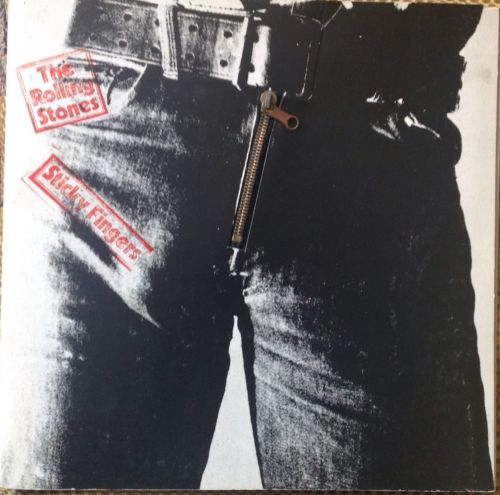
The Rolling Stones ? "Sticky Fingers" Rolling Stones Records ?1C 064-63 152 Vinyl, LP, reissued in 1979 with a zipper cover and printed insert.
The vinyl appears to have been lightly played and is in great condition. The sleeve also shows minimal signs of wear apart from a slight dink to the corner and is also in great shape - no tears or writing. The zip works and the printed insert is in great condition. Matrix / Runout (Side 1 Variant): 63152-A1 Matrix / Runout (Side 2 Variant): 63152-B1
"Sticky Fingers" is The Rolling Stones' ninth British and 11th American studio album, released in April 1971. It is the band's first album of the 1970s and its first release on the band's newly formed label, Rolling Stones Records, after having been contracted since 1963 with Decca Records in the UK and London Records in the US. It is also Mick Taylor's first full-length appearance on a Rolling Stones album, the first Rolling Stones album not to feature any contributions from guitarist and founder Brian Jones and the first one on which singer Mick Jagger is credited with playing guitar.
"Sticky Fingers" is widely regarded as one of the Rolling Stones' best albums. It achieved triple platinum certification in the US and contains songs such as the chart-topping "Brown Sugar", the country ballad "Dead Flowers", "Wild Horses", "Can't You Hear Me Knocking", and the sweeping ballad "Moonlight Mile".
The album's artwork emphasises the suggestive innuendo of the "Sticky Fingers" title, showing a close-up of a jeans-clad male crotch with the visible outline of a medium-sized penis; the cover of the original (vinyl LP) release featured a working zipper and perforations around the belt buckle that opened to reveal a sub-cover image of cotton briefs. The vinyl release displayed the band's name and album title along the image of the belt; behind the zipper the white briefs were seemingly rubber stamped in gold with the stylized name of American pop artist Andy Warhol, below which read "THIS PHOTOGRAPH MAY NOT BE—ETC." While the artwork was conceived by Warhol, photography was by Billy Name and design was by Craig Braun. Braun and his team had other ideas, such as wrapping the album in rolling paper - a concept later used by Cheech & Chong in "Big Bambu" - but Jagger was enthused by Warhol's cover with a zipper. Execution was then handled as Warhol sent Braun Polaroid pictures of a model in tight jeans.
The cover photo of a male model's crotch clad in tight blue jeans was assumed by many fans to be an image of Mick Jagger, but the people actually involved at the time of the photo shoot claim that Warhol had several different men photographed (Jagger was not among them) and never revealed which shots he used. Among the candidates, Jed Johnson, Warhol's lover at the time, denied it was his likeness, although his twin brother Jay is a possibility. Those closest to the shoot, and subsequent design, name Factory artist and designer Corey Tippin as the likeliest candidate. Warhol "superstar" Joe Dallesandro claims to have been the model.
The album features the first usage of the "tongue & lips" logo of Rolling Stones Records, originally designed by John Pasche in 1970. Jagger suggested to Pasche that he copy the out-stuck tongue of the Hindu goddess Kali, and while Pasche first felt it would date the image back to the Indian culture craze of the 1960s, seeing Kali made him change his mind. Before the end of that year his basic version was faxed to Craig Braun by Marshall Chess. The black & white copy was then modified by Braun and his team, resulting in today's most popular red version, the slim one with the two white stripes on the tongue. Critic Sean Egan has said of the logo, "Without using the Stones' name, it instantly conjures them, or at least Jagger, as well as a certain lasciviousness that is the Stones' own ... It quickly and deservedly became the most famous logo in the history of popular music." The tongue and lips design was part of a package that, in 2003, VH1 named the "No. 1 Greatest Album Cover" of all time.
In 1994, "Sticky Fingers" was ranked number ten in Colin Larkin's All Time Top 1000 Albums. He stated, "Dirty rock like this has still to be bettered, and there is still no rival in sight." In a retrospective review, Q magazine said that the album was "the Stones at their assured, showboating peak ... A magic formula of heavy soul, junkie blues and macho rock". NME wrote that it "captures the Stones bluesy swagger" in a "dark-land where few dare to tread". Record Collector magazine said that it showcases Jagger and Richards as they "delve even further back to the primitive blues that first inspired them and step up their investigations into another great American form, country." In his review for Goldmine magazine, Dave Thompson wrote that the album still is superior to "most of The Rolling Stones’ catalogue". In 2003, Sticky Fingers was listed as No. 63 on Rolling Stone magazine's list of The 500 Greatest Albums of All Time.
price rating


