Triumph of the Will 1934 Party Day Marches Speeches Ceremonies Leni Riefenstahl
$
50



Favourite Auctions
To save auctions to your favourites, please login
If you don't have an account, please register
Description
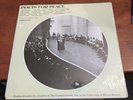
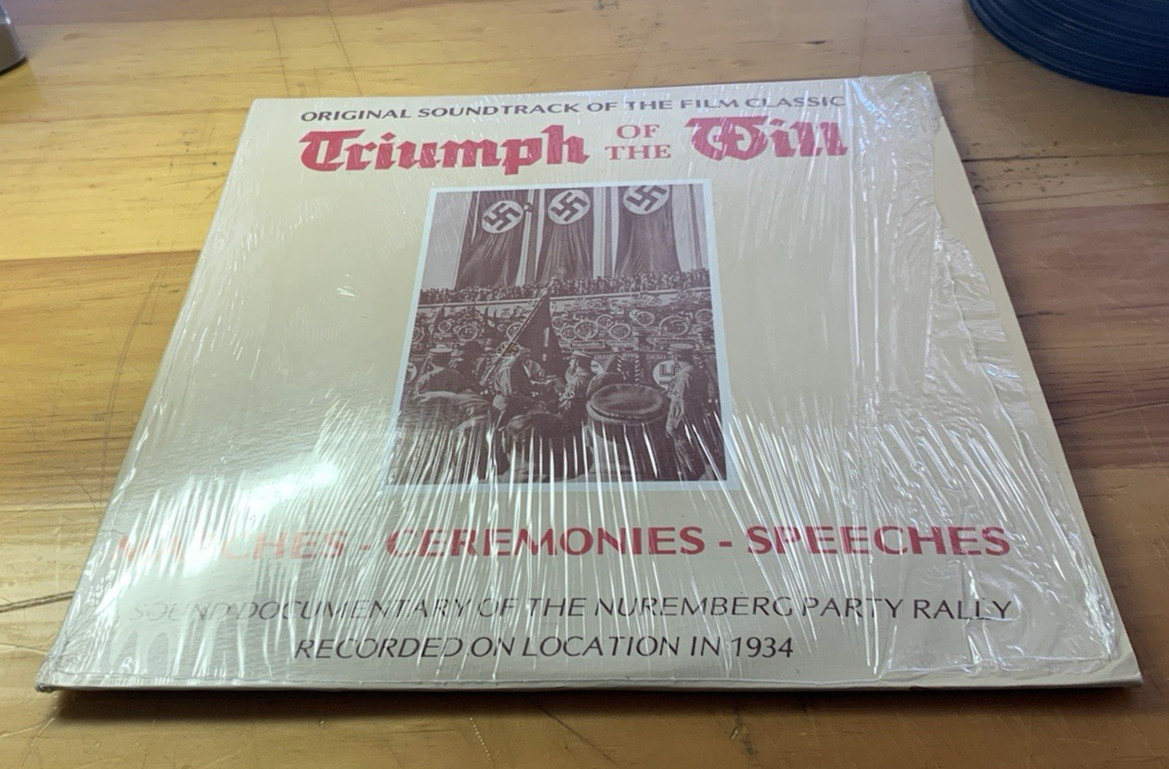
Triumph Of The Will (Original Soundtrack) Various - Triumph Of The Will (Original Soundtrack) album cover Label: Communications Archives, Inc. – CAM-271477 Format: 2 x Vinyl, LP, Album, Reissue, Mono Country: US Released: 1977 Genre: Non-Music, Brass & Military, Stage & Screen Style: Military, Speech, Soundtrack A1 Triumph Of The Will Theme Written-By – H. Windt* A2 Zapfenstreich - Evening Ceremonies A3 S.A. Review March A4 Traditional Folk Marches A5 Hess Opens Congress B1 German Leaders Speak B2 Labor Service Day B3 S.A. And Wehrmacht Marches C1 Hitler Youth Day C2 Night Rally Of Political Leaders C3 S.A. Salutes Hitler D1 S.A. And S.S. Assembly Theme D2 S.S. On Parade D3 Entry Of The Standards / Hitler Closes Congress / Horst Wessel Song Sound documentary of the 1934 Party Day from the film directed by Leni Riefenstahl, including marches, speeches, and ceremonies.
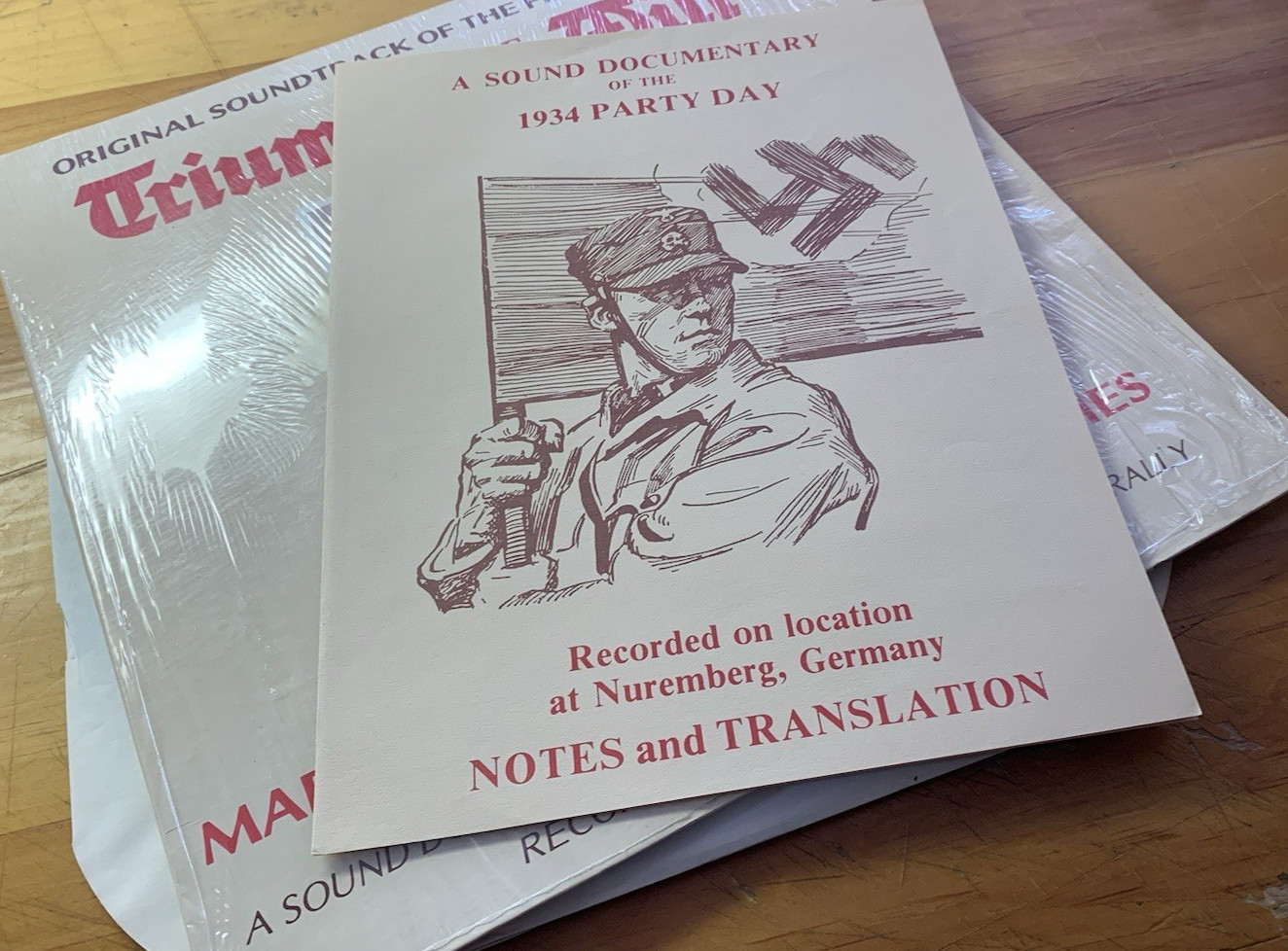
With 4-page insert containing notes and translations from the Leni Riefenstahl recorded events of the September 4-10, 1934 Nazi Party Rally, Nuremberg.
Triumph of the Will (German: Triumph des Willens) is a 1935 German Nazi propaganda film directed, produced, edited and co-written by Leni Riefenstahl. Adolf Hitler commissioned the film and served as an unofficial executive producer; his name appears in the opening titles. It chronicles the 1934 Nazi Party Congress (rally) in Nuremberg, which was attended by more than 700,000 Nazi supporters.[1] The film contains excerpts of speeches given by Nazi leaders at the Congress, including Hitler, Rudolf Hess and Julius Streicher, interspersed with footage of massed Sturmabteilung (SA) and Schutzstaffel (SS) troops and public reaction. Its overriding theme is the return of Germany as a great power with Hitler as its leader. The film was produced after the Night of the Long Knives, and many formerly prominent SA members are absent.
Following its release in March 1935, it became a major example of film used as propaganda and was well-received at home. Riefenstahl's techniques—such as moving cameras, aerial photography, the use of long-focus lenses to create a distorted perspective, and the revolutionary approach to the use of music and cinematography—have earned Triumph of the Will recognition as one of the greatest propaganda films in history. It won several awards in Germany, France and Italy.[2]
During World War II, Frank Capra's seven-film series Why We Fight was directly inspired by Triumph of the Will and the United States' response to it.[3] In present-day Germany, the film is not censored but the courts commonly classify it as Nazi propaganda, which requires an educational context for public screenings.[4] The film continues to influence films, documentaries and commercials to this day
price rating