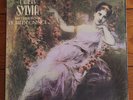
JOHN FAHEY -Blind Joe Death 1964 LP Takoma C1002 w/ booklet blues guitar VG+
$
185


Favourite Auctions
To save auctions to your favourites, please login
If you don't have an account, please register
Description
PLEASE TAKE A LOOK AT MY OTHER eBAY AUCTIONS - ALWAYS EXPECT THE UNEXPECTED
CHECK OUT MY NEWLY LISTED RARE & OBSCURE LP's & 45'S - SOUL, 60s PSYCH & GARAGE, ROCKABILLY
John Fahey - "Blind Joe Death" in mono on Takoma C 1002. Many if not all of the songs that were on his mega-rare 1959 private pressing have been re-recorded. However, this first pressing on Takoma is also very rare (he recorded the album again in 1967 and that is the recording that has been reissued and kept in print on vinyl for quite long). This ones comes with the "notes" booklet that states Piedmont/Takoma C 1002 on the top.
At the bottom of the spare front cover it reads "This record is a limited pressing, second edition, TRANSCENDENTAL WATERFALL / ON DOING AN EVIL DEED BLUES / IN CHRIST THERE IS NO EAST OR WEST and UNCLOUDY DAY recorded in Berkeley, California in April, 1964, in the studio of an anonymous benefactor". However it was not released until 1966.
The tracks are: On Doing An Evil Deed Blues, St. Louis Blues, Poor Boy Long Ways from Home, Uncloudy Day, John Henry, In Christ there is No East or West, The Transcendental Waterfall, Desperate Man Blues, Sun Gonna Shine in My Back Door Someday Blues and Sligo River Blues.
Record Grade: VG+, the vinyl retains almost all of its original gloss, there are some surface marks that cause an occasional click or pop but by and large this album plays with great clarity and in much better than average condition.
Cover Grade: VG+, minor to average wear, name written on back cover top right corner
Labels: Black and silver
ABOUT THE ALBUM:
For his first Takoma release, Fahey essentially presented an altered version of his extremely limited-edition (less than 100 copies), self-pressed 1959 debut. All but one of the songs from that legendary 1959 effort are here, but some of them are 1964 re-recordings, as Fahey felt (correctly) that his technique had improved so much that they would benefit from being recut. The album's mystique probably owes more to the 1959 record's rarity (and utter oddity in the context of its era) than the music, in which Fahey's experimental blues-folk acoustic fusion is just beginning to take shape. It remains a very interesting record from a historical perspective, however, as few if any other guitarists were attempting to interpret blues and folk idioms in such an idiosyncratic fashion in the late '50s and early '60s.ABOUT JOHN FAHEY:
One of acoustic music's true innovators and eccentrics, John Fahey was a crucial figure in expanding the boundaries of the acoustic guitar over the last few decades. His music was so eclectic that it's arguable whether he should be defined as a "folk" artist. In a career that saw him issue several dozen albums, he drew from blues, Native American music, Indian ragas, experimental dissonance, and pop. His good friend Dr. Demento has noted that Fahey "was the first to demonstrate that the finger-picking techniques of traditional country and blues steel-string guitar could be used to express a world of non-traditional musical ideas -- harmonies and melodies you'd associate with Bartok, Charles Ives, or maybe the music of India." The more meditative aspects of his work foreshadowed new age music, yet Fahey played with a fierce imagination and versatility that outshone any of the guitarists in that category. His idiosyncrasy may have limited him to a cult following, but it also ensured that his work continues to sound fresh.
Fahey was a colorful figure from the time he became an accomplished guitarist in his teens. Already a collector of rare early blues and country music, he made his first album in 1959, ascribing part of it to the pseudonymous "Blind Joe Death." Only 95 copies of the LP were pressed, making it a coveted collector's item today. (In the 1960s, Fahey would re-record the material for wider circulation.) In college, he wrote a thesis on Charley Patton (an exotic subject at the time). Yet Fahey did not perform publicly for money until the mid-'60s, after his third album.
Fahey's early albums for Takoma in the mid-'60s laid out much of the territory he would explore. His instrumentals, filtering numerous genres of music into his own style, evoked haunting and open spaces. At times they could be soothing and plaintive; at other times they were disquieting, even dissonant. The more experimental aspects of his material even foreshadowed psychedelia in their lengthy improvisations (some cuts lasted as long as 20 minutes), use of Indian modes, unpredictable stylistic shifts, and overall eerie strangeness. His persona as a weirdo of sorts was amplified by his bizarre and lengthy song titles and liner notes. He also employed odd guitar tunings that continue to exert an overlooked influence on contemporary musicians to this day.
Fahey remained consistently popular on a cult level through the mid-'80s. His most commercially successful efforts, oddly, were probably his Christmas albums, which are among the more interesting holiday records of any genre. For a time he ran the Takoma label, where he was instrumental in starting the career of Leo Kottke (who owes much of his stylistic inspiration to Fahey), as well as promoting lesser-known talents like Robbie Basho. He was a catalyst in other subtle ways, helping to form Canned Heat by introducing Al Wilson (who played on a Fahey album in 1965) to Bob Hite, and rediscovering Delta bluesman Bukka White with his friend Ed Denson.
Fahey sold Takoma to Chrysalis in the mid-'70s, but continued to record regularly, and also tour (though his live performances were erratic). In 1986, he contracted Epstein-Barr syndrome, a long-lasting viral infection that, combined with diabetes and other health problems, sapped his energy and resources. Although the Epstein-Barr virus was finally overcome, the mid-'90s found him living in poverty in Oregon, where he paid his rent by pawning his guitar and reselling rare classical records. The appearance of a major career retrospective on Rhino, Return of the Repressed, in 1994 boosted his profile to its highest level in years. In 1997, he returned to active recording with City of Refuge and was planning a Revenant definitive package of Charley Patton's work when he died following sextuple-bypass surgery at the age of 61. The Fahey discography is dauntingly large and diverse; the neophyte is advised to start with the two-disc Return of the Repressed, but those who wish to dig deeper will be very pleased with Takoma's extensive reissues, which started to appear in the late nineties.
All of my records are shipped in sturdy cardboard LP or 45 rpm mailers with appropriate padding (heavy cardboard fillers or bubble wrap or "peanuts" or some combination thereof". With the exception of sealed LP's, all LP's are removed from their outer sleeves to prevent seam splitting. Upon request, I will give your sealed LP's the same treatment. (once an LP is shipped sealed, it cannot be returned once opened).
All records are carefully graded. In an attempt to give customers an accurate impression of condition rather than adhere to somewhat arbitrary criteria, I give an "overall presentation" grade, supplemented when necessary with additional remarks. Please refer to my grading system below for a more detailed explanation.
MY GRADING SYSTEMS: I’ve been told that I grade conservatively. My NM (near mint) is my highest grade for opened records (which would also include unplayed records). It’s a 9 or 10 on a 1-10 scale. M- would be equivalent to an 8; VG++ to a 7; VG+ to a 6; VG to a 5; VG- to a 4; G to a 3; F to a 2 and P to a 1. The same scale applies when I grade covers (jackets). Significant defects are specifically noted and taken into consideration in the grade.
GRADING DESCRIPTIONS
RECORDS:
- GRADING is based on the following criteria
- Sealed = store stock new
- Near Mint = like new or near new with only one or two small insignificant defects, a 9 or better on a 1-10 scale
- Near Mint Minus = very nice. Would be Near Mint, except for a couple of light hairlines or scuffs, which do not affect play
- VG++ = still a very nice record with all or nearly all of its original gloss but may have a few more light, surface marks, hairlines, needle tracks or the like which should not materially effect play
- VG+ = a nice, but used record that may have a series of light scuffs or scratches. It probably plays with a few pops, but has no serious problems.
- VG = a well-used record that still should sound OK when played, but may have moderate surface noise, pops, etc.
- VG- = a well-worn record that plays through without skipping, but will do until a better copy comes along.
- Good = not actually good at all but probably will play through but with much in the way of surface noise, pops, crackles, etc. Still, will have no cracks, chips or the like
- Fair = you’re getting this record just to own but not to play
- Poor = the sky’s the limit, generally I will discard a record this bad (and sell the cover, jacket or sleeve alone) unless the label holds some particular interest
VISUAL GRADING: All records are visually graded only unless I state that they are play-graded. Some major labels were pressed on better quality vinyl and will sound better than a record which visually appears the same on "budget" labels which were pressed on lower quality vinyl. Recording techniques also varied. The sound on live albums may be far inferior to studio recordings. There may also be defects in the pressing which are invisible. The point is that an album on a high quality label that was visually graded VG+ may sound better than an album on a budget label that was visually graded Mint- or even Near Mint. Please refer to my return policy, below. But please don’t be shocked if a record visually graded Near Mint doesn’t sound state of the art. If I base my grade on a PLAY GRADE, I will state this specifically in my grading section.
COVERS: There are really too many possible defects regarding covers to be as specific in my definitions as I had been with my record grades. But please keep in mind these general grading guidelines:
- I will give greater weight to the condition of the front cover than back cover when assigning an overall grade
- No cover with a cut out hole or saw mark will be graded Near Mint even if it is still in factory shrink and there is no other wear
- I will not reduce the grade of a cover for stickers which are glued to the jacket by the record company (eg. Contains the hit song Expressway to Your Heart); but will reduce the grade for stickers glued on the cover by stores, previous owners, etc.
- If I write that a cover has a bb hole, I’m talking about a small cut out hole
- A saw mark is a narrow cut in the perimeter of the cover, could be anywhere and vary in length from 1/2” to 2” at the most.
- The overall grade takes into consideration any stated defects. For example, if I grade a cover VG+ and then state it has 6” top and bottom seam splits - I’ve already reduced the grade because of the seam splits. If the seams weren’t split, the cover would be graded higher such as VG++ or Mint-.
Shipping Costs: CURRENT SHIPPING RATES AND POLICIES.
The winning bidder pays for shipping.
DOMESTIC SHIPPING WITHIN THE UNITED STATES: Due to increase in postage rates, I had sometimes been losing money on shipping as I send all records in sturdy professional Bags Unlimited mailers with one or more fillers. Therefore, I am now using the eBay postage calculator to determine postage. This will also result in a more equitable charge for priority mail shipments. Instead of a flat fee, those who live in the southeast and mid-east will reap the benefit of reduced priority mail rates.
DOMESTIC AND INTERNATIONAL SHIPMENTS: COMBINED SHIPPING - Save money when I mail 2 or more records in the same package. Please wait until I send you an invoice or request an invoice when combining two or more records or cd's in one shipment -prior to making payment.
INTERNATIONAL SHIPMENTS: Overseas customers are encouraged to bid. As with U.S. shipments, I will use eBay's postage calculator for all overseas shipments.
Postage to Canada is substantially less than to other countries - if you live in Canada and don't see a separate rate for Canada , please e-mail me and I'll modify the invoice to reflect the lower shipping charges. Surface mail is no longer available for overseas. Express Mail International and Priority Mail International are available - rates are substantially higher than first class international and will be quoted for each purchase if buyer requests this service. Express Mail International or Registered mail is now required for purchases over $100. Generally, Express International costs $35 for 1 album and additional albums are about $5-6 more. Registered costs about $26 for 1 album, about $5 more for each additional album. Registered mail may not be available to certain countries. I am sorry but the increased risks and costs must be passed on to the international buyer. On the bright side of things, Express Mail International will get you the package faster and it is safer. Registered mail is the safest form of shipment (but not as fast as express mail international). So there are benefits to the buyer as well as the seller. Please wait until I send you an invoice or request an invoice when combining two or more records or cd's in one shipment -prior to making payment.
Please check out my other eBay auctions and stores listings.
I’ve been listing all types of records - mostly LP’s - including 50’s and 60’s rock ‘n’ roll, country, folk jazz, blues, personalities, new wave and punk, surf, psych, spoken word, comedy, etc., etc....... I try to list unusual, unique or obscure records, not the ones that you see all the time. While a majority of my listings are albums, you’ll often find a nice selection of 45’s, EP’s or picture sleeves...and an occasional 78 or two.
My return policy: . You may return an item if it's not in the conditon described. You may not return items if you decide you don't like the music. I will return the base price of the item unless I make an error in shipment such as sending you the wrong record or cd. In that case, you will be reimbursed for the cost of the item and shipping both ways. In addition, the item must be returned in its original condition , i.e. the way it was shipped when it left my hands. While a very high percentage of my records arrive safe and sound (I use professional mailers and a filler or two, more for 78’s), they occasionally are damaged in transit. If that happens, I won’t accept the return of the record or other item.
Sealed Records: After a sealed record is paid for, I will gladly open it before mailing to make sure that the record is new & unplayed. If the record is not, I will give a full refund. Even though it is easy to spot most resealed records from the 50's and 60's [I will mention that in the desription if it looks like a possibility], not all records from the 70's & 80's are quite as obvious. Please ask for any details about the seal of a particular record & I will be happy to answer.